

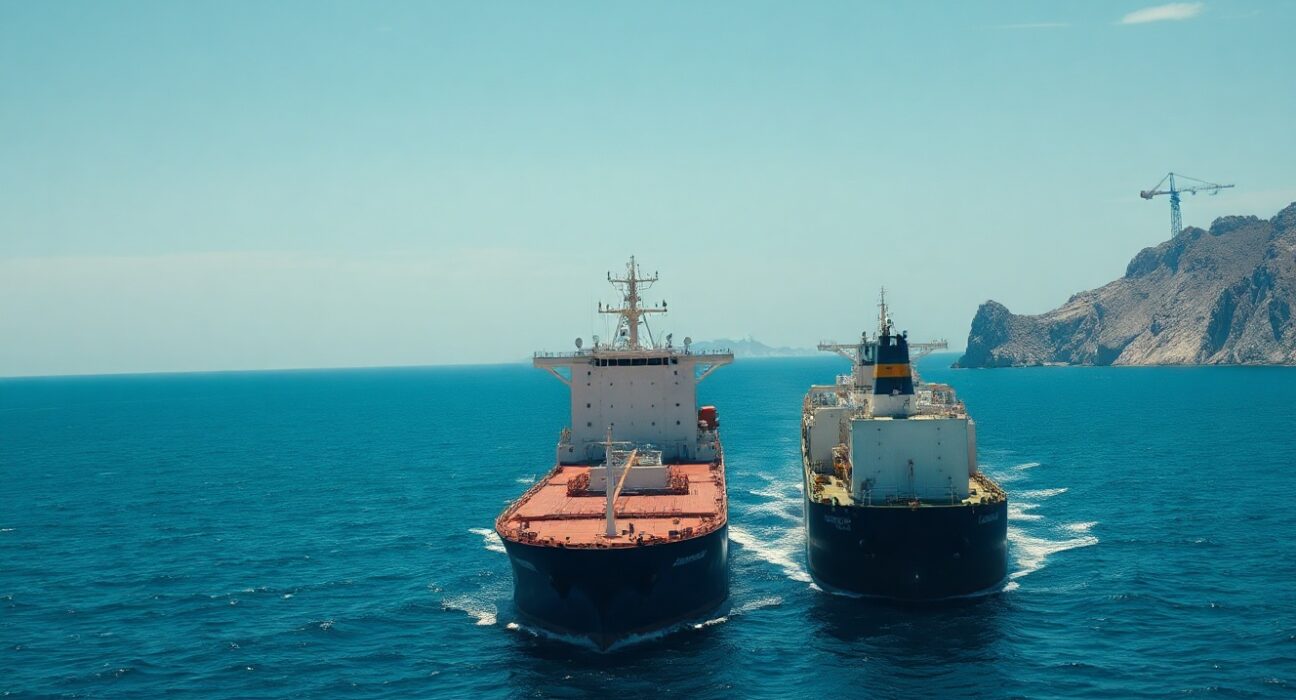
Tehran, Iran — Iran’s Persian Gulf Strait Management Bureau announced new regulations on Tuesday requiring all vessels to submit a passage application at least 48 hours before entering the Strait of Hormuz. The bureau stated the decision is based on an Iran-U.S. Memorandum of Understanding (MOU) and directives from relevant authorities, though the specific terms of the agreement were not publicly detailed.
New Passage Requirements
Under the new rules, ship operators must provide advance notice and meet unspecified conditions to receive approval for transit. The bureau emphasized that passage will be granted only to vessels that submit a complete application and comply with the stipulated requirements. The announcement did not clarify what documentation or safety checks would be needed, nor did it specify penalties for non-compliance.
The Strait of Hormuz is a critical maritime chokepoint, handling roughly one-fifth of the world’s oil consumption. Any disruption or tightening of transit rules has immediate implications for global energy prices and shipping insurance rates.
Geopolitical and Market Context
The timing of the announcement is significant. Iran and the United States have engaged in indirect talks regarding nuclear program restrictions and sanctions relief, but formal agreements have remained elusive. The reference to an Iran-U.S. MOU suggests a previously undisclosed diplomatic channel may have produced a framework for maritime cooperation.
Market analysts are watching closely. Previous Iranian threats to close or restrict the strait have caused volatility in crude oil futures and raised shipping insurance premiums for vessels transiting the region. The new 48-hour notice requirement, while not a blockade, introduces a layer of bureaucratic friction that could slow traffic and increase operational costs for shipping lines.
Impact on Global Shipping and Energy Security
The requirement applies to all vessels, including oil tankers, container ships, and liquefied natural gas carriers. For shipping companies, the need for advance planning may complicate last-minute route changes and increase administrative burdens. For oil markets, even minor delays at the strait can tighten supply and push prices higher, particularly if the policy is enforced inconsistently.
International maritime law generally upholds the principle of transit passage through straits used for international navigation. The United Nations Convention on the Law of the Sea (UNCLOS), which Iran has not ratified, guarantees ships the right of unimpeded passage. However, coastal states may regulate navigation for safety and environmental reasons, provided they do not hamper transit. Legal experts will likely scrutinize whether the 48-hour notice requirement constitutes a permissible safety measure or an illegal restriction.
Conclusion
Iran’s new 48-hour advance notice requirement for Strait of Hormuz passage introduces a new layer of regulatory oversight at one of the world’s most strategically vital waterways. While the stated basis is a U.S.-Iran MOU, the lack of public transparency raises questions about enforcement and intent. The global shipping industry and energy markets should prepare for potential delays and increased compliance costs, even as diplomatic channels continue behind the scenes.
FAQs
Q1: What is the Strait of Hormuz and why is it important?
The Strait of Hormuz is a narrow waterway between Iran and Oman connecting the Persian Gulf to the Gulf of Oman and the Arabian Sea. It is a critical chokepoint for global oil shipments, with about 20% of the world’s oil passing through it daily.
Q2: What does the new 48-hour notice requirement mean for ships?
Vessels must submit a passage application at least 48 hours before arriving at the strait and meet conditions set by Iran’s Persian Gulf Strait Management Bureau. Failure to comply could result in denied passage or delays.
Q3: Is this requirement legal under international law?
The legality is uncertain. While UNCLOS allows coastal states to regulate navigation for safety and environmental reasons, it prohibits measures that effectively hamper transit passage. Iran is not a party to UNCLOS, which complicates the legal framework. The policy’s consistency with customary international law will likely be debated.
Disclaimer: The information provided is not trading advice, Bitcoinworld.co.in holds no liability for any investments made based on the information provided on this page. We strongly recommend independent research and/or consultation with a qualified professional before making any investment decisions.
