Waiting for casino winnings to appear can feel like watching paint dry. Players win a jackpot on Friday night, yet their bank statement might stay blank until Tuesday. The lag is frustrating for everyone involved, including operators who need to handle angry emails. Holding an MGA Lizenz, the innovative crypto casino operates smoothly in der Schweiz, showing that technology can shorten this boring gap. The engine behind the speed is a small chunk of code called a smart contract. Instead of letting finance staff shuffle paperwork, a smart contract checks the game result, verifies the wager, and pushes the payout, all in one breath. This article explores how these digital agreements are wiping away delays across the iGaming world. By looking at the pain points of old systems, the nuts and bolts of blockchain tools, and real examples from forward-thinking sites, readers will see why instant rewards may soon become the new normal.
What Causes Traditional Payout Delays?
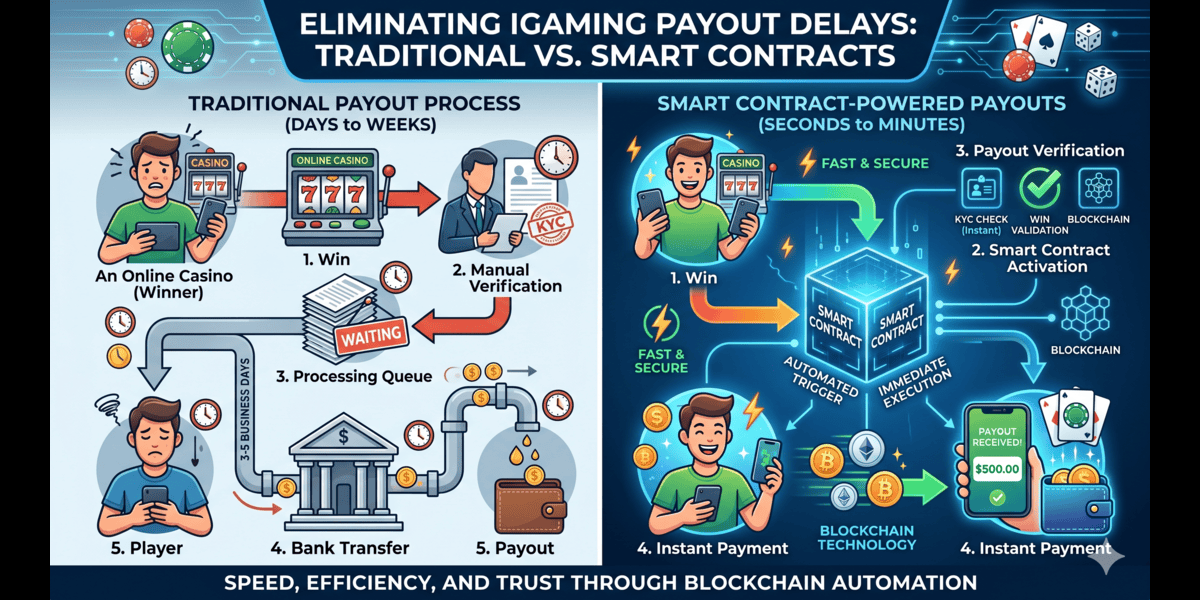
Long waits are no mystery; they result from slow banking rails, manual checks, and risk concerns at traditional online casinos that store player funds all together. staff must carefully consider wager history, bonus rules and fraud alerts before sending out payouts. Each step in this process resides in its own program so data has to move between screens; if an applicant requests money on a weekend or holiday it may cause delays until offices reopen again. Banking institutions use batch transfers that move only during business hours after receiving approval for transactions, currency conversions and region-specific rules add more red tape, typos in account numbers can put payments back at square one, leaving operators searching for more efficient systems while satisfying regulators; lost goodwill being an often unnoticed cost of doing business.
How Smart Contracts Work in iGaming
Smart contracts reside on blockchain, an immutable public ledger which cannot be changed secretly. In iGaming, smart contracts can be programmed to monitor for two facts: an official game result and the winning address. Once both facts reach the chain, the code activates itself and sends the prize straight to a player’s digital wallet – no manager or clerk can stop it or misplace a spreadsheet; since all can see what has occurred and who won, disputes decrease significantly. Random-number generators can also feed directly into contracts, creating an instantaneous link between play and pay. Blockchain networks settle transactions every few seconds throughout the day or night compared to bank transfers which process them all at once; fees remain low because there’s no middle bank taking its cut of fees from each payment hash recorded by smart contracts, providing regulators a transparent audit trail with minimal paperwork from casino staff and providing players with easy tracking on an interactive block explorer on their phones.
Real-World Benefits for Players and Operators
Shorter payout lines create happier customers and stronger retention rates. When players share with friends the news that winnings were received within minutes, word quickly spreads. Operators save staff hours with automated checks replacing manual reviews, freeing up more labor time for customer support or new game launches. Chargeback risk decreases since blockchain transfers are irreversible; thus preventing fraudsters from reverse payments after cashing out their chips. Compliance teams also stand to gain from on-chain logs: these enable compliance teams to demonstrate to regulators that funds were handled appropriately and anti-money-laundering rules were observed, while holding less money in transit improves cash flow and allows sites to invest faster in marketing or jackpots. Suppliers who develop games on-chain enjoy faster royalty splits as well as affiliates who benefit from smart contract-enforced commission plans that pay partners immediately when an eligible bet settles – creating an ecosystem in which trust costs less while speed pays dividends.
Future Outlook and Final Thoughts
Smart contracts may currently address delays, but their next wave could solve other iGaming woes as well. Developers are creating oracles to connect real-world sports scores, esports data feeds and weather feeds directly into blockchain-based transactions. Layer-two networks promise to reduce fees to fractions of a cent while speeding settlement times up to near instantaneousness, enabling payouts for bets on basketball and horse racing to automatically initiate as soon as the referee blows the final whistle. Community jackpots that pool tokens from multiple titles may also automatically distribute themselves instantly, while regulators are beginning to recognize its potential. Multiple licensing bodies have published guidance addressing how blockchain records may fulfill reporting duties – signalling wider acceptance. Players will experience this as an effortless transition: just press withdraw, count to three, and spend their winnings. For operators, however, the competitive bar will increase – websites using manual methods could look outdated in this fiber age; in short, automatic, transparent and affordable payouts are set to become the industry standard.
Disclaimer: The information provided is not trading advice, Bitcoinworld.co.in holds no liability for any investments made based on the information provided on this page. We strongly recommend independent research and/or consultation with a qualified professional before making any investment decisions.