

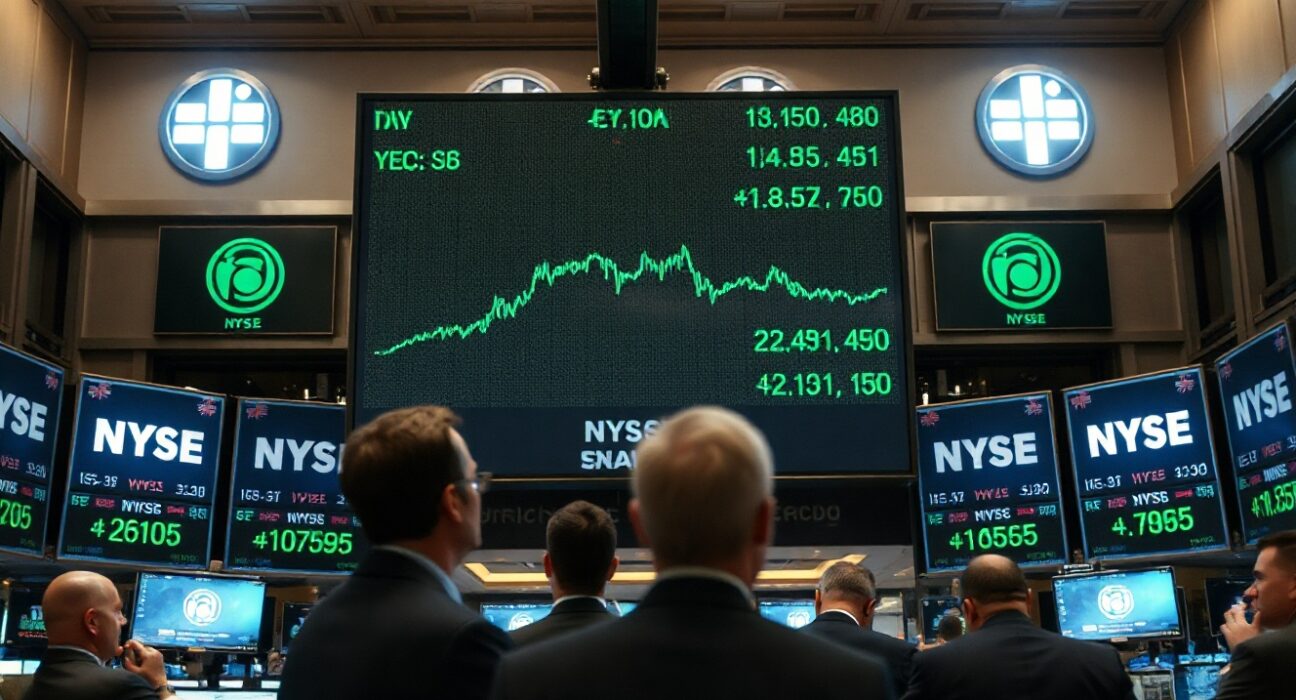
The Dow Jones Industrial Average posted a green session on Wednesday, climbing 0.6% to close above 39,000. But beneath the surface, the advance lacked the broad-based strength that typically signals a healthy, sustainable rally. Instead, gains were concentrated in defensive sectors, raising questions about the market’s true conviction.
Defensive Leadership Signals Caution
Leading the Dow’s advance were utilities and consumer staples — sectors investors typically turn to when they expect economic slowdown or uncertainty. The Dow Jones Utility Average rose 1.4%, while Procter & Gamble and Coca-Cola added over 1% each. In contrast, cyclical sectors like industrials and technology lagged, with only a handful of components pushing the index higher. This pattern suggests that the rally is more about hedging than optimism.
Rate-Cut Hopes vs. Economic Reality
Market participants are increasingly pricing in the likelihood of Federal Reserve rate cuts later this year, following weaker-than-expected consumer confidence data and signs of cooling in the labor market. The CME FedWatch Tool now shows a 70% probability of a cut by September. However, lower rates are typically a response to economic weakness, not a vote of confidence. If the Fed cuts because growth is faltering, equities may not benefit as much as hoped.
What This Means for Investors
The divergence between the Dow’s headline number and the underlying composition of the rally is a classic cautionary signal. When defensive stocks lead, it often precedes broader market pullbacks. Investors should look beyond the index level and examine which sectors are driving gains. A narrow rally built on rate-cut speculation may prove fragile if economic data deteriorates further.
Conclusion
The Dow Jones Industrial Average is green, but for reasons that warrant skepticism. Defensive sector leadership and reliance on Fed policy expectations rather than economic fundamentals create a fragile foundation. For now, the market is pricing in a soft landing, but the composition of the rally suggests that not all green is equal.
FAQs
Q1: Why is the Dow rising if the economy is slowing?
Investors are rotating into defensive stocks and betting on Federal Reserve rate cuts, which can temporarily lift indices even when economic data weakens.
Q2: What does defensive sector leadership indicate?
It typically signals that investors are risk-averse and expecting slower growth or uncertainty, rather than genuine economic expansion.
Q3: Could the Dow rally continue?
It can, but a rally driven by rate-cut hopes rather than earnings growth or economic strength is more vulnerable to reversals if the Fed disappoints or data worsens.
Disclaimer: The information provided is not trading advice, Bitcoinworld.co.in holds no liability for any investments made based on the information provided on this page. We strongly recommend independent research and/or consultation with a qualified professional before making any investment decisions.
