

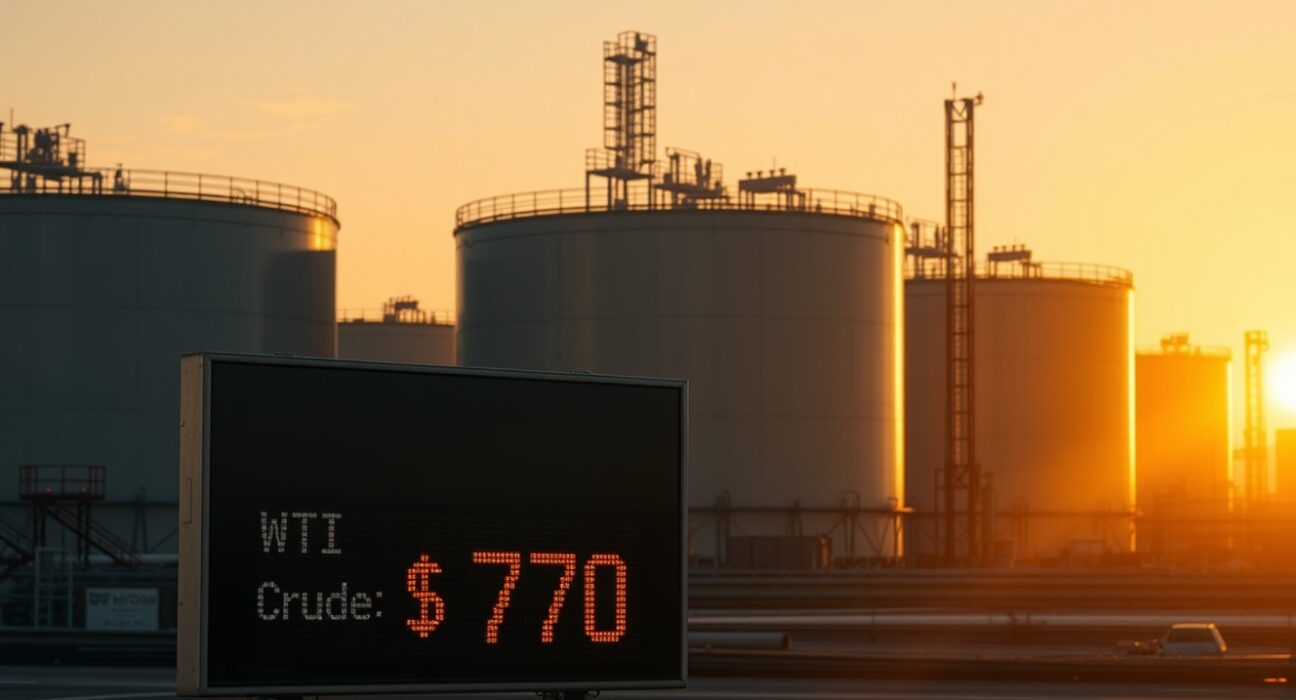
West Texas Intermediate (WTI) crude oil futures declined to approximately $70 per barrel on Wednesday, as traders grappled with conflicting signals regarding the status of nuclear negotiations between the United States and Iran. The price movement reflects growing uncertainty over whether a potential diplomatic breakthrough could unlock additional Iranian crude supplies to global markets.
Market Reaction to Mixed Diplomatic Signals
Oil prices have been sensitive to developments in US-Iran talks, which resumed in recent weeks after a prolonged stalemate. On one hand, reports emerged suggesting progress toward a temporary agreement that could ease sanctions on Iranian oil exports. On the other hand, US officials issued statements downplaying the likelihood of a near-term deal, creating confusion among traders.
WTI crude for July delivery settled at $70.12 per barrel, down $1.45, or approximately 2%, from the previous session. Brent crude, the international benchmark, also fell, trading near $74.50 per barrel. The decline erased gains from earlier in the week when optimism about a potential deal had briefly pushed prices higher.
Supply Implications and Market Context
Iran currently produces around 2.5 million barrels per day (bpd) of crude oil, but exports have been severely constrained by US sanctions. Analysts estimate that a full lifting of sanctions could add 500,000 to 1 million bpd to global supply within months, a volume that could significantly weigh on prices amid already abundant non-OPEC production.
The conflicting signals come at a time when oil markets are already navigating demand concerns from slowing economic growth in China and Europe, as well as uncertainty over OPEC+ production quotas. The International Energy Agency (IEA) recently warned that global oil supply could exceed demand by the second half of 2025 if additional barrels enter the market.
Why This Matters for Energy Markets
The potential return of Iranian oil exports represents one of the most significant supply-side variables for crude markets this year. For consumers, lower oil prices could translate into reduced gasoline and heating costs, providing some relief from persistent inflation. For producers, particularly within OPEC+, additional Iranian supply could complicate efforts to maintain price stability through coordinated production cuts.
Traders are now closely watching for any official confirmation or denial of progress in the talks. The lack of clarity itself has become a source of volatility, with intraday price swings of $2 to $3 becoming common in recent sessions.
Conclusion
WTI crude oil’s slide toward $70 per barrel underscores the market’s sensitivity to geopolitical developments, particularly those involving major producers like Iran. Until clearer signals emerge from Washington and Tehran, oil prices are likely to remain volatile, with the $68 to $75 range acting as a key trading band. Investors and energy consumers alike should prepare for continued uncertainty as diplomatic channels remain active but unpredictable.
FAQs
Q1: Why did WTI crude oil fall to near $70?
The decline was driven by conflicting reports about the status of US-Iran nuclear talks, creating uncertainty over whether Iranian oil exports could return to global markets and increase supply.
Q2: How much oil could Iran add to global markets if sanctions are lifted?
Analysts estimate that a full lifting of sanctions could add 500,000 to 1 million barrels per day within months, which would significantly increase global supply and put downward pressure on prices.
Q3: What is the key price level to watch for WTI crude?
Traders are watching the $68 to $75 range as a key trading band. A sustained break below $68 could signal further downside, while a move above $75 would suggest the market is pricing in a failure to reach a deal.
Disclaimer: The information provided is not trading advice, Bitcoinworld.co.in holds no liability for any investments made based on the information provided on this page. We strongly recommend independent research and/or consultation with a qualified professional before making any investment decisions.
