

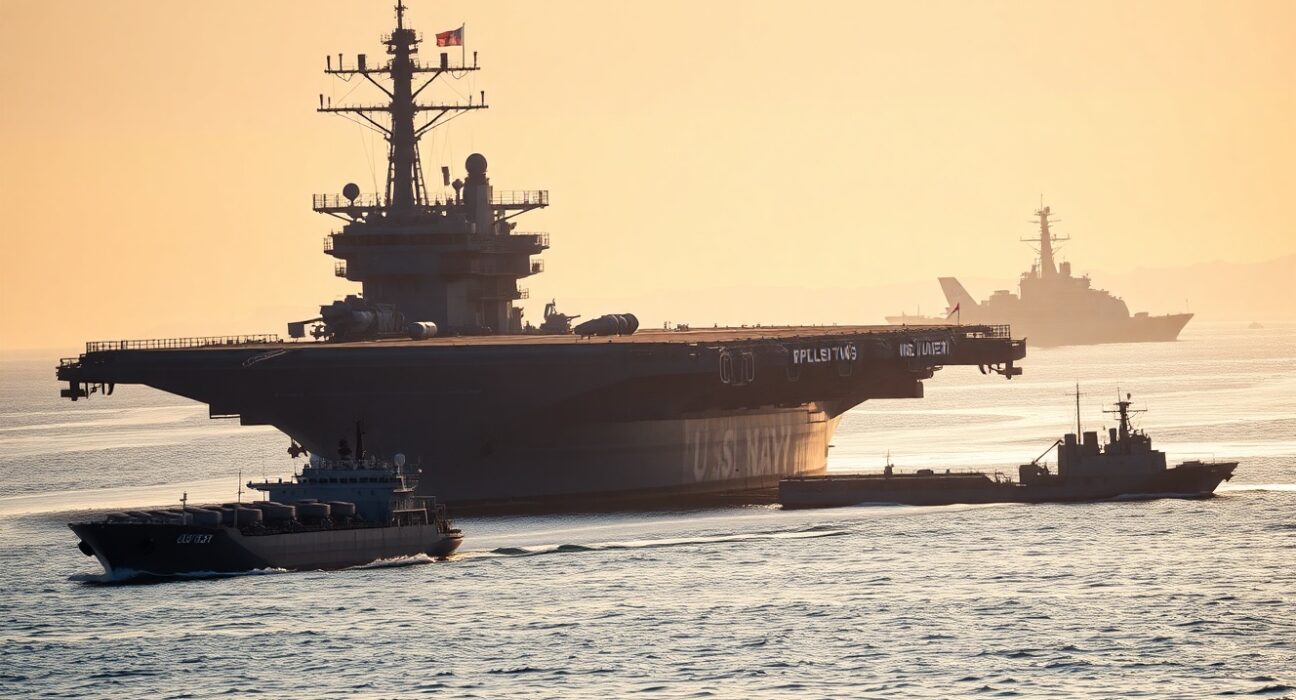
In a significant escalation of rhetoric regarding one of the world’s most critical maritime chokepoints, President Donald Trump has declared the United States the “Guardian of the Hormuz Strait.” The statement, delivered without a formal policy document or immediate military deployment, has sent ripples through global energy markets and diplomatic circles, raising questions about the future of freedom of navigation in the Persian Gulf.
What the Declaration Means
The phrase “Guardian of the Hormuz Strait” is not an official military designation but a political declaration. It signals that the United States intends to take a more assertive, unilateral role in ensuring the safe passage of oil tankers and commercial vessels through the narrow waterway, which connects the Persian Gulf to the Arabian Sea. Approximately 20% of the world’s oil passes through the Strait of Hormuz, making it a vital artery for global energy supply.
This declaration comes amid heightened tensions with Iran, which has historically threatened to block the strait in response to economic sanctions or military pressure. The Trump administration’s move appears designed to preempt any such action and to reassure allies and markets of the US commitment to regional stability.
Strategic and Economic Implications
The immediate impact was felt in oil markets, where benchmark Brent crude prices saw a modest uptick following the announcement. Analysts caution that while the declaration itself does not change the military balance in the region, it could alter the risk calculus for shipping insurers and oil traders.
“This is a clear message to both Tehran and global markets,” said Dr. Elena Vasquez, a senior fellow at the Center for Strategic and International Studies. “The US is drawing a line in the water. The question now is whether this will deter Iranian provocations or escalate them.”
The declaration also places US allies in a difficult position. European nations and Asian importers, heavily reliant on Gulf oil, must now decide whether to support the US stance or seek alternative diplomatic channels to de-escalate tensions. Japan and South Korea, two of the largest importers of Middle Eastern crude, have yet to issue formal responses.
Historical Context
The Strait of Hormuz has been a flashpoint for decades. During the Iran-Iraq War in the 1980s, both sides attacked oil tankers in what became known as the “Tanker War.” In 2019, a series of attacks on tankers near the strait were attributed to Iran, leading to a temporary spike in oil prices and the deployment of additional US naval assets.
The Trump administration’s “maximum pressure” campaign against Iran, which includes crippling economic sanctions, has already reduced Iran’s oil exports to near zero. Tehran has repeatedly warned that it could retaliate by disrupting shipping through the strait, a threat it has made credible through past actions.
What Happens Next
No additional US naval deployments have been announced, but the Pentagon is reportedly reviewing contingency plans for escorting commercial vessels through the strait. The US Navy’s Fifth Fleet, based in Bahrain, already maintains a significant presence in the region.
International maritime law recognizes the right of innocent passage through international straits. However, the US declaration could be seen as challenging that framework by asserting unilateral guardianship. Legal experts are divided on whether such a declaration has any standing under the United Nations Convention on the Law of the Sea, which the US has signed but not ratified.
Conclusion
President Trump’s declaration that the US is the “Guardian of the Hormuz Strait” marks a notable rhetorical shift in American foreign policy toward the Persian Gulf. While it does not immediately alter the military or legal landscape, it sets the stage for potential confrontation or deterrence. For global energy markets and the nations that depend on Gulf oil, the statement adds a new layer of uncertainty to an already volatile region. The coming weeks will reveal whether this is the beginning of a new strategic doctrine or a temporary political maneuver.
FAQs
Q1: What is the Strait of Hormuz and why is it important?
The Strait of Hormuz is a narrow waterway between Iran and the Arabian Peninsula. It is the world’s most important oil chokepoint, with about 20% of global petroleum consumption passing through it daily.
Q2: Does the US have the legal right to declare itself guardian of the strait?
International law recognizes the right of innocent passage through international straits. The US declaration is a political statement, not a legal one. Its enforceability is uncertain and would likely be contested by Iran and other nations.
Q3: How could this affect oil prices?
Any perceived threat to shipping through the Strait of Hormuz typically leads to higher oil prices due to supply disruption fears. While the declaration alone caused a modest increase, a real confrontation could push prices significantly higher.
Disclaimer: The information provided is not trading advice, Bitcoinworld.co.in holds no liability for any investments made based on the information provided on this page. We strongly recommend independent research and/or consultation with a qualified professional before making any investment decisions.
