

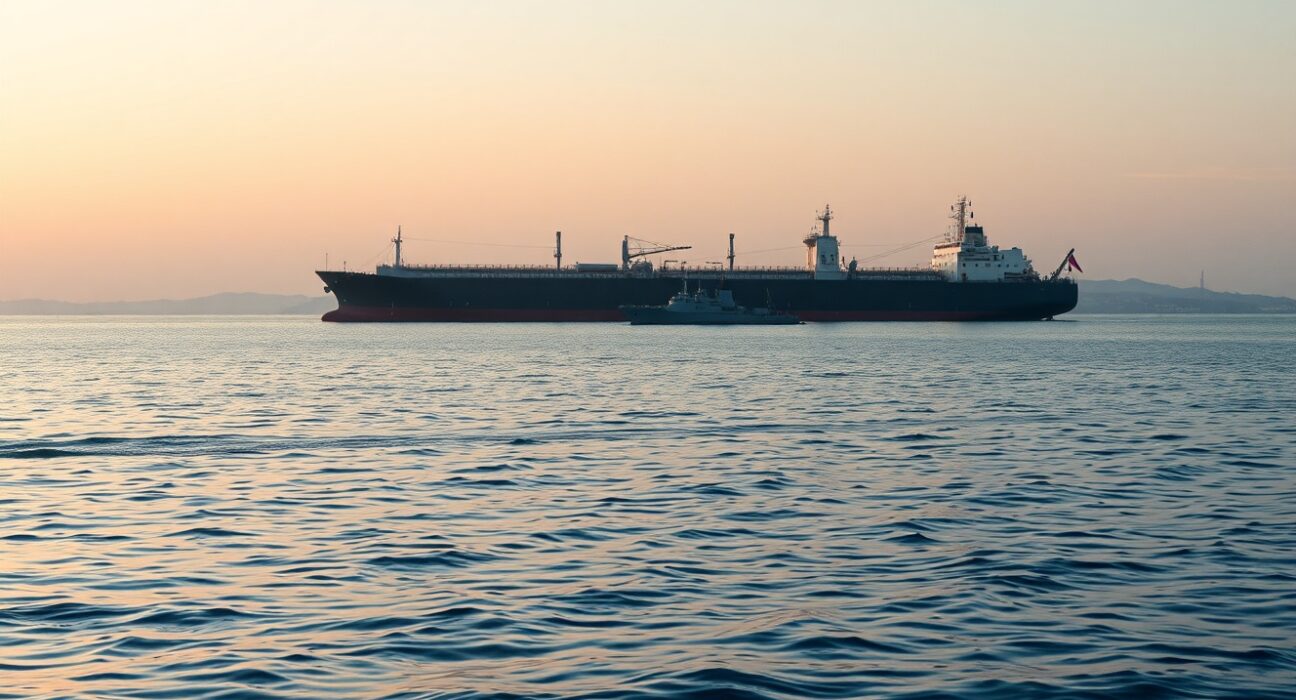
US President Donald Trump has declared that the Strait of Hormuz, a critical maritime chokepoint for global oil shipments, will remain open to all international shipping except for vessels flagged to or sanctioned by Iran. The announcement, made without a formal executive order or joint statement from allied navies, signals a significant escalation in Washington’s pressure campaign against Tehran and raises immediate questions about enforcement and the risk of confrontation in one of the world’s most strategically vital waterways.
Background and Context
The Strait of Hormuz, connecting the Persian Gulf to the Gulf of Oman and the open ocean, handles roughly 20% of the world’s petroleum transit, according to the US Energy Information Administration. Iran has historically threatened to close or disrupt the strait in response to sanctions or military pressure. President Trump’s statement, which has not yet been formalized through diplomatic channels or international maritime law, appears to be an attempt to extend the US maximum-pressure campaign into the maritime domain.
Implications for Global Shipping and Oil Markets
The immediate impact of the announcement is likely to be felt in oil markets, where traders will price in heightened risk premiums for crude and liquefied natural gas transiting the region. Shipping insurers may raise premiums for vessels operating near Iranian waters, and some shipping lines could reroute cargoes around the Cape of Good Hope, increasing transit times and costs. Analysts note that the US Navy’s Fifth Fleet, based in Bahrain, has the capability to enforce such a policy, but doing so would risk direct engagement with Iranian naval forces.
Legal and Diplomatic Dimensions
International law, particularly the United Nations Convention on the Law of the Sea, guarantees freedom of navigation through straits used for international navigation. A unilateral ban on Iranian shipping could be challenged at the International Court of Justice. US allies in Europe and Asia, many of which depend on stable oil flows from the Gulf, have not yet publicly endorsed the move. The European Union and Japan have previously urged restraint in the region.
Conclusion
President Trump’s declaration that the Strait of Hormuz is open to all shipping except Iran represents a sharp escalation in US-Iran tensions with immediate implications for global energy markets, maritime security, and international law. The lack of formal diplomatic or legal backing for the policy introduces uncertainty, and the risk of miscalculation or confrontation remains high. Market participants and allied governments will watch closely for further official statements or naval deployments.
FAQs
Q1: What did President Trump say about the Strait of Hormuz?
A1: President Trump stated that the Strait of Hormuz will remain open to all international shipping except vessels flagged to or sanctioned by Iran.
Q2: Why is the Strait of Hormuz important?
A2: The Strait of Hormuz is a narrow waterway through which about 20% of the world’s oil passes, making it a critical chokepoint for global energy supplies.
Q3: Can the US legally ban Iranian shipping from the Strait?
A3: International law guarantees freedom of navigation through international straits. A unilateral ban could face legal challenges under the UN Convention on the Law of the Sea, though the US has not ratified that treaty.
Disclaimer: The information provided is not trading advice, Bitcoinworld.co.in holds no liability for any investments made based on the information provided on this page. We strongly recommend independent research and/or consultation with a qualified professional before making any investment decisions.
