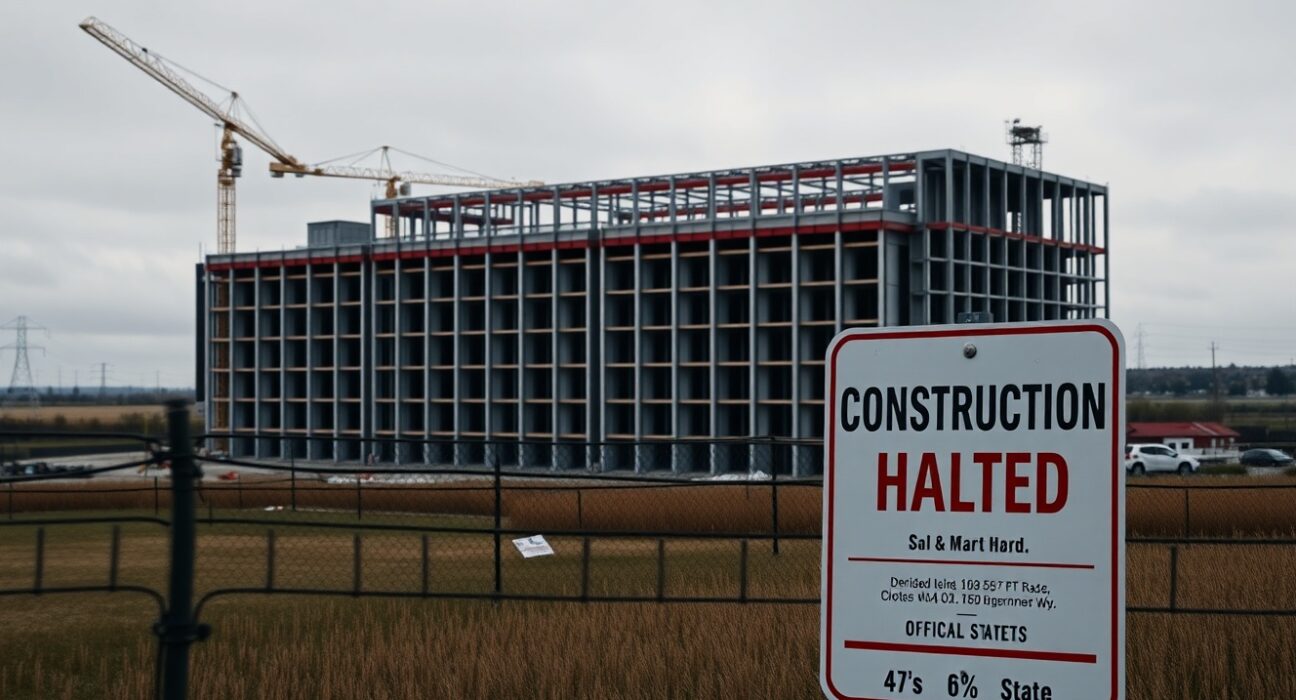
New York State has become the first in the nation to pause the construction of new data centers, after Governor Kathy Hochul signed an executive order today temporarily barring state agencies from approving permits for projects of 50 megawatts or larger. The moratorium, which takes effect immediately, will affect more than a dozen planned facilities and remains in place until the state completes an environmental review process expected to take roughly one year.
Why New York paused data center development
The executive order, announced at a press conference in Brooklyn, responds to mounting concerns over the strain that large-scale data centers place on local infrastructure. Hochul cited rising electricity costs, water consumption, and noise pollution as key factors. “Progress shouldn’t arrive with a higher utility bill, deleted water supply, or noise pollution,” she said. The order applies to any data center with a capacity of 50 megawatts or more, effectively freezing permits for facilities that have not yet been finalized by the state’s Department of Environmental Conservation.
Public sentiment has shifted sharply against data center development in recent months. A Pew Research report found that only 10% of Americans are more excited than concerned about AI use in daily life, and just 23% believe the technology will positively affect how people do their jobs. Two-thirds of respondents in a separate poll said they worry data centers will drive up electricity prices. Another survey found that residents would prefer an Amazon warehouse in their neighborhood over a data center.
Broader legislative push and federal tensions
Hochul’s executive order arrives as more stringent measures move through the New York legislature. Lawmakers advanced a bill last month that would pause construction of data centers larger than 20 megawatts for one year, while another bill still in committee proposes a three-year moratorium. The state is also considering requiring data centers to pay into a fund that supports the electrical grid, and Hochul has indicated she wants to prevent hyperscale data centers from receiving tax benefits.
The order could set up a clash with the Trump administration, which has supported data center development. Last month, the Federal Energy Regulatory Commission — led by a Trump appointee — directed grid operators to create fast lanes for data center interconnections. At the federal level, Senator Bernie Sanders has proposed a nationwide moratorium, though it has gained little traction. In Maine, Governor Janet Mills vetoed a similar bill that would have paused construction until November 2027.
What the moratorium means for AI and energy demand
The scale of data center construction has grown dramatically as AI computing demands surge. The average data center built in recent years has been under 100 megawatts, but projects now in development are expected to be much larger. According to BloombergNEF, nearly a quarter of new data centers built through 2030 will exceed 500 megawatts, driven by increasing AI investment. New York’s moratorium effectively halts projects that would have consumed significant portions of the state’s energy capacity.
Just a few years ago, states competed to attract data centers as economic development projects. But the rapid expansion — and the associated strain on electrical grids, water supplies, and farmland — has soured public opinion. In December, more than 230 organizations called for a nationwide pause on new data centers, reflecting growing grassroots opposition.
Conclusion
New York’s executive order marks a significant shift in the regulatory landscape for data centers, directly linking AI infrastructure development to environmental and community impact. The moratorium will remain in effect until the state completes a formal environmental review process, which Hochul expects to take about a year. The decision positions New York as a test case for how states can balance AI-driven economic growth with resource sustainability and public consent.
FAQs
Q1: What does New York’s executive order on data centers actually do?
The order temporarily bars state agencies from approving permits for new data center projects of 50 megawatts or larger, halting construction until an environmental review process is completed.
Q2: How long will the moratorium last?
Governor Hochul expects the environmental review to take about one year. The moratorium will be lifted once the review is finalized.
Q3: Why are data centers facing backlash now?
Large data centers strain local electrical grids, consume significant water for cooling, and generate noise pollution. Recent polls show widespread public concern over rising electricity costs and the environmental impact of AI-driven infrastructure.
Disclaimer: The information provided is not trading advice, Bitcoinworld.co.in holds no liability for any investments made based on the information provided on this page. We strongly recommend independent research and/or consultation with a qualified professional before making any investment decisions.