

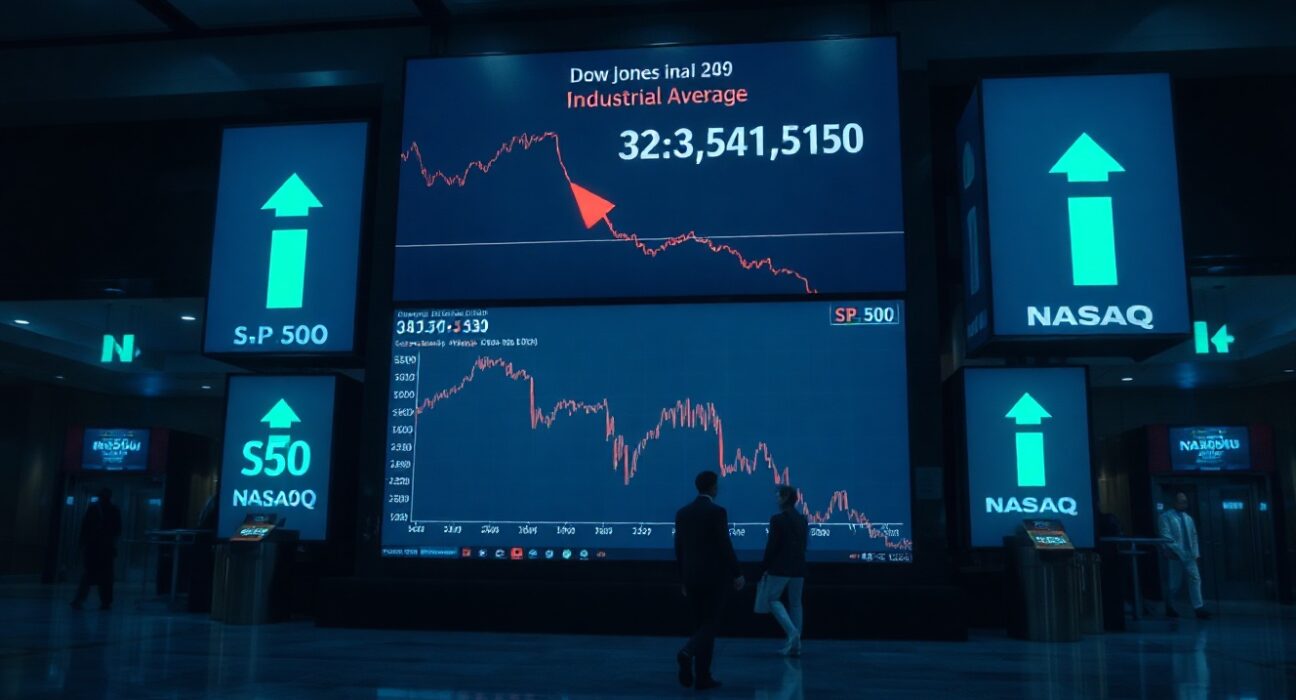
The Dow Jones Industrial Average is notably underperforming as other major U.S. stock indices rally on encouraging disinflation data. While the S&P 500 and Nasdaq have climbed on hopes that the Federal Reserve’s interest rate hiking cycle is nearing its end, the Dow has remained largely flat, raising questions about the breadth of the current market rally.
What’s Driving the Divergence?
The divergence stems from the Dow’s composition. The index is heavily weighted toward industrial, financial, and healthcare companies—sectors that are more sensitive to a slowing economy. In contrast, the S&P 500 and Nasdaq are dominated by technology and growth stocks, which have benefited most from falling bond yields and expectations of lower interest rates. As of the latest trading session, the Dow has gained less than 1% over the past month, while the S&P 500 has risen over 4% and the Nasdaq has surged more than 6%.
Disinflation Data and Market Reaction
Recent reports showing a slowdown in consumer price inflation have fueled optimism that the Fed may pause or reverse its rate hikes sooner than previously anticipated. This has been a tailwind for growth-oriented sectors. However, the Dow’s more cyclical components are facing headwinds from lingering concerns about corporate earnings and global demand. For instance, shares of major industrial firms like Caterpillar and Boeing have struggled, offsetting gains in other Dow components.
What This Means for Investors
The Dow’s lagging performance serves as a reminder that not all stocks benefit equally from disinflation. Investors who have focused solely on the headline indices may be missing a more nuanced picture. The divergence suggests that the market rally is narrow and driven by expectations of lower rates, rather than broad-based economic strength. This could signal caution for those expecting a sustained bull market.
Conclusion
The Dow Jones Industrial Average’s underperformance amid the disinflation rally highlights a key market divergence. While technology and growth stocks have surged, blue-chip industrials and financials remain under pressure. For investors, this underscores the importance of looking beyond headline index performance and understanding sector-specific dynamics.
FAQs
Q1: Why is the Dow Jones underperforming compared to the S&P 500 and Nasdaq?
The Dow is heavily weighted toward industrial, financial, and healthcare companies, which are more sensitive to economic slowdown fears. In contrast, the S&P 500 and Nasdaq have more exposure to technology and growth stocks that benefit from falling interest rate expectations.
Q2: What is disinflation and how does it affect stock markets?
Disinflation refers to a slowdown in the rate of inflation. It can boost stock markets by raising expectations that central banks will stop raising interest rates, which lowers borrowing costs and supports higher valuations for growth stocks.
Q3: Should investors be concerned about the Dow’s lagging performance?
The divergence suggests the current rally is narrow and driven by rate-cut hopes rather than broad economic strength. Investors should consider sector diversification and be cautious about assuming the rally will continue across all stocks.
Disclaimer: The information provided is not trading advice, Bitcoinworld.co.in holds no liability for any investments made based on the information provided on this page. We strongly recommend independent research and/or consultation with a qualified professional before making any investment decisions.
