

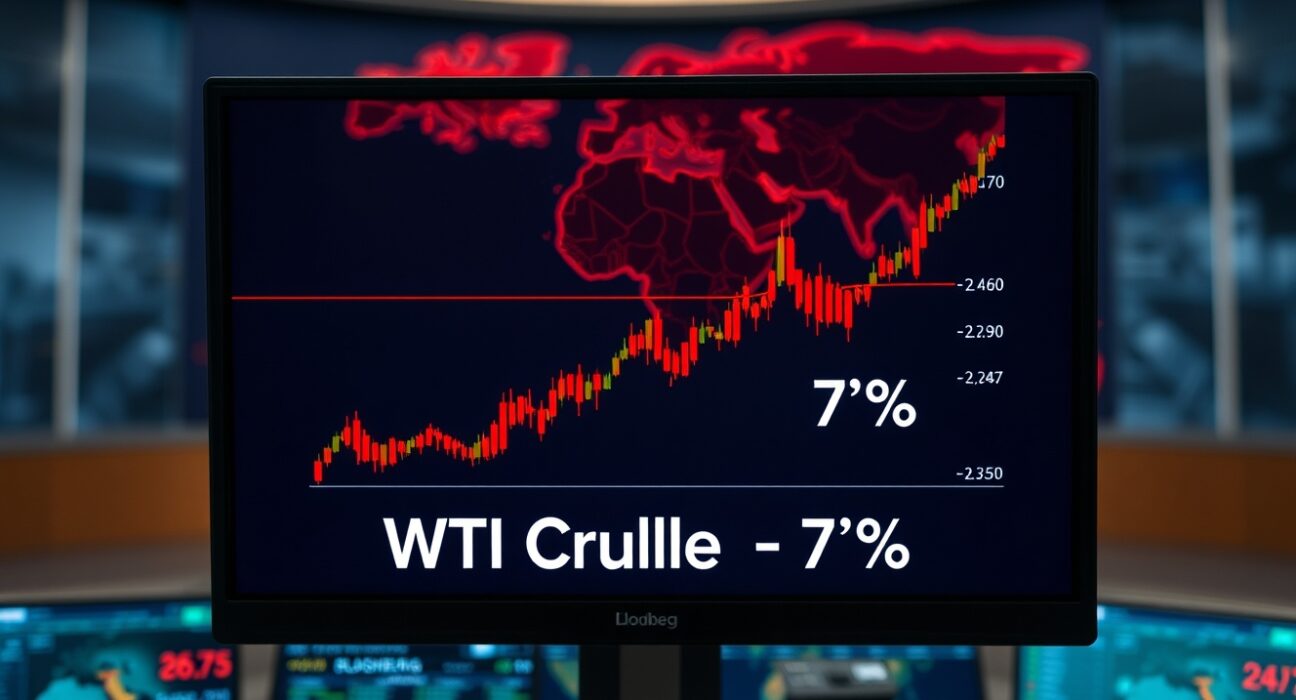
West Texas Intermediate (WTI) crude oil prices surged by approximately 7% in trading on [Date of event, if known, otherwise ‘this week’], as an escalation of the conflict in the Middle East heightened fears of significant supply disruptions from one of the world’s most critical oil-producing regions. The sharp rally marked one of the largest single-day percentage gains for the benchmark in recent months, driven by a combination of direct military action, threats to key transit chokepoints, and broader market anxiety over the potential for a wider regional war.
Geopolitical Catalyst Behind the Rally
The immediate trigger for the price spike was a series of intensifying military exchanges between Israel and Iran-backed forces, which included reported strikes near major energy infrastructure. While no direct damage to oil production or export facilities has been confirmed as of the latest reports, the market is pricing in a significant risk premium. Traders are particularly focused on the Strait of Hormuz, a narrow waterway through which roughly 20% of the world’s petroleum passes. Any disruption to this chokepoint would have an immediate and severe impact on global crude supply.
Market Reaction and Trading Volume
The 7% move in WTI futures was accompanied by a sharp spike in trading volume, indicating broad-based institutional and speculative buying. Analysts noted that the move was not solely driven by spot market fears but also by a wave of short-covering as traders who had bet on lower prices were forced to close positions. The rally pushed WTI above the $[Insert price level if known, e.g., $85] per barrel mark, a key technical resistance level. Brent crude, the international benchmark, also rose sharply, reflecting the global nature of the supply risk.
Impact on Consumers and the Broader Economy
For consumers, a sustained rally in oil prices translates directly to higher costs at the pump and increased inflationary pressure. The timing is particularly sensitive, as many central banks, including the U.S. Federal Reserve, are navigating the final stages of their inflation-fighting campaigns. A renewed spike in energy costs could complicate monetary policy decisions and weigh on economic growth forecasts. Airlines, shipping companies, and other fuel-intensive industries are especially vulnerable to the volatility.
Conclusion
The 7% surge in WTI oil prices underscores the extreme sensitivity of global energy markets to geopolitical instability in the Middle East. While the full extent of the supply risk remains uncertain, the market’s reaction reflects a genuine fear of a prolonged and disruptive conflict. Traders, policymakers, and consumers alike will be closely monitoring diplomatic efforts and any further military developments in the coming days, as the direction of oil prices will have significant implications for the global economy.
FAQs
Q1: Why did WTI oil prices surge 7%?
A1: The surge was primarily driven by an escalation of the Middle East conflict, which raised fears of supply disruptions from a major oil-producing region, particularly threats to the Strait of Hormuz.
Q2: How does the Middle East war affect global oil supply?
A2: The Middle East accounts for a significant portion of global oil production and exports. Military conflict in the region can disrupt production, damage infrastructure, or block critical shipping routes like the Strait of Hormuz, leading to supply shortages and price spikes.
Q3: What does this mean for gasoline prices?
A3: Crude oil is the primary input for gasoline. A sustained increase in WTI prices typically leads to higher gasoline prices at the pump, though the pass-through can take days or weeks depending on local market conditions and refining capacity.
Disclaimer: The information provided is not trading advice, Bitcoinworld.co.in holds no liability for any investments made based on the information provided on this page. We strongly recommend independent research and/or consultation with a qualified professional before making any investment decisions.
