

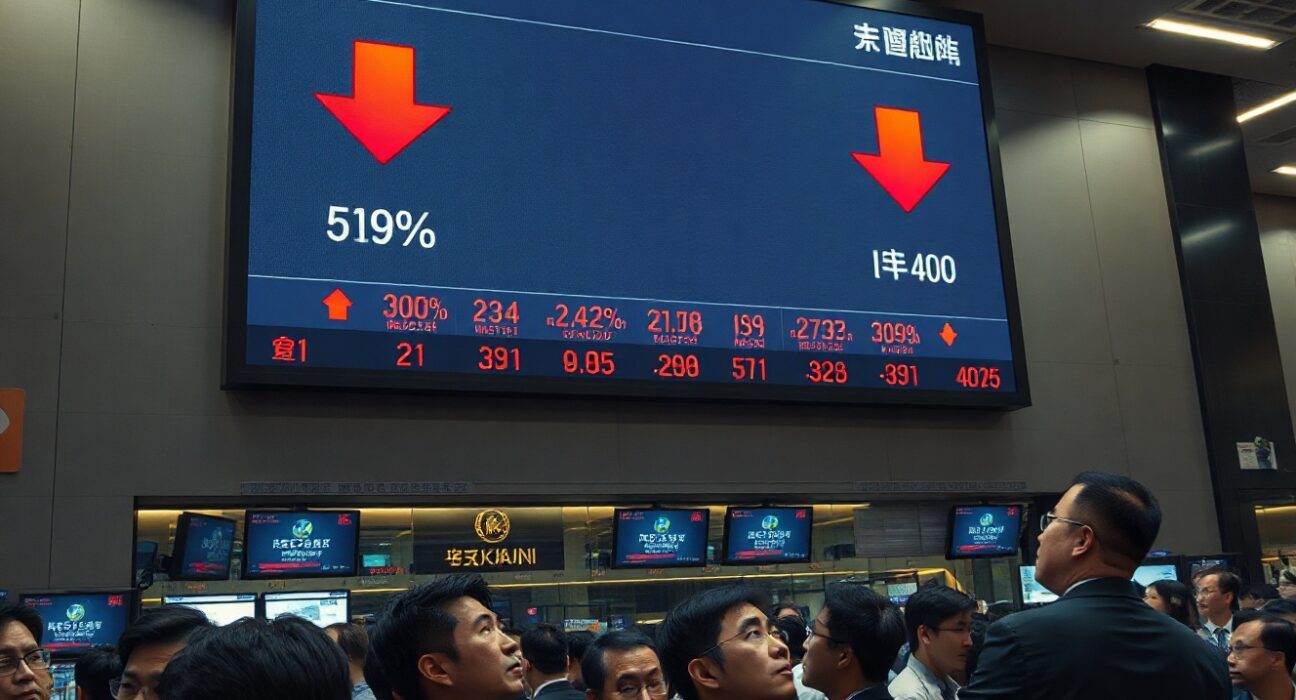
The KOSPI index experienced a sharp and sudden crash in July 2025, wiping out significant market value in a matter of days and catching many investors off guard after a period of sustained optimism. The selloff, which saw the benchmark index drop by more than 8% from its recent highs, underscored how quickly market sentiment can shift when euphoria meets reality. As of late July 2025, the KOSPI had fallen to around 2,850 points, a level not seen since early in the year, triggering concerns about broader economic stability and prompting regulatory scrutiny.
What triggered the July KOSPI crash?
The immediate trigger was a combination of global and domestic factors that converged in late July. Globally, a surprise interest rate hike by the U.S. Federal Reserve and weaker-than-expected earnings from major tech companies dampened risk appetite across Asian markets. Domestically, South Korea’s export growth slowed more than forecast, and political uncertainty around pending legislation on corporate governance reforms added to investor jitters. The KOSPI, which had rallied nearly 20% in the first half of 2025 on the back of semiconductor demand and a weak won, became vulnerable to profit-taking as these headwinds intensified.
Market analysts noted that the crash was not a single-day event but a multi-day slide, with the index falling over five consecutive sessions. The selloff was exacerbated by algorithmic trading and margin calls, as leveraged retail investors, who had piled into the market during the euphoric rally, were forced to liquidate positions. According to the Korea Exchange, margin debt had reached a record high of over 100 trillion won just weeks before the crash, amplifying the downward spiral.
How did regulators and policymakers respond?
In response to the volatility, South Korea’s Financial Services Commission (FSC) announced emergency monitoring measures and hinted at potential circuit breaker adjustments. The FSC also urged listed companies to enhance share buybacks and dividend payouts to stabilize prices, echoing similar measures used during previous market stress. The Bank of Korea held an unscheduled meeting to assess financial stability, but kept its benchmark interest rate unchanged, signaling a cautious approach to avoid further market disruption.
These responses, while aimed at restoring confidence, also highlighted the structural vulnerabilities in the market. The heavy reliance on retail investors, who account for a significant portion of trading volume, makes the KOSPI particularly susceptible to sentiment swings. Regulatory measures, therefore, are often a double-edged sword: they can provide short-term support but may also create moral hazard if investors believe the government will always intervene.
Why does this crash matter for everyday investors?
The July crash serves as a stark reminder that markets do not move in a straight line. For retail investors, many of whom entered the market during the post-pandemic rally, the sudden reversal was a harsh lesson in risk management. The crash also underscored the importance of diversification and the dangers of chasing momentum without considering valuation. As of early August 2025, the KOSPI had partially recovered, but many individual stocks remained below their pre-crash levels, leaving those who bought at the peak with significant losses.
Beyond individual portfolios, the crash has broader implications for South Korea’s economy. A sustained decline in equity prices could dampen consumer confidence and corporate investment, potentially slowing GDP growth. Moreover, the episode has prompted calls for stronger investor education and better disclosure practices, as well as a review of the margin lending rules that amplified the selloff.
Conclusion
The July KOSPI crash was a textbook example of how market euphoria can be followed by a sharp correction when fundamentals fail to justify valuations. While the immediate panic has subsided, the lessons for investors and regulators remain pertinent. For investors, the event reinforces the need for disciplined, long-term strategies rather than speculative trading. For policymakers, it highlights the importance of building a more resilient market infrastructure that can withstand sudden shifts in sentiment. As the KOSPI navigates the aftermath, the focus will be on whether the market can regain its footing without another bout of volatility.
FAQs
Q1: What caused the July 2025 KOSPI crash?
The crash was triggered by a mix of global factors, including a U.S. Fed rate hike and weak tech earnings, and domestic issues like slowing exports and political uncertainty. These combined to burst the market’s overvaluation bubble, leading to a sharp selloff.
Q2: How much did the KOSPI drop in July 2025?
As of late July 2025, the KOSPI fell by more than 8% from its recent high, dropping to around 2,850 points. The decline occurred over five consecutive sessions, with significant daily losses.
Q3: What can investors learn from the July KOSPI crash?
The key lesson is the importance of risk management and not getting caught up in market euphoria. Investors should diversify their portfolios, avoid excessive leverage, and focus on long-term fundamentals rather than short-term momentum.
Disclaimer: The information provided is not trading advice, Bitcoinworld.co.in holds no liability for any investments made based on the information provided on this page. We strongly recommend independent research and/or consultation with a qualified professional before making any investment decisions.
