

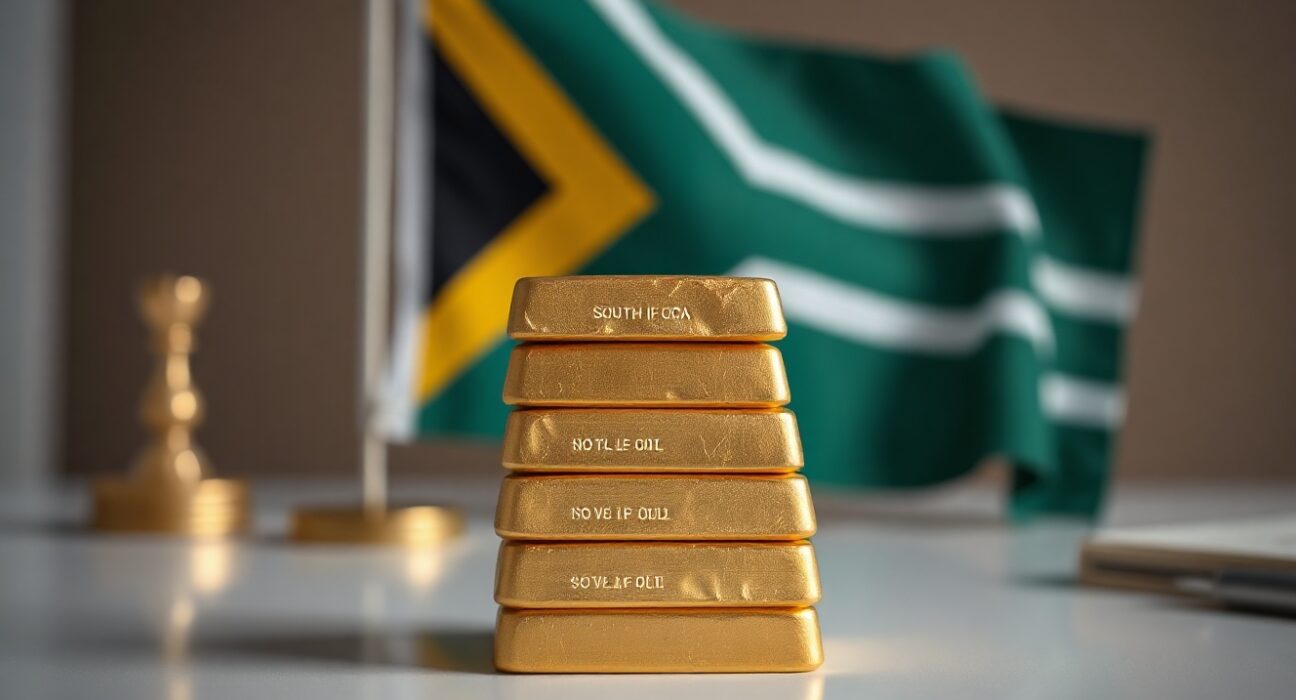
South Africa’s gross gold and foreign exchange reserves declined to $73.451 billion in July, down from $74.115 billion in the previous month, according to the latest data from the South African Reserve Bank (SARB). The month-on-month decrease reflects ongoing shifts in global financial markets and domestic economic conditions, marking a notable adjustment after several months of relative stability.
What Drove the Decline in Reserves?
The dip in reserves is primarily attributed to valuation changes and movements in the international prices of gold, coupled with fluctuations in major currencies against the US dollar. Since gold forms a significant component of South Africa’s reserve assets, any change in the global gold price directly impacts the total reserve figure. Additionally, the SARB occasionally intervenes in the foreign exchange market to smooth volatility, which can also affect the reserve levels.
While the decrease is modest—less than 1%—it signals a period of adjustment for the country’s external buffer. Analysts note that reserve levels remain adequate to cover short-term external obligations, but the trend will be watched closely by investors and rating agencies as a measure of economic resilience.
Implications for the Economy and Markets
The slight reduction in reserves comes at a time when emerging market economies are navigating a complex global environment, characterized by high interest rates in advanced economies and fluctuating commodity prices. For South Africa, a lower reserve buffer could potentially increase the cost of external borrowing, though the current level still provides a comfortable cushion against external shocks.
Market participants often view reserve levels as a proxy for a country’s ability to manage currency volatility and meet import payments. The July data, while showing a decline, remains within the range that economists consider healthy for an economy of South Africa’s size. The rand’s performance in recent weeks has been relatively stable, suggesting that the reserve dip has not yet triggered market concerns.
Why This Matters for Investors and Citizens
For investors, the reserve figures offer insight into the central bank’s capacity to defend the currency if needed. For ordinary citizens, the reserves indirectly influence inflation and interest rates, as they support the stability of the rand. A sustained downward trend could lead to tighter monetary conditions, but the current single-month dip is not yet a cause for alarm.
Conclusion
South Africa’s gross gold and forex reserves fell to $73.451 billion in July from $74.115 billion in June, a modest decline driven by valuation changes and market dynamics. While the reduction is not drastic, it underscores the importance of monitoring external buffers in an uncertain global economy. The SARB’s next move will be key to understanding the trajectory of reserves in the coming months.
FAQs
Q1: What are gross gold and forex reserves?
Gross reserves are the total foreign assets held by the central bank, including gold, foreign currencies, and special drawing rights. They serve as a buffer to support the currency and meet external obligations.
Q2: Why did South Africa’s reserves decline in July?
The decline is mainly due to valuation changes, including a drop in gold prices and currency fluctuations. The SARB may also have conducted forex operations that affected the total.
Q3: Is the decline in reserves a cause for concern?
No, the decline is modest and reserves remain at adequate levels. However, sustained declines could signal economic vulnerability, so the trend is monitored closely.
Disclaimer: The information provided is not trading advice, Bitcoinworld.co.in holds no liability for any investments made based on the information provided on this page. We strongly recommend independent research and/or consultation with a qualified professional before making any investment decisions.
