

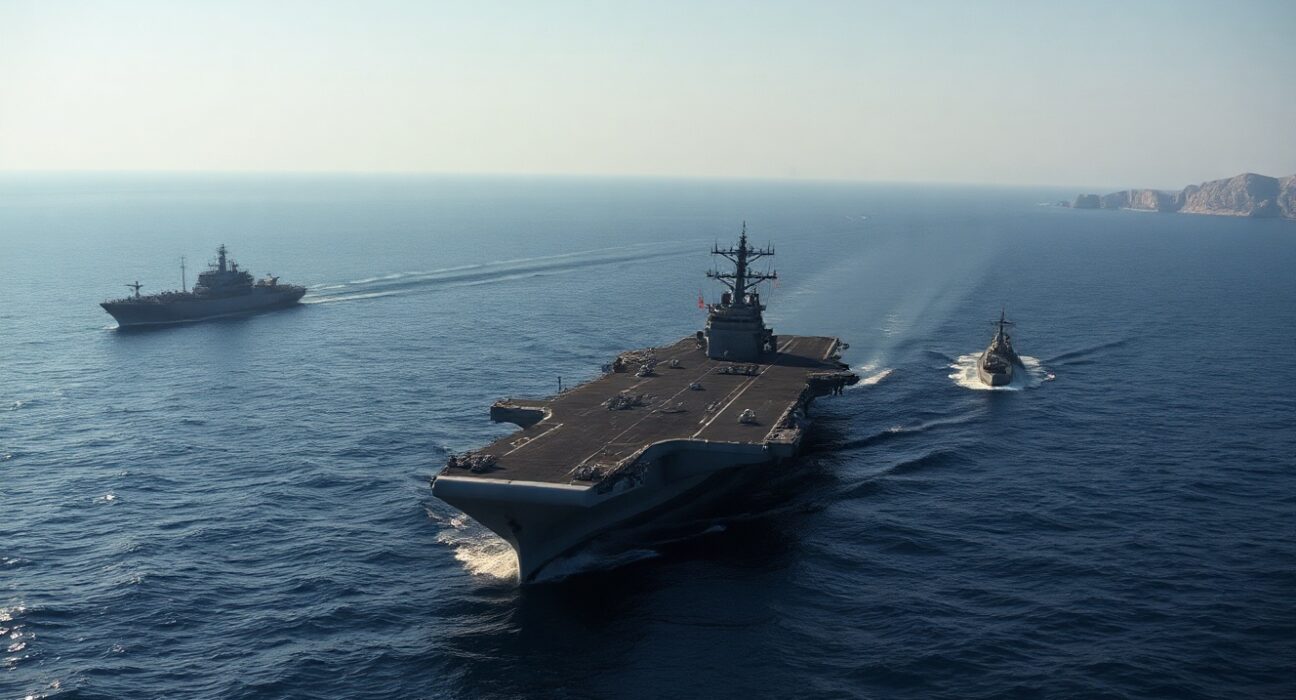
President Donald Trump announced on [date] that the United States has “total control” over the Strait of Hormuz, a critical maritime chokepoint through which about 20% of global oil supply transits. The statement, made during a press briefing, signals an escalation in US military posture in the region and carries immediate implications for global energy markets and diplomatic relations with Iran.
Context: The Strategic Importance of the Strait of Hormuz
The Strait of Hormuz, connecting the Persian Gulf with the Gulf of Oman, is the world’s most important oil passageway. According to the US Energy Information Administration, an estimated 21 million barrels of oil per day flowed through the strait in 2023, representing roughly one-fifth of global petroleum consumption. Any disruption to this route can trigger significant volatility in oil prices and affect economies worldwide.
President Trump’s assertion of “total control” comes amid heightened tensions with Iran, which has previously threatened to close the strait in response to US sanctions and military actions. The US Navy’s Fifth Fleet, based in Bahrain, has long maintained a presence in the region to ensure freedom of navigation, but this explicit claim of control marks a more forceful rhetorical stance.
Market and Geopolitical Implications
Following Trump’s remarks, oil prices saw an immediate uptick, with Brent crude futures rising by [percentage]% in early trading. Analysts caution that any actual blockade or military confrontation could send prices soaring, potentially straining the global economic recovery.
Iran’s foreign ministry responded sharply, calling the statement “provocative” and reiterating its right to secure the strait. International shipping companies are closely monitoring the situation, with some already considering rerouting vessels around the Arabian Peninsula—a longer and costlier alternative.
Why This Matters to Global Consumers
For everyday consumers, the stakes are tangible. Higher oil prices typically translate into increased costs for gasoline, heating, and a wide range of goods that depend on petroleum-based transportation. A sustained crisis in the strait could also exacerbate inflationary pressures, affecting central bank policies worldwide.
Conclusion
President Trump’s declaration of “total control” over the Strait of Hormuz represents a significant escalation in US-Iran tensions, with immediate consequences for global energy security and economic stability. While the full impact remains uncertain, the situation demands close monitoring by policymakers, businesses, and consumers alike.
FAQs
Q1: What exactly did President Trump say about the Strait of Hormuz?
President Trump stated that the United States has “total control” over the Strait of Hormuz, a claim made during a press briefing. The full context of his remarks has not been elaborated.
Q2: Why is the Strait of Hormuz so important?
The strait is a vital maritime route for global oil shipments, with about 20% of the world’s petroleum passing through it daily. Any disruption can cause major fluctuations in oil prices.
Q3: How has Iran responded to the US claim?
Iran’s foreign ministry called the statement “provocative” and asserted its own right to ensure security in the strait, escalating diplomatic tensions.
Disclaimer: The information provided is not trading advice, Bitcoinworld.co.in holds no liability for any investments made based on the information provided on this page. We strongly recommend independent research and/or consultation with a qualified professional before making any investment decisions.
