

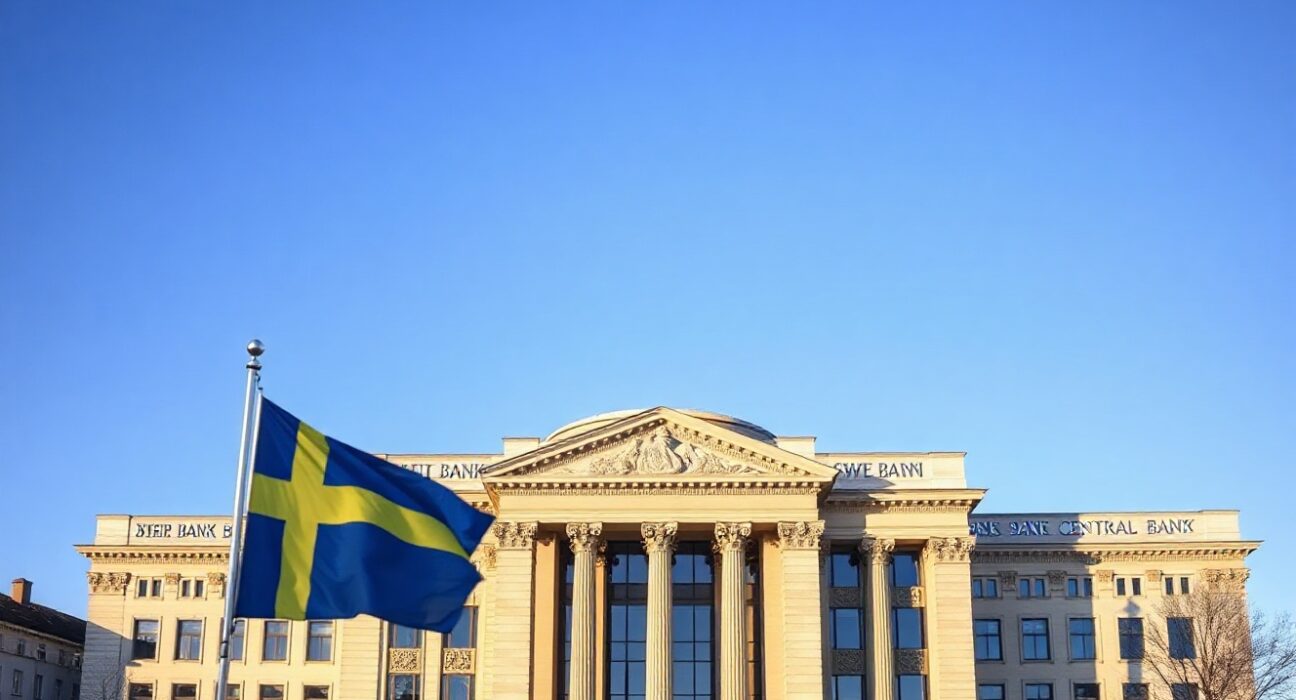
The Riksbank left its benchmark interest rate unchanged at its latest policy meeting, a decision that BNY strategists say underscores the Swedish krona’s persistent underperformance in the currency market.
As of the February 2025 meeting, the central bank held the policy rate at 2.25%, pausing after a series of cuts that began in mid-2024. BNY’s analysis highlights that the krona’s weakness is not just a matter of rate differentials but also reflects broader economic vulnerabilities, including slow growth and inflation dynamics that remain below the Riksbank’s target.
Policy Divergence and SEK Performance
The Riksbank’s cautious stance contrasts with the more hawkish positioning of the U.S. Federal Reserve, which has kept rates higher for longer. This divergence has weighed on the krona, which has lost ground against the dollar and the euro over the past year. BNY notes that while the Riksbank’s steady policy was widely expected, the lack of forward guidance leaves the currency exposed to external shocks.
Sweden’s economy has shown signs of recovery, but the krona remains sensitive to global risk sentiment and commodity price swings. BNY’s strategists point out that the currency’s valuation is stretched relative to historical norms, suggesting limited room for appreciation without a shift in global monetary conditions.
Implications for Importers and Travelers
A weaker krona raises the cost of imported goods, contributing to imported inflation even as domestic price pressures ease. For Swedish consumers, this means higher prices for electronics, fuel, and other dollar-denominated products. Travelers heading abroad also face reduced purchasing power, which could temper outbound tourism spending.
For exporters, the weaker currency provides a competitive edge, potentially supporting the manufacturing sector. However, BNY warns that the benefits are uneven and may not offset the drag on domestic consumption.
Market Outlook and Key Levels
Market participants are now focused on the Riksbank’s next move, with expectations split between a hold and a further cut in the coming months. BNY advises that the krona’s trajectory will hinge on the Fed’s policy path and any signs of sustained inflation in Sweden. Technical analysts are watching key support levels against the euro, with a break lower potentially triggering further depreciation.
Conclusion
The Riksbank’s steady hand reflects a cautious approach to monetary policy, but the krona’s lag highlights the challenges facing the Swedish economy. With inflation near target and growth recovering, the central bank may need to balance supporting the currency against fostering domestic demand. As BNY’s analysis suggests, the krona’s fate is closely tied to global monetary trends, leaving little room for complacency.
FAQs
Q1: Why is the Swedish krona weak despite the Riksbank’s steady policy?
The krona’s weakness stems from a combination of global factors, including the Fed’s high rates and risk-off sentiment, as well as domestic concerns about growth and inflation. BNY notes that the Riksbank’s cautious stance has not been enough to reverse the trend.
Q2: What does the Riksbank’s hold mean for Swedish consumers?
Consumers may face higher import prices due to the weak krona, but the hold on rates helps keep borrowing costs stable. The overall impact depends on how long the currency remains under pressure.
Q3: Will the krona recover soon?
Forecasts are uncertain. BNY suggests that a recovery would require a shift in global monetary policy or a clear improvement in Sweden’s economic fundamentals. In the near term, the krona may remain volatile.
Disclaimer: The information provided is not trading advice, Bitcoinworld.co.in holds no liability for any investments made based on the information provided on this page. We strongly recommend independent research and/or consultation with a qualified professional before making any investment decisions.
