

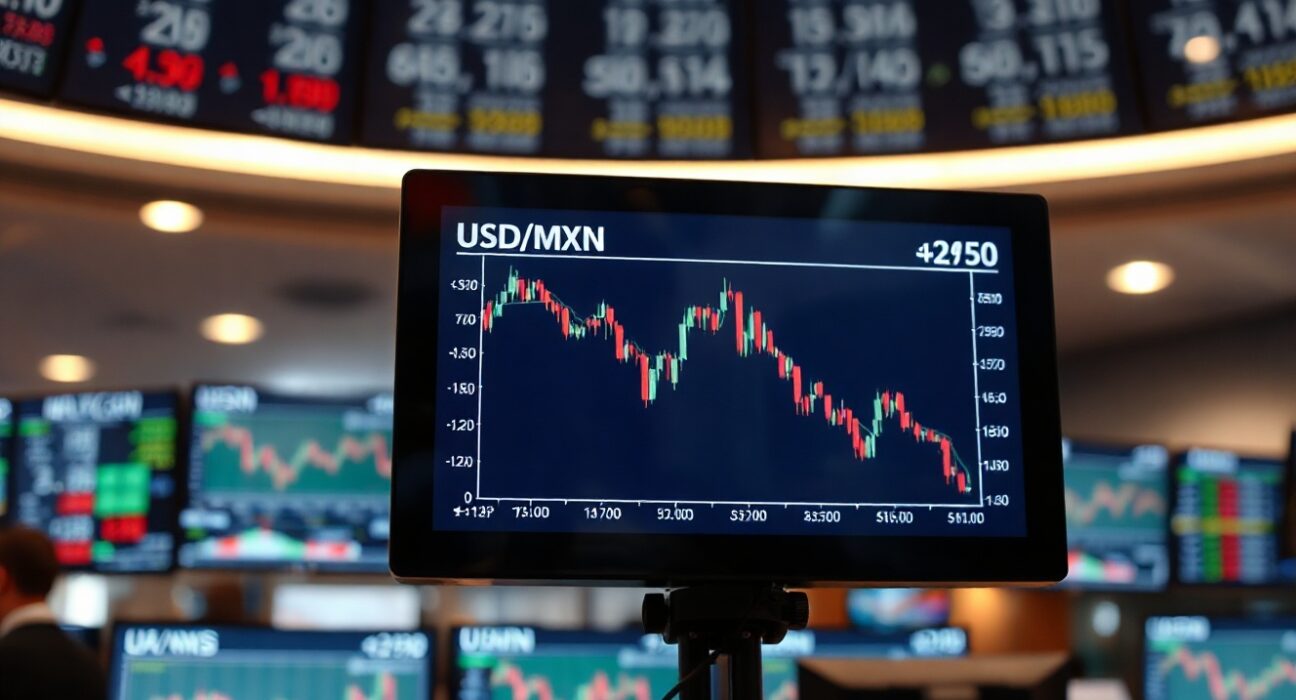
The Mexican Peso weakened against the US Dollar on [Date of publication], as escalating geopolitical risks in the Middle East intensified demand for the safe-haven US currency, pushing the USD/MXN pair higher. This movement reflects a broader market shift where investors are reducing exposure to risk-sensitive emerging market currencies in favor of more stable assets during periods of heightened uncertainty.
Geopolitical Risk and the US Dollar’s Appeal
The US Dollar index, which measures the currency against a basket of six major peers, has seen renewed buying interest as conflicts in the Middle East raise concerns about global economic stability. In this environment, the dollar often benefits from its status as the world’s primary reserve currency and a go-to safe haven. The Mexican Peso, while fundamentally supported by high interest rates and strong remittance flows, remains vulnerable to sudden shifts in global risk sentiment, particularly when geopolitical headlines dominate trading.
USD/MXN Reaction and Market Drivers
As of the latest trading session, the USD/MXN exchange rate has moved closer to the 17.20 level, a notable increase from recent lows. This movement is not isolated to the Peso; other emerging market currencies, including the South African Rand and the Chilean Peso, have also faced downward pressure. The primary catalyst is the flight to quality, with investors selling off riskier assets. Furthermore, rising oil prices, often a consequence of Middle East instability, present a mixed picture for Mexico. While Mexico is a significant oil producer, the global risk-off mood has overshadowed any potential benefit from higher crude prices.
Impact on Importers and Travelers
A softer Peso directly impacts Mexican importers, making goods priced in dollars more expensive, which can feed into domestic inflation. For travelers and businesses with dollar-denominated expenses, the current environment means a higher cost for their transactions. Conversely, exporters in Mexico may find their products more competitive on the global market. The Bank of Mexico’s monetary policy stance remains a key factor to watch; a significant and sustained Peso depreciation could complicate the central bank’s path toward easing interest rates.
Conclusion
The Mexican Peso’s recent softness is a direct consequence of heightened geopolitical risk in the Middle East, which has bolstered the US Dollar’s safe-haven appeal. While the Peso’s fundamentals remain intact, the immediate market direction is likely to be dictated by the evolution of these global events. Traders and businesses should monitor headlines closely, as any de-escalation could quickly reverse the dollar’s gains, while further escalation may lead to additional Peso weakness.
FAQs
Q1: Why does the Mexican Peso weaken when geopolitical tensions rise?
Investors tend to move capital from riskier assets, like emerging market currencies, into safe-haven currencies such as the US Dollar during times of global uncertainty. This increased demand for dollars strengthens the USD against the Peso.
Q2: What is the main driver of the current USD/MXN movement?
The primary driver is the risk-off sentiment triggered by Middle East conflicts. This has increased demand for the US Dollar as a safe-haven asset, leading to a depreciation of the Mexican Peso.
Q3: How could this affect the Mexican economy?
A weaker Peso can increase the cost of imports and potentially fuel inflation. However, it can also make Mexican exports more competitive. The Bank of Mexico will be closely monitoring the situation for its potential impact on monetary policy.
Disclaimer: The information provided is not trading advice, Bitcoinworld.co.in holds no liability for any investments made based on the information provided on this page. We strongly recommend independent research and/or consultation with a qualified professional before making any investment decisions.
