

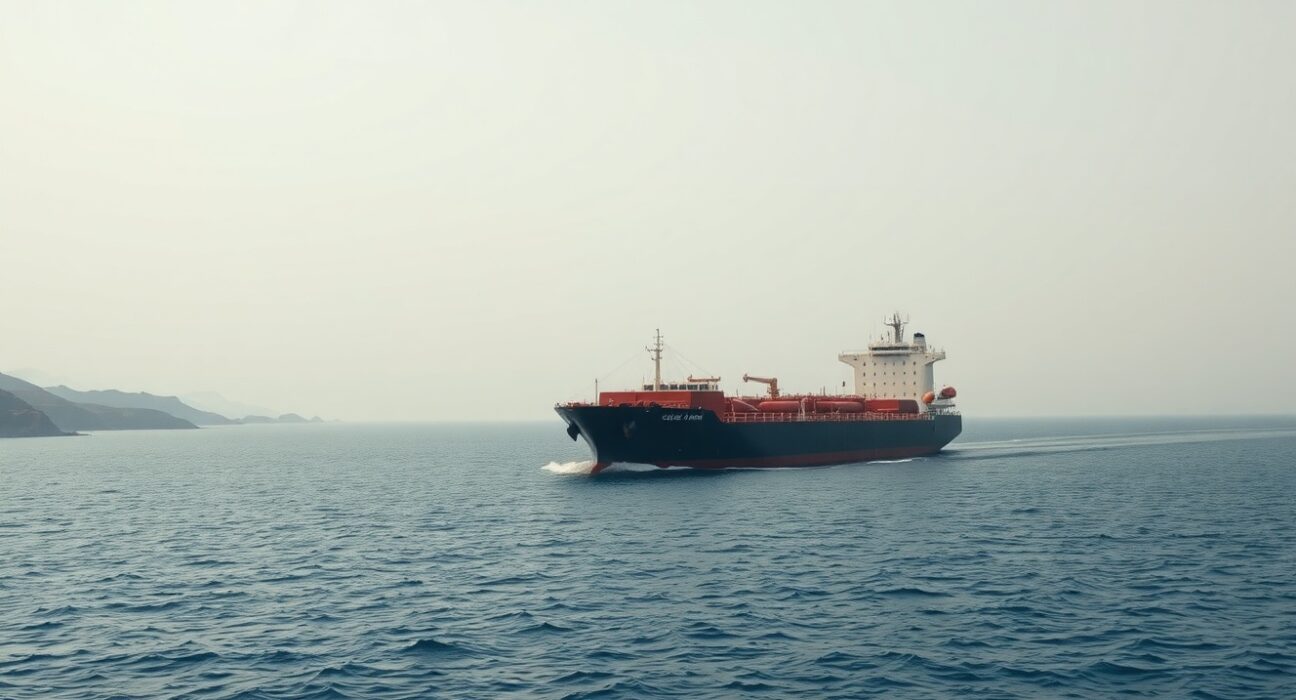
A new analysis from MUFG Bank outlines how Asian foreign exchange markets could take sharply different trajectories depending on the outcome of rising tensions in the Strait of Hormuz. The report, shared with clients this week, highlights that the region’s currencies are not uniformly exposed to a potential disruption in the strategic waterway, through which roughly one-fifth of the world’s oil passes.
Geopolitical risk splits currency outlook
MUFG strategists note that a prolonged closure or significant disruption at Hormuz would most severely impact oil-importing Asian economies, particularly those in South and East Asia. Countries like India, Japan, and South Korea, which rely heavily on Middle Eastern crude, could see their currencies weaken as energy costs surge and trade balances deteriorate. Conversely, oil-exporting nations such as Indonesia and Malaysia might experience currency support from higher crude prices, creating a clear divergence within the Asian FX landscape.
The analysis considers multiple scenarios ranging from a short-lived diplomatic resolution to a full-blown military confrontation. Under a ‘benign resolution’ scenario, where tensions ease quickly, MUFG expects Asian currencies to stabilize, with the Chinese yuan and Singapore dollar benefiting from reduced risk premiums. In a ‘prolonged disruption’ scenario, the Japanese yen and Swiss franc could gain safe-haven flows, while the Indian rupee and Thai baht face downward pressure.
Market implications and investor positioning
MUFG’s report arrives as hedge funds and asset managers increase their focus on geopolitical tail risks in the Middle East. The bank warns that current market pricing does not fully reflect the probability of a significant Hormuz disruption, leaving room for sharp currency moves if the situation escalates. Traders are advised to monitor diplomatic signals from major powers, as well as insurance rates for tankers transiting the strait, which have already risen in recent weeks.
The analysis also points to potential second-round effects on Asian central banks. A sustained oil price spike could force import-dependent economies to raise interest rates to defend their currencies, potentially slowing growth. Export-oriented economies like South Korea and Taiwan could face a double hit from higher input costs and weaker external demand if global trade slows.
Why this matters for Asian FX traders
For currency traders and corporate treasurers operating in Asia, the MUFG analysis provides a structured framework for hedging against tail risks. The key takeaway is that a one-size-fits-all approach to Asian FX exposure is inadequate under Hormuz scenarios. Instead, portfolios need to account for each country’s net oil position, reserve adequacy, and historical sensitivity to geopolitical shocks. The report emphasizes that while the base case remains a diplomatic resolution, the asymmetric risk of a severe disruption warrants preparation.
Conclusion
MUFG’s assessment underscores that the Strait of Hormuz is not just an energy chokepoint but a potential catalyst for currency divergence across Asia. The analysis provides a timely reminder that geopolitical events can create winners and losers even within the same region, urging investors to differentiate between fundamentally resilient and vulnerable currencies. As the situation evolves, market participants will be watching for any shift in rhetoric or military posture that could tip the balance toward one of the outlined scenarios.
FAQs
Q1: Which Asian currencies are most vulnerable to a Hormuz Strait disruption?
According to MUFG, oil-importing economies like India, Japan, South Korea, and Thailand face the highest vulnerability due to their dependence on Middle Eastern crude. Their currencies could weaken if oil prices spike sharply.
Q2: Could any Asian currencies benefit from higher oil prices?
Yes. Oil-exporting nations such as Indonesia and Malaysia could see currency support as their export revenues rise. The Japanese yen might also strengthen as a safe-haven asset during heightened geopolitical uncertainty.
Q3: What is the base case scenario in MUFG’s analysis?
MUFG’s base case assumes a diplomatic resolution that avoids a prolonged disruption, leading to stabilization in Asian FX markets. However, the bank warns that the probability of a more severe outcome is underappreciated by current market pricing.
Disclaimer: The information provided is not trading advice, Bitcoinworld.co.in holds no liability for any investments made based on the information provided on this page. We strongly recommend independent research and/or consultation with a qualified professional before making any investment decisions.
