

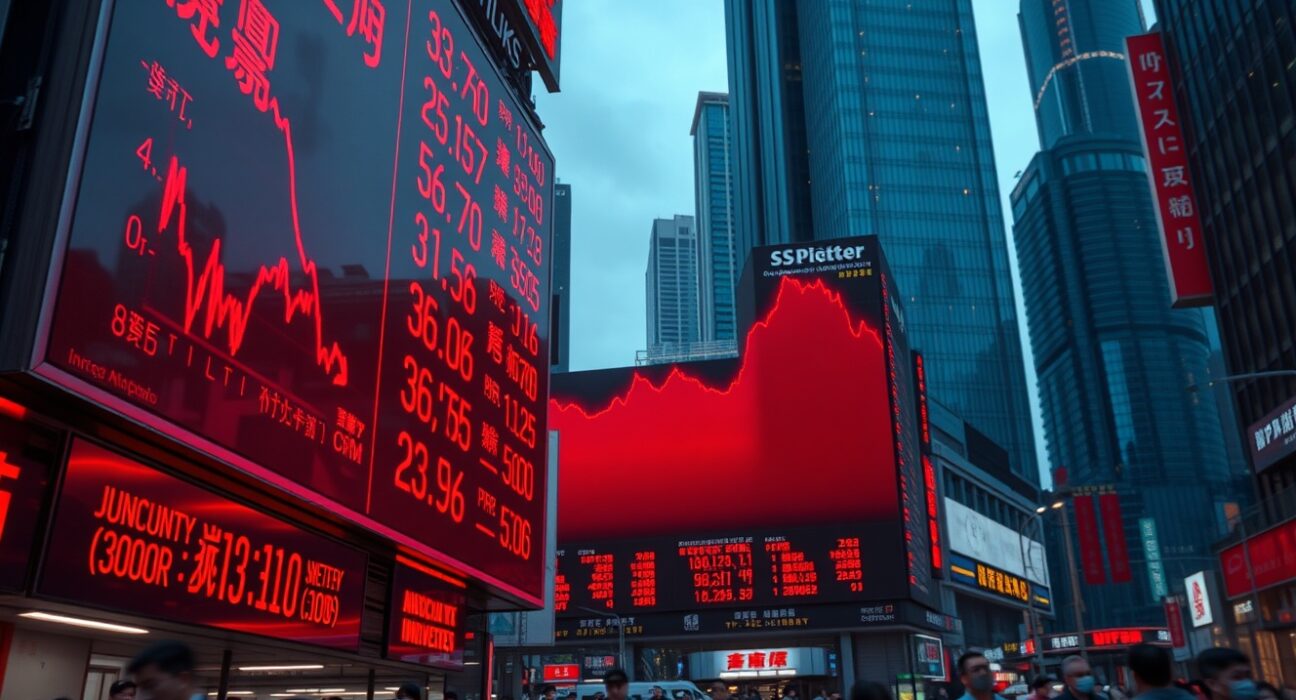
Asian stock markets experienced broad declines on Monday, as a sharp rise in US Treasury yields and renewed geopolitical uncertainty surrounding US-Iran relations dampened investor sentiment. Major indices from Tokyo to Seoul fell, reflecting growing concerns over higher borrowing costs and potential disruptions to regional stability.
Bond Yields Surge, Pressuring Equities
The selloff in Asian equities followed a notable jump in US bond yields, with the benchmark 10-year Treasury note climbing to its highest level in several weeks. Rising yields typically make borrowing more expensive for corporations and consumers, weighing on economic growth expectations and prompting investors to rotate out of riskier assets like stocks.
In Japan, the Nikkei 225 fell by over 2%, while South Korea’s Kospi dropped more than 1.5%. Hong Kong’s Hang Seng Index and China’s Shanghai Composite also posted losses, though to a lesser extent. The moves reflected a broader reassessment of monetary policy expectations, as markets priced in a higher-for-longer interest rate environment in the United States.
US-Iran Tensions Add to Risk-Off Mood
Adding to the cautious tone, reports of renewed friction between the United States and Iran raised concerns about potential disruptions in the Middle East, a key region for global energy supplies. While no immediate escalation was confirmed, the uncertainty contributed to a risk-off sentiment across Asian trading floors.
Oil prices edged higher on the news, with Brent crude rising above $82 per barrel. Higher energy costs could further complicate the inflation outlook for central banks, particularly in import-dependent Asian economies.
What This Means for Investors
The simultaneous pressure from rising bond yields and geopolitical risks creates a challenging environment for equity markets in the near term. Investors are now closely watching for any signals from the Federal Reserve regarding its next policy moves, as well as diplomatic developments between Washington and Tehran.
For Asian markets, the key question is whether the current selloff is a temporary correction or the beginning of a more sustained downturn. Analysts suggest that much will depend on upcoming economic data from the US and China, as well as any concrete shifts in US foreign policy toward Iran.
Conclusion
Monday’s decline across Asian stock markets underscores the fragility of investor confidence in the face of rising US bond yields and renewed geopolitical uncertainty. While the immediate triggers are clear, the longer-term trajectory will hinge on central bank communications and diplomatic outcomes. Market participants are advised to remain cautious and monitor developments closely.
FAQs
Q1: Why did Asian stock markets fall today?
A: Asian markets declined due to a sharp rise in US Treasury bond yields and renewed uncertainty in US-Iran relations, which together prompted investors to reduce exposure to riskier assets.
Q2: How do rising US bond yields affect Asian stocks?
A: Higher US bond yields make borrowing more expensive globally and can attract capital away from equities, particularly in emerging and developed Asian markets, leading to selloffs.
Q3: Is this selloff likely to continue?
A: The near-term outlook depends on further developments in US monetary policy and US-Iran relations. Investors are watching for economic data and diplomatic signals to gauge whether the selloff is temporary or sustained.
Disclaimer: The information provided is not trading advice, Bitcoinworld.co.in holds no liability for any investments made based on the information provided on this page. We strongly recommend independent research and/or consultation with a qualified professional before making any investment decisions.
