
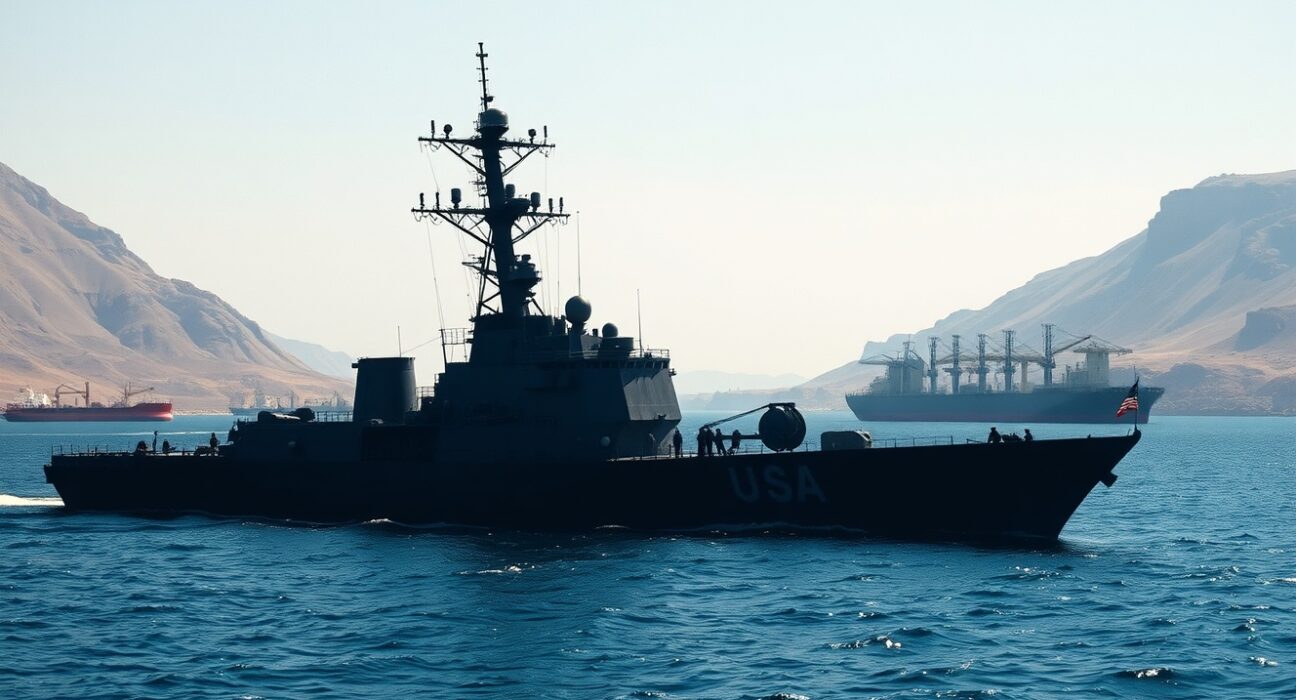
Asian financial markets experienced dramatic declines on Monday, March 17, 2025, following the abrupt collapse of US-Iran peace negotiations and the subsequent US military closure of the Strait of Hormuz, a critical global oil transit corridor responsible for approximately 21% of global petroleum trade.
Asian Markets React to Geopolitical Shock
Major Asian stock indices recorded significant losses during morning trading sessions. Japan’s Nikkei 225 dropped 4.2%, while Hong Kong’s Hang Seng Index fell 5.1%. South Korea’s KOSPI declined 3.8%, and Australia’s ASX 200 decreased by 3.5%. Furthermore, Singapore’s Straits Times Index retreated 4.7%. These movements represent the most substantial single-day declines in regional markets since the 2022 global inflation crisis.
Market analysts immediately identified several interconnected factors driving the sell-off. First, investors reacted to the sudden breakdown in diplomatic relations. Second, traders responded to the immediate energy security implications. Third, market participants anticipated potential supply chain disruptions. Finally, investors priced in increased regional instability risks.
Collapse of US-Iran Negotiations
The diplomatic breakdown followed nine months of intensive negotiations in Geneva and Doha. These talks aimed to establish a new nuclear framework agreement. However, negotiations stalled over verification protocols for Iran’s nuclear facilities. Additionally, disagreements emerged regarding sanctions relief timelines. The US delegation reportedly presented new demands concerning Iran’s ballistic missile program. Consequently, Iranian officials rejected these conditions as unacceptable violations of sovereignty.
White House Press Secretary confirmed the negotiation suspension at 02:00 GMT. The announcement cited “fundamental disagreements on verification measures.” Meanwhile, Iranian Foreign Ministry officials described the US position as “maximalist and unrealistic.” European mediators expressed disappointment but acknowledged the diplomatic impasse. Regional analysts noted this represents the most significant US-Iran diplomatic failure since the 2018 Joint Comprehensive Plan of Action withdrawal.
Historical Context and Regional Implications
The Strait of Hormuz represents one of the world’s most strategically important maritime chokepoints. Approximately 21 million barrels of oil pass through daily. This volume represents about one-third of all seaborne traded oil. Major global economies depend heavily on this transit route. For instance, Japan imports 80% of its oil through the strait. Similarly, South Korea imports 60% of its petroleum via this corridor.
Previous closures or threats to Hormuz shipping have triggered global economic consequences. The 2019 tanker attacks caused brief oil price spikes of 15%. The 2021 seizure of a British-flagged tanker increased regional insurance premiums by 300%. Historical data shows that sustained Hormuz disruptions could remove 2-3% from global GDP growth. Energy analysts project potential oil price increases to $150-200 per barrel with prolonged closure.
US Military Action and Global Response
The US Department of Defense announced the “temporary maritime safety closure” at 03:30 GMT. Pentagon officials cited “immediate threats to commercial shipping” as justification. The Fifth Fleet deployed additional assets to enforce the closure. These include guided-missile destroyers and maritime patrol aircraft. The US action follows intelligence reports of Iranian Revolutionary Guard Corps naval movements.
International reactions emerged rapidly from global capitals. The United Kingdom expressed “serious concern” but acknowledged security considerations. France called for “immediate diplomatic de-escalation.” China urged “all parties to exercise maximum restraint.” Gulf Cooperation Council members issued a joint statement emphasizing “freedom of navigation principles.” OPEC emergency meetings convened to discuss production adjustments.
| Market/Commodity | Change | Time of Measurement |
|---|---|---|
| Brent Crude Oil | +18.7% | 06:00 GMT |
| West Texas Intermediate | +17.2% | 06:00 GMT |
| Gold Futures | +5.3% | 06:00 GMT |
| US Dollar Index | +2.1% | 06:00 GMT |
| Japanese Yen (vs USD) | +1.8% | 06:00 GMT |
Economic Impact Analysis
Energy-dependent Asian economies face immediate pressure from rising oil prices. Japan’s Ministry of Economy, Trade and Industry activated emergency fuel reserves. South Korea announced plans to increase coal and liquefied natural gas usage. India activated diplomatic channels to secure alternative supply routes. Singapore’s Maritime and Port Authority issued navigation advisories for vessels.
Supply chain experts identified several vulnerable industries. First, aviation and transportation sectors face immediate cost increases. Second, petrochemical manufacturers encounter raw material shortages. Third, shipping and logistics companies experience route disruptions. Fourth, consumer goods producers face increased transportation expenses. Finally, agricultural sectors confront higher fertilizer and transportation costs.
Central bank responses varied across the region. The Bank of Japan maintained its current monetary policy stance. The Reserve Bank of Australia indicated potential rate pause considerations. The Monetary Authority of Singapore announced liquidity support measures. Regional finance ministers scheduled emergency meetings to coordinate responses.
Expert Perspectives on Market Trajectory
Financial analysts provided cautious assessments of the situation. Goldman Sachs analysts projected “short-term volatility with potential medium-term stabilization.” Morgan Stanley researchers noted “asymmetric risk toward further deterioration.” JPMorgan economists highlighted “limited fiscal space for stimulus in most Asian economies.” UBS strategists emphasized “differentiated impacts across regional markets.”
Energy market specialists offered specific projections. International Energy Agency analysts estimated 3-4 million barrels per day displacement initially. Rystad Energy consultants projected potential 30-40% insurance premium increases. Wood Mackenzie researchers identified alternative routing options adding 10-14 days transit time. Energy Aspects analysts warned of potential refining capacity underutilization.
Regional Security Considerations
The Strait of Hormuz closure introduces complex security dynamics. First, it increases naval activity in confined waters. Second, it raises accidental engagement risks. Third, it potentially emboldens non-state actors. Fourth, it tests existing security partnerships. Fifth, it may trigger proportional responses from regional powers.
Historical precedents suggest several possible escalation pathways. The 1988 US-Iran naval clashes resulted in significant vessel damage. The 2019 drone attacks demonstrated asymmetric warfare capabilities. The 2021 cyber attacks on Saudi Aramco showed digital vulnerability dimensions. Current military assessments emphasize multi-domain threat environments.
Conclusion
Asian stocks experienced substantial declines following the dual shocks of failed US-Iran peace talks and the Strait of Hormuz closure. These events triggered immediate market volatility and raised fundamental questions about energy security architecture. The situation remains fluid with diplomatic, military, and economic dimensions still evolving. Global markets will closely monitor developments, particularly regarding diplomatic re-engagement possibilities and alternative energy transportation arrangements. The Asian stocks reaction reflects deep-seated concerns about prolonged geopolitical instability and its economic consequences.
FAQs
Q1: Why did Asian stocks drop so significantly?
The decline resulted from two simultaneous shocks: the collapse of US-Iran peace negotiations and the US military closure of the Strait of Hormuz, which together raised concerns about regional stability, energy security, and economic disruption.
Q2: How important is the Strait of Hormuz for global oil markets?
The Strait of Hormuz is critically important, transporting approximately 21 million barrels of oil daily, representing about 21% of global petroleum consumption and one-third of all seaborne traded oil.
Q3: What are the main points of disagreement in the US-Iran negotiations?
Primary disagreements involve verification protocols for nuclear facilities, timelines for sanctions relief, and limitations on Iran’s ballistic missile program, with both sides describing the other’s positions as unacceptable.
Q4: How are Asian governments responding to the crisis?
Responses include activating strategic fuel reserves, seeking alternative energy supplies, providing liquidity support to financial markets, and engaging in diplomatic efforts to de-escalate the situation.
Q5: What historical precedents exist for Strait of Hormuz disruptions?
Previous incidents include the 1988 US-Iran naval clashes, 2019 tanker attacks, 2021 vessel seizures, and various periods of heightened military activity, though a complete closure of this duration is unprecedented in recent decades.
Disclaimer: The information provided is not trading advice, Bitcoinworld.co.in holds no liability for any investments made based on the information provided on this page. We strongly recommend independent research and/or consultation with a qualified professional before making any investment decisions.