

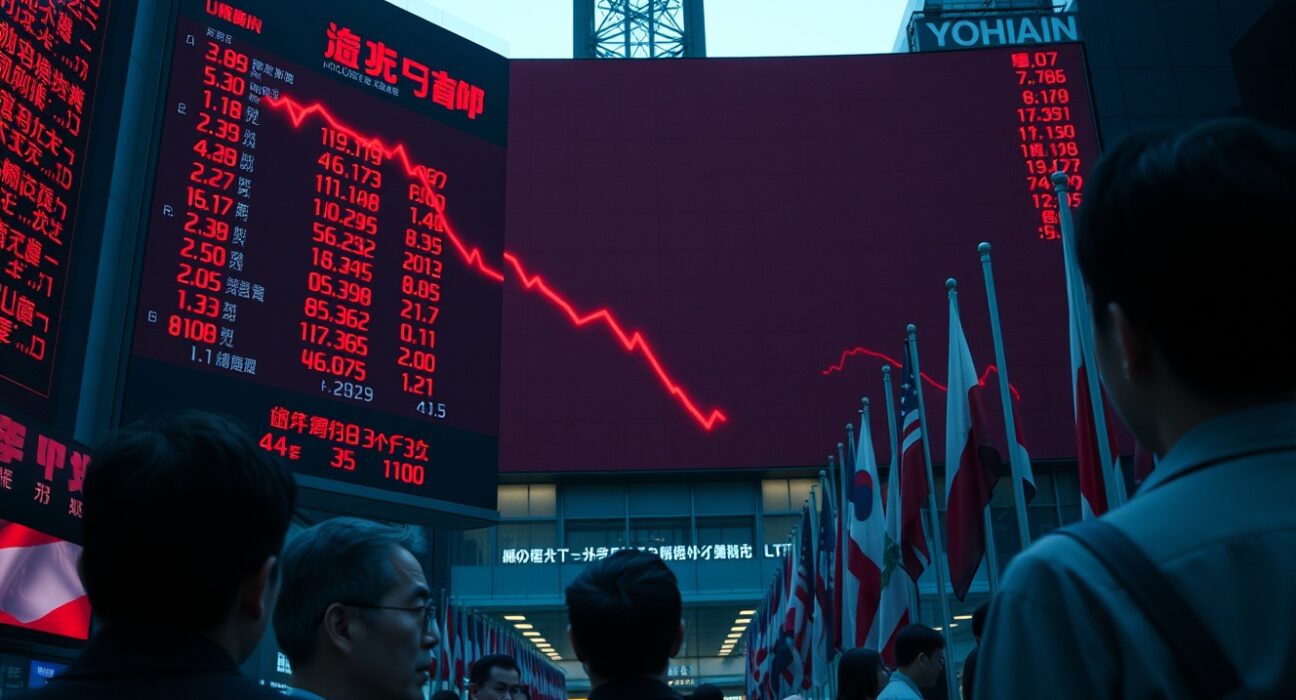
Asian equity markets opened lower on Tuesday, extending losses from the previous session as renewed geopolitical tensions between the United States and Iran dampened investor sentiment. South Korea’s KOSPI index led the regional decline, falling more than 1.5% in early trading, as traders weighed the risk of supply disruptions in the Middle East and potential impacts on global energy markets.
Renewed US-Iran War Fears Hit Risk Appetite
The latest wave of selling was triggered by reports of heightened military posturing in the Persian Gulf, following a series of diplomatic exchanges that broke down over the weekend. The White House reiterated its commitment to maintaining freedom of navigation, while Iranian officials warned of retaliatory measures if economic sanctions are tightened further. The standoff has revived fears of a direct confrontation, prompting investors to rotate out of riskier assets and into safe havens such as gold and the US dollar.
Japan’s Nikkei 225 fell 1.2%, while Hong Kong’s Hang Seng Index dropped 0.9%. China’s Shanghai Composite also edged lower, declining 0.4%, as the geopolitical uncertainty overshadowed positive domestic economic data. Australia’s ASX 200 slipped 0.7%, reflecting broad-based caution across the region.
KOSPI Under Pressure from Export and Oil Concerns
South Korea’s benchmark KOSPI index was the worst performer in the region, dragged down by heavy selling in semiconductor and energy-sensitive stocks. Samsung Electronics and SK Hynix both fell more than 2%, as traders worried that a spike in oil prices could squeeze margins for manufacturers and dampen consumer demand. The Korean won also weakened against the dollar, adding to the pressure on import-reliant firms.
The KOSPI’s decline comes after a volatile month for Korean equities, which had been buoyed by strong export data earlier in the quarter. Analysts at Mirae Asset Securities noted that the market is now pricing in a risk premium tied to the geopolitical situation, which could persist until there is clearer diplomatic progress.
Oil Price Spike and Broader Market Implications
Brent crude futures rose above $85 per barrel in Asian trading, up nearly 3% from the previous close, as traders factored in the possibility of supply disruptions through the Strait of Hormuz. A sustained increase in energy costs would have ripple effects across Asian economies, particularly in net-importing nations like South Korea, Japan, and India. Higher fuel costs could also complicate central banks’ efforts to manage inflation, potentially delaying interest rate cuts that markets had been expecting later this year.
Investors are now closely watching diplomatic channels, including potential mediation efforts by European and Gulf states. Any sign of de-escalation could trigger a sharp reversal in risk assets, but for now, the prevailing mood remains cautious.
Conclusion
The renewed US-Iran tensions have injected a fresh wave of uncertainty into Asian markets, with the KOSPI bearing the brunt of the sell-off. While the immediate impact is visible in equity and commodity prices, the longer-term trajectory will depend on whether diplomatic efforts can prevent the situation from escalating further. For now, traders are advised to monitor geopolitical developments closely and adjust portfolio exposure accordingly.
FAQs
Q1: Why did Asian stocks fall today?
A: Asian stocks fell primarily due to renewed geopolitical tensions between the United States and Iran, which raised fears of a military conflict and potential disruptions to global oil supplies. This prompted investors to sell riskier assets and seek safe havens.
Q2: Why was South Korea’s KOSPI hit the hardest?
A: The KOSPI was hit hardest because South Korea is a major oil importer and a key exporter of semiconductors and electronics. A spike in oil prices and a weaker won increase production costs and reduce profit margins for Korean companies, making the market especially vulnerable to geopolitical shocks.
Q3: Could the situation lead to a broader market correction?
A: While a full-scale correction is not guaranteed, sustained escalation could trigger further declines across Asian equities, particularly if oil prices remain elevated and inflation concerns resurface. Investors are advised to watch for diplomatic developments and central bank responses.
Disclaimer: The information provided is not trading advice, Bitcoinworld.co.in holds no liability for any investments made based on the information provided on this page. We strongly recommend independent research and/or consultation with a qualified professional before making any investment decisions.
