

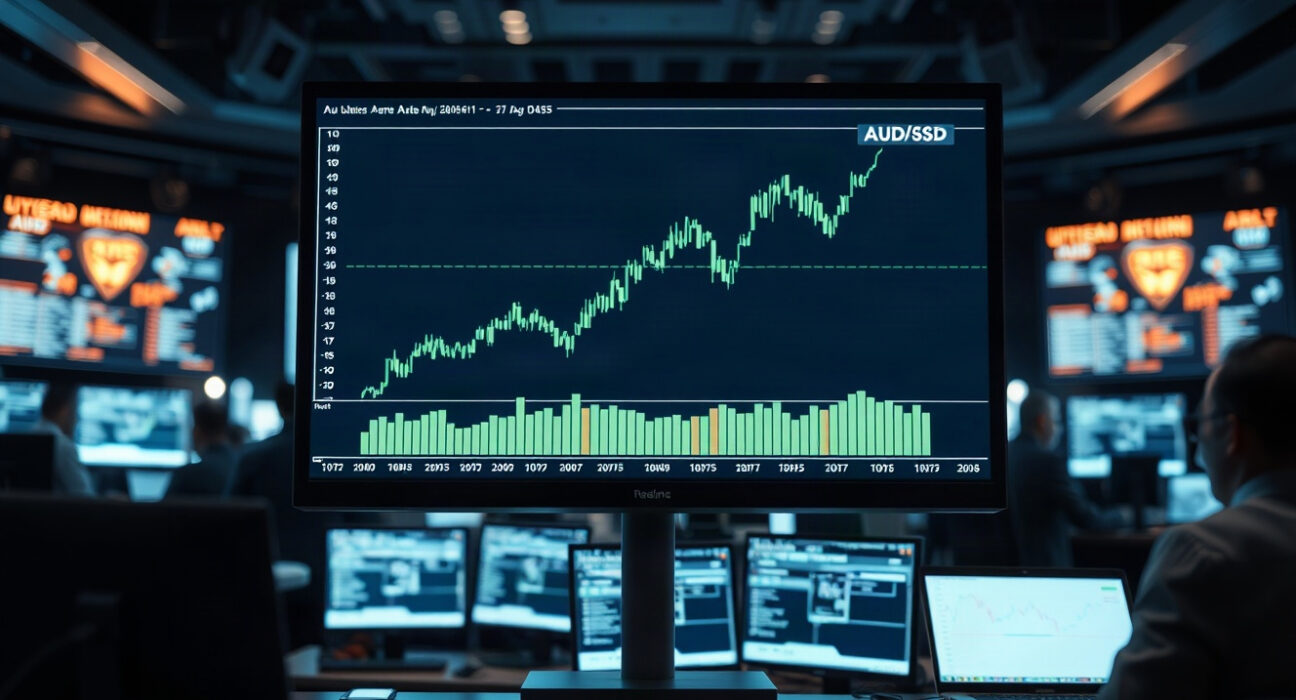
The Australian Dollar strengthened against the US Dollar, trading near the 0.7050 mark, as reports confirmed that US President Donald Trump called off planned military strikes on Iran, a move that cooled geopolitical tensions and spurred demand for risk-sensitive currencies like the Aussie.
Market Reaction to De-escalation
The shift in sentiment was immediate, with the AUD/USD pair reversing earlier losses to push higher during the Asian trading session. The decision to cancel the strikes, which were reportedly in response to the downing of a US drone, was seen as a deliberate step to avoid a broader conflict in the Middle East. This directly reduced the appeal of safe-haven assets, including the US Dollar and Japanese Yen, while providing a tailwind for growth-linked currencies.
Traders interpreted the news as a signal that the US is prioritizing diplomatic channels over military action, at least for now. This has led to a repricing of risk, with equity futures also pointing to a firmer open. For the Australian Dollar, the improved risk climate is a key driver, as the currency is highly sensitive to global growth expectations and commodity prices.
Impact on the Australian Dollar
The AUD’s resilience is notable, as it comes despite a mixed domestic economic calendar. The currency’s strength is largely a function of external factors, particularly the ebb and flow of US foreign policy and its effect on global risk sentiment. As tensions ease, investors are more willing to hold positions in higher-yielding currencies, a category that typically includes the Australian Dollar.
Furthermore, the relative stability in oil prices following the news helps Australia’s terms of trade, as the nation is a major energy exporter. A lower risk premium on oil reduces the potential for imported inflation, which could otherwise complicate the Reserve Bank of Australia’s policy outlook. The central bank has maintained a cautious stance, and a calmer geopolitical environment provides it with more breathing room to assess domestic conditions.
What This Means for Traders
For market participants, the immediate focus is on whether this de-escalation is durable. The situation remains fluid, and any reversal in the US stance could quickly unwind the current move. Traders are also keeping an eye on upcoming US economic data, which will provide further direction for the greenback. The pair’s ability to hold above the 0.7000 psychological level is seen as a positive technical signal, but sustained momentum will require a continued absence of negative geopolitical headlines.
Conclusion
As of this report, the Australian Dollar is trading with a firm bias near 0.7050 against the US Dollar, supported by a clear reduction in geopolitical risk following President Trump’s decision to cancel planned strikes on Iran. While the immediate market reaction is positive, the longevity of this move depends on the stability of the diplomatic situation and the broader global economic outlook. Investors should remain vigilant, as headlines from the Middle East can shift market dynamics quickly.
FAQs
Q1: Why does the Australian Dollar react to US-Iran tensions?
The Australian Dollar is a risk-sensitive currency, meaning it tends to strengthen when global risk appetite is high and weaken when investors seek safety. Geopolitical tensions, such as those between the US and Iran, typically increase market uncertainty, driving investors toward safe-haven assets like the US Dollar. When tensions ease, the demand for riskier assets, including the AUD, increases.
Q2: What is the significance of the 0.7050 level for AUD/USD?
The 0.7050 level is a near-term resistance point that the pair has been testing. A sustained break above it could signal further upside momentum, while a failure to hold might lead to a retracement. It is a technically important area that traders watch for potential entry or exit points.
Q3: How might the Reserve Bank of Australia react to a stronger Australian Dollar?
A stronger Australian Dollar can help curb imported inflation but can also weigh on export competitiveness. The RBA typically monitors the currency’s level as part of its broader economic assessment. A sustained rally might influence the central bank’s forward guidance, though its primary focus remains on domestic employment and inflation data.
Disclaimer: The information provided is not trading advice, Bitcoinworld.co.in holds no liability for any investments made based on the information provided on this page. We strongly recommend independent research and/or consultation with a qualified professional before making any investment decisions.
