

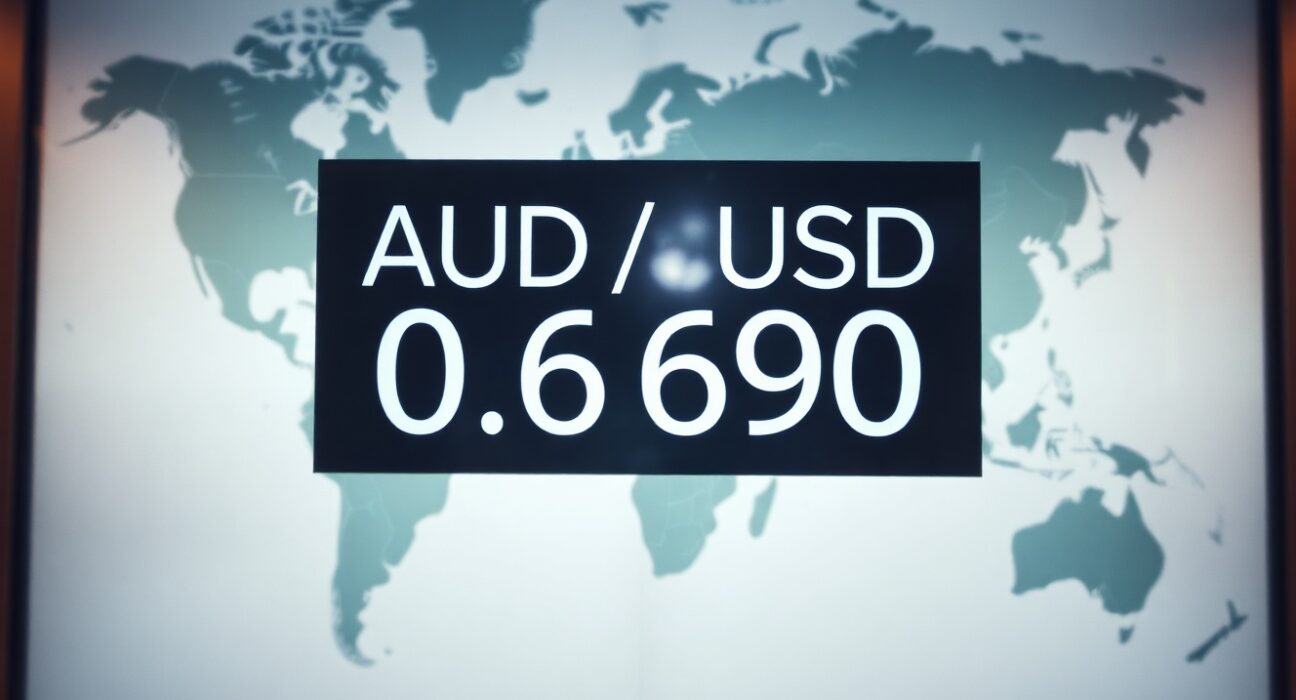
The Australian Dollar (AUD) is trading in a narrow range above the 0.6900 mark against the US Dollar (USD) on Wednesday, as currency markets begin to price in the possibility of a negotiated resolution to the ongoing conflict involving Iran. The move reflects a cautious shift in risk sentiment, with traders weighing the potential for reduced geopolitical instability against lingering uncertainties.
Market Sentiment and the Iran Factor
The Australian Dollar, often considered a proxy for global risk appetite due to its close ties to commodity prices and Asian trade flows, has found support in recent sessions. Reports suggesting that diplomatic channels are being explored to de-escalate tensions in the Middle East have provided a modest boost to risk-sensitive currencies. A negotiated end to the conflict would likely reduce safe-haven demand for the US Dollar, providing further upside for the AUD.
However, gains remain capped. The situation remains fluid, and no formal agreement has been reached. Markets are also monitoring potential disruptions to global oil supply, which could have knock-on effects for Australia’s trading partners and inflation expectations. The Australian Dollar’s resilience above 0.6900 suggests that traders are cautiously optimistic but not yet fully committed to a risk-on stance.
Technical and Fundamental Drivers
From a technical perspective, the 0.6900 level has acted as a psychological support zone for the AUD/USD pair. A sustained break above this level could open the door for a move toward the 0.6950–0.7000 region, depending on further developments in the Middle East and upcoming economic data.
On the fundamental side, the Reserve Bank of Australia’s (RBA) recent policy stance continues to influence the currency. While the RBA has held interest rates steady, its commentary remains data-dependent. A de-escalation of geopolitical tensions could allow the central bank to focus more on domestic inflation and employment figures, potentially shifting market expectations for future rate moves.
What This Means for Traders and Investors
For forex traders, the current environment underscores the importance of geopolitical risk assessment. The Australian Dollar’s stability above 0.6900 is not a signal of strong bullish momentum, but rather a reflection of a market in wait-and-see mode. Any concrete progress in negotiations could trigger a more decisive move higher, while a breakdown in talks could see the AUD quickly retrace toward 0.6850 or lower.
Investors with exposure to Australian assets should monitor diplomatic developments closely. A peaceful resolution would likely support commodity prices and improve the outlook for Australia’s export sector, while prolonged conflict could weigh on global growth and risk appetite.
Conclusion
The Australian Dollar’s steadiness above 0.6900 reflects a market cautiously pricing in a potential negotiated end to the Iran conflict. While the immediate outlook is uncertain, the currency’s resilience suggests that traders are leaning toward a more optimistic scenario. Continued monitoring of diplomatic channels and economic data will be essential for gauging the next directional move in AUD/USD.
FAQs
Q1: Why is the Australian Dollar sensitive to geopolitical events like the Iran conflict?
The Australian Dollar is considered a risk-sensitive currency because Australia’s economy is heavily tied to global trade, particularly with China and other Asian economies. Geopolitical instability can disrupt trade, affect commodity prices, and shift investor risk appetite, all of which influence the AUD.
Q2: What does it mean when the Australian Dollar is ‘steady above 0.6900’?
It means the AUD/USD exchange rate is trading in a narrow range above the 0.6900 level, indicating that the market is relatively stable and not experiencing sharp volatility. This level often acts as a psychological support zone for traders.
Q3: How might a negotiated end to the Iran war affect the Australian Dollar?
A negotiated resolution would likely reduce geopolitical risk, weaken safe-haven demand for the US Dollar, and improve global risk sentiment. This could provide a boost to the Australian Dollar, potentially pushing it higher against the USD.
Disclaimer: The information provided is not trading advice, Bitcoinworld.co.in holds no liability for any investments made based on the information provided on this page. We strongly recommend independent research and/or consultation with a qualified professional before making any investment decisions.
