

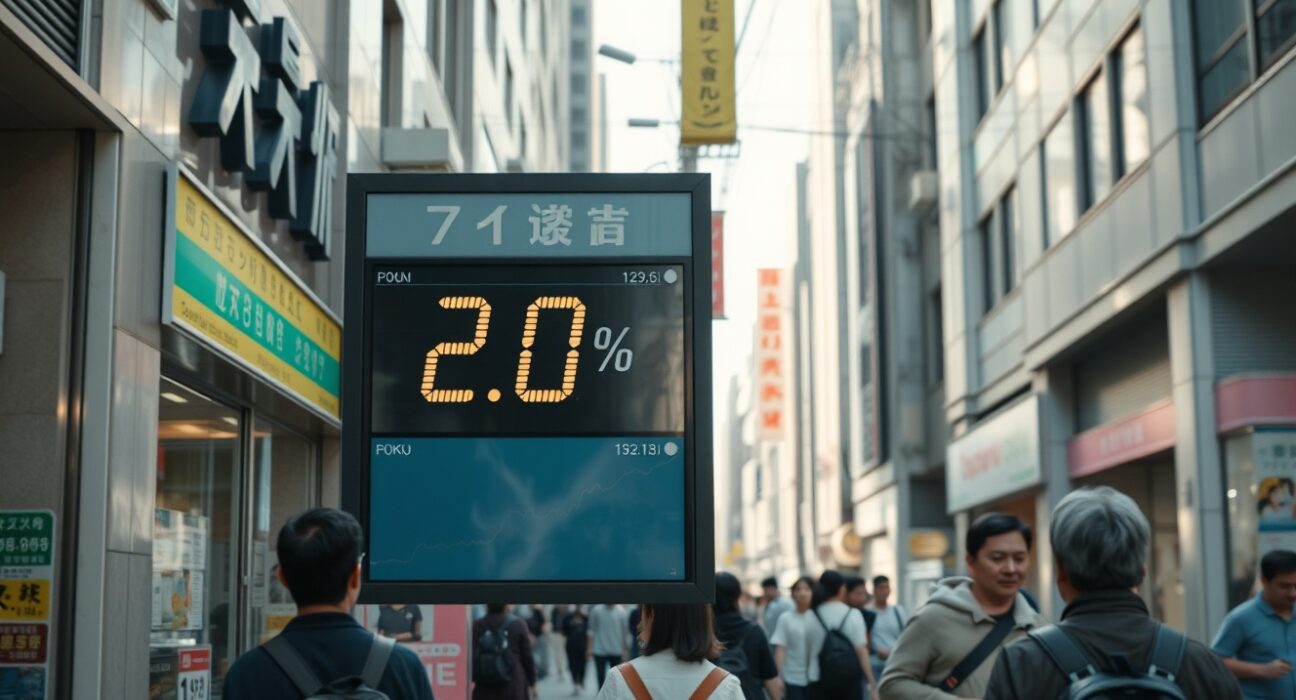
Tokyo’s core consumer price index (CPI) rose 2.0% year-on-year in July 2025, according to data released by Japan’s Ministry of Internal Affairs and Communications. The figure, which excludes volatile fresh food prices, aligns with the Bank of Japan’s (BOJ) long-standing 2% inflation target and signals sustained price pressures in the nation’s capital.
Key Drivers Behind the July Reading
The July increase was driven primarily by higher costs for processed food, energy, and services. Processed food prices rose 3.8% year-on-year, while energy costs climbed 1.5%, reflecting a modest rebound in global crude oil prices and the gradual pass-through of utility tariff adjustments. Services inflation, a key focus for the BOJ, remained firm at 1.2%, supported by rising wages and labor costs in sectors such as hospitality and transportation.
Excluding both fresh food and energy, the so-called ‘core-core’ CPI increased 1.6% year-on-year, slightly below the headline figure but still indicating broad-based price pressures. This metric is closely watched by policymakers as a measure of underlying demand-driven inflation.
Implications for Bank of Japan Policy
The steady 2.0% reading reinforces the BOJ’s cautious approach to monetary policy normalization. While the central bank has already raised short-term interest rates twice in 2025, most recently to 0.25% in June, Governor Kazuo Ueda has repeatedly emphasized that the pace of further tightening will depend on incoming data. The Tokyo CPI is considered a leading indicator for national inflation trends, which will be released later in August.
Market analysts widely expect the BOJ to hold rates steady at its next policy meeting in September, as it continues to assess the sustainability of wage-driven inflation and the impact of previous rate hikes on consumer spending. The yen’s recent appreciation against the U.S. dollar has also helped moderate import price pressures, providing the BOJ with additional policy flexibility.
What This Means for Consumers and Investors
For Japanese households, the steady inflation reading means continued pressure on real wages, despite recent pay raises negotiated in the annual ‘shunto’ labor talks. The BOJ has projected that inflation will gradually moderate toward its target over the medium term, but persistent services inflation suggests that price increases are becoming more embedded in the economy.
For global investors, the Tokyo CPI data reinforces the narrative of a gradually normalizing Japanese economy, which could support further yen strength and higher Japanese government bond yields. However, the BOJ’s cautious stance may limit the pace of any dramatic shifts, keeping Japanese assets relatively attractive for carry trades.
Conclusion
Tokyo’s July CPI reading of 2.0% year-on-year confirms that Japan’s inflation remains aligned with the BOJ’s target, supporting a gradual normalization of monetary policy. The data provides no immediate urgency for further rate hikes, but underscores the ongoing challenge of sustaining price stability while supporting economic growth. The national inflation report, due later this month, will provide a more comprehensive picture of price trends across Japan.
FAQs
Q1: Why is the Tokyo CPI considered a leading indicator for Japan’s national inflation?
Because Tokyo accounts for a significant share of Japan’s economic activity and consumer spending, and its CPI data is released about two weeks before the national figure, making it a reliable early gauge of nationwide price trends.
Q2: How does the Tokyo CPI reading affect Bank of Japan interest rate decisions?
The BOJ closely monitors the Tokyo CPI as a timely indicator of inflation momentum. A steady reading near the 2% target reduces the urgency for immediate rate changes, while a significant deviation could prompt the central bank to adjust its policy stance.
Q3: What is the difference between ‘core CPI’ and ‘core-core CPI’?
Core CPI excludes volatile fresh food prices, while core-core CPI excludes both fresh food and energy prices. Core-core CPI is considered a better measure of underlying, demand-driven inflation because it strips out temporary price shocks from energy and food.
Disclaimer: The information provided is not trading advice, Bitcoinworld.co.in holds no liability for any investments made based on the information provided on this page. We strongly recommend independent research and/or consultation with a qualified professional before making any investment decisions.
