

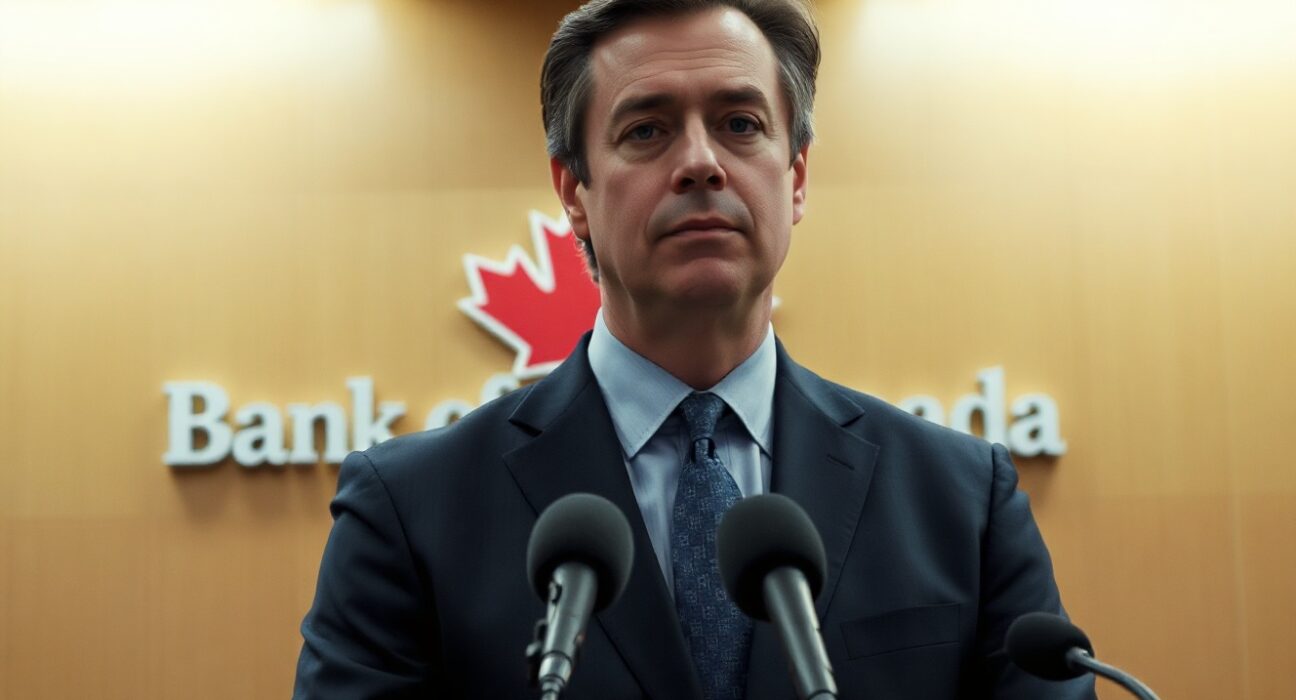
Bank of Canada Governor Tiff Macklem delivered a clear message on Thursday: Canada’s economy is not in a recession. Speaking at a press conference following the release of the central bank’s latest monetary policy report, Macklem acknowledged that growth has been uneven but emphasized that recent GDP data and consumer spending trends do not meet the technical definition of a recession.
What the Data Shows
Macklem pointed to second-quarter GDP figures that, while modest, showed expansion. ‘The economy is growing, albeit at a slower pace than we have seen in recent years,’ he said. ‘We are not seeing the broad-based decline in economic activity that characterizes a recession.’ The Bank of Canada’s own projections suggest growth will pick up in the second half of the year, supported by resilient consumer spending and a strong labor market.
Implications for Monetary Policy
The governor’s remarks come as the central bank holds its key interest rate at 4.5%, following a series of rate hikes aimed at curbing inflation. Macklem indicated that while inflation remains above the 2% target, the economy’s ability to absorb higher rates without tipping into a recession gives the bank room to maintain its current stance. ‘We are in a period of adjustment, not a downturn,’ he said.
Why This Matters for Canadians
For households and businesses, Macklem’s assessment offers some reassurance. Mortgage rates, borrowing costs, and consumer confidence are all influenced by the central bank’s view of the economy. By ruling out a recession, the Bank of Canada signals that the worst-case scenario—a prolonged contraction—is not on the table. However, Macklem cautioned that growth will remain below trend for the near term, meaning job gains and wage increases may slow.
Conclusion
Macklem’s statement reinforces the central bank’s narrative that the economy is undergoing a necessary cooling phase, not a collapse. With inflation still above target and global uncertainty persisting, the Bank of Canada is likely to keep rates steady for the foreseeable future, watching for signs of either a rebound or a deeper slowdown.
FAQs
Q1: What is the technical definition of a recession?
A recession is typically defined as two consecutive quarters of negative GDP growth. Canada has not met this threshold.
Q2: How does the Bank of Canada’s view affect interest rates?
If the economy were in recession, the bank might cut rates to stimulate growth. Since Macklem sees no recession, rates are likely to remain steady.
Q3: What should consumers expect in the coming months?
Continued slow growth, stable but elevated borrowing costs, and a gradual easing of inflation pressures.
Disclaimer: The information provided is not trading advice, Bitcoinworld.co.in holds no liability for any investments made based on the information provided on this page. We strongly recommend independent research and/or consultation with a qualified professional before making any investment decisions.
