

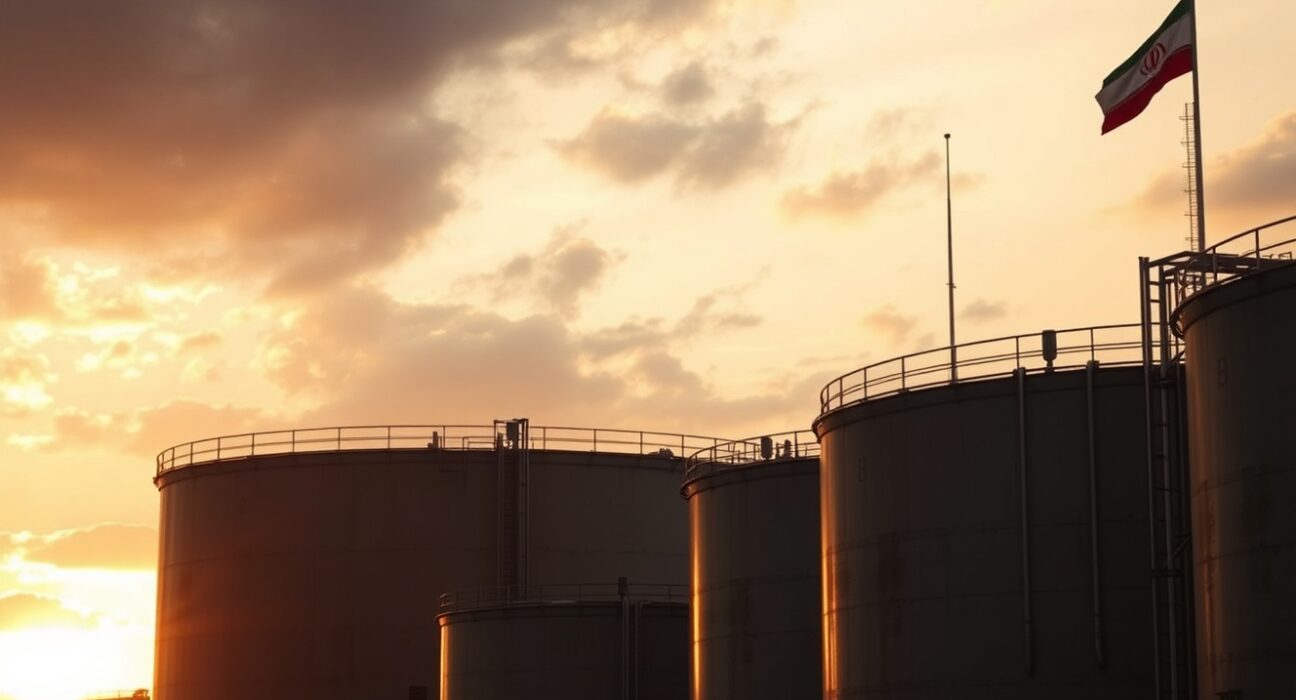
Commerzbank analysts report that a risk premium remains embedded in Brent crude oil prices following the recent escalation of tensions between Iran and Israel, with the market pricing in a persistent threat to supply stability in the Middle East. The bank’s commodities desk notes that while no immediate supply disruption has occurred, the psychological and strategic impact of the conflict has shifted trader expectations.
Geopolitical Risk Continues to Underpin Prices
The risk premium, which surged in the days following the initial military exchanges, has not fully dissipated despite a lack of direct oil infrastructure damage. Commerzbank strategists argue that the market is now accounting for the possibility of future retaliation or miscalculation, particularly given Iran’s strategic position near the Strait of Hormuz, a chokepoint for roughly 20% of global oil transit.
Brent crude futures have stabilized in a range above $80 per barrel, a level that analysts say reflects both the immediate geopolitical overlay and broader market fundamentals. The bank’s assessment aligns with other market observers who note that the risk premium is likely to persist until there is clear de-escalation or a diplomatic resolution.
Market Implications and Trader Sentiment
The persistence of the risk premium has implications for energy costs, inflation expectations, and central bank policy decisions globally. Higher oil prices feed into transportation and manufacturing costs, potentially complicating efforts by the Federal Reserve and other central banks to ease monetary policy.
Commerzbank’s analysis highlights that options markets are still pricing in elevated volatility, suggesting traders are hedging against further spikes. The backwardation structure in the futures curve, where near-term contracts trade above longer-dated ones, also indicates that the market sees current supply risks as acute rather than structural.
Why This Matters for Investors
For investors, the sustained risk premium means that energy sector equities and oil-linked assets may continue to benefit from uncertainty, but it also introduces a tail risk of sharp corrections if diplomatic channels produce a surprise breakthrough. The bank advises caution, noting that the current environment favors active risk management over directional bets.
Conclusion
Commerzbank’s view underscores that the Iran conflict has left a lasting imprint on oil markets, with the risk premium likely to persist until there is concrete evidence of de-escalation. Traders and policymakers alike must navigate a landscape where geopolitical noise remains a dominant driver of price action.
FAQs
Q1: What is a risk premium in oil markets?
A risk premium is the extra amount traders are willing to pay for crude oil due to uncertainty about future supply, such as the threat of conflict in a major producing region.
Q2: How does the Iran conflict affect Brent crude prices?
The conflict raises fears of supply disruptions, particularly if the Strait of Hormuz is affected, which pushes prices higher as traders demand compensation for the risk of lost output.
Q3: How long could the risk premium last?
Commerzbank suggests the premium will persist until there is clear diplomatic progress or a sustained reduction in military tensions, which could take weeks or months depending on geopolitical developments.
Disclaimer: The information provided is not trading advice, Bitcoinworld.co.in holds no liability for any investments made based on the information provided on this page. We strongly recommend independent research and/or consultation with a qualified professional before making any investment decisions.
