

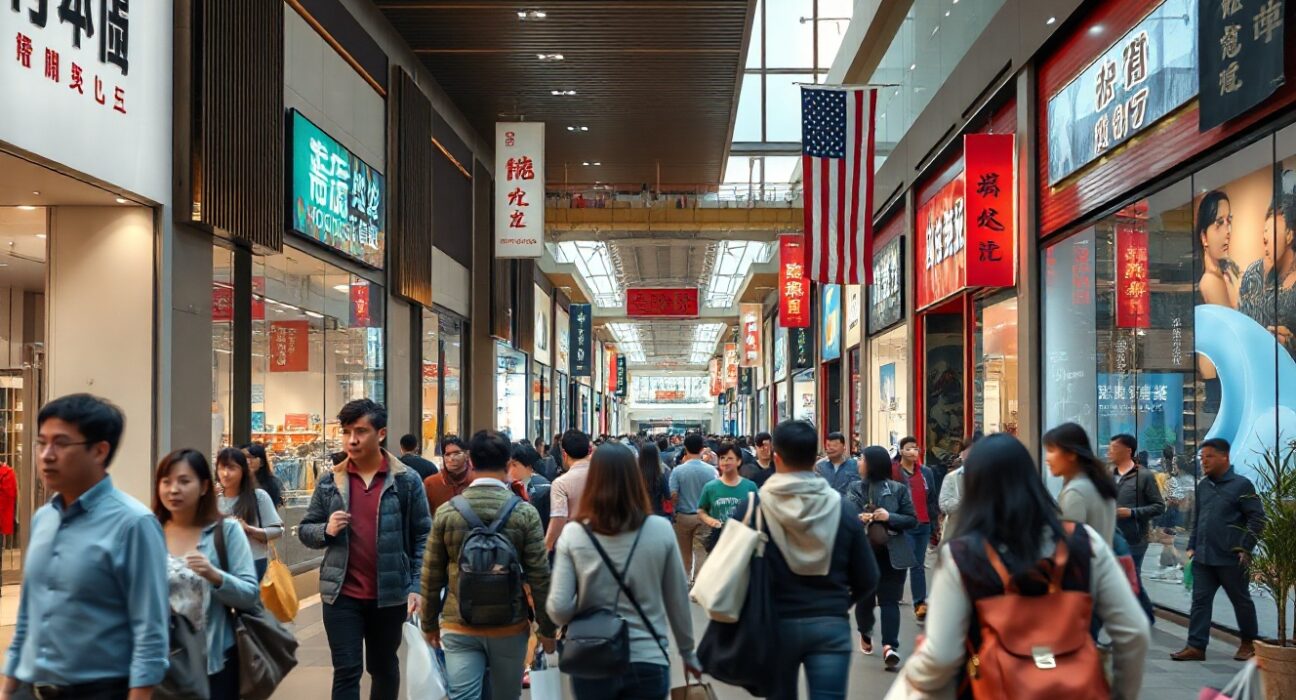
China’s retail sales increased by 0.6% in July compared with the same month last year, falling short of market expectations and signaling that consumer demand remains fragile despite ongoing policy support. The data, released by the National Bureau of Statistics, came in below the 1.0% growth forecast by economists polled by Reuters, highlighting the uneven recovery in the world’s second-largest economy.
What the Data Shows
The 0.6% year-on-year rise in retail sales for July marks a slowdown from the previous month’s 2.0% gain, indicating that household consumption is still under pressure. The figure reflects a complex picture: while services and online retail have shown resilience, spending on big-ticket items such as automobiles and home appliances remains subdued. The data also comes amid a property market downturn and persistently high youth unemployment, both of which weigh on consumer confidence.
Implications for the Economy
The miss in retail sales adds to evidence that China’s economic recovery is losing momentum. Industrial output and fixed-asset investment, also released in the same batch of data, showed mixed results, with industrial production growing 3.7% year-on-year in July, slightly above expectations, while investment growth slowed. The combination of weak consumption and tepid investment suggests that the government may need to introduce more targeted stimulus measures to meet its annual growth target of around 5%.
Why It Matters
Consumer spending is a critical driver of China’s economy, accounting for over 60% of GDP growth in recent years. The persistent weakness in retail sales not only affects domestic businesses but also has global implications, as China is a major market for many international brands and commodities. Investors and policymakers will be watching closely for any new policy responses, such as interest rate cuts or fiscal support, to shore up demand.
Context and Outlook
July’s retail sales data comes on the heels of a series of disappointing economic indicators, including a contraction in exports and deflationary pressures. The Chinese government has already rolled out measures to boost consumption, such as tax cuts on new energy vehicles and subsidies for home appliance purchases, but their impact has been limited so far. Economists expect that further policy easing may be necessary in the coming months, but the effectiveness of such measures will depend on restoring consumer confidence, which remains fragile amid job insecurity and a sluggish property market.
Conclusion
China’s July retail sales miss underscores the challenges facing the economy as it navigates a post-pandemic recovery marked by weak domestic demand and external headwinds. While the data does not signal an imminent crisis, it highlights the need for sustained policy support to stabilize consumption and restore confidence. The coming months will be crucial in determining whether the current measures are sufficient or if additional action is required to meet growth targets.
FAQs
Q1: What was the exact retail sales growth rate in China for July?
China’s retail sales rose 0.6% in July compared with a year earlier, missing the 1.0% forecast by economists.
Q2: Why did retail sales miss expectations?
The miss is attributed to weak consumer confidence, a property market downturn, and high youth unemployment, which have dampened spending on big-ticket items.
Q3: What are the potential policy responses?
The government may introduce additional stimulus measures, such as interest rate cuts, fiscal support, or targeted subsidies, to boost consumption and support economic growth.
Disclaimer: The information provided is not trading advice, Bitcoinworld.co.in holds no liability for any investments made based on the information provided on this page. We strongly recommend independent research and/or consultation with a qualified professional before making any investment decisions.
