

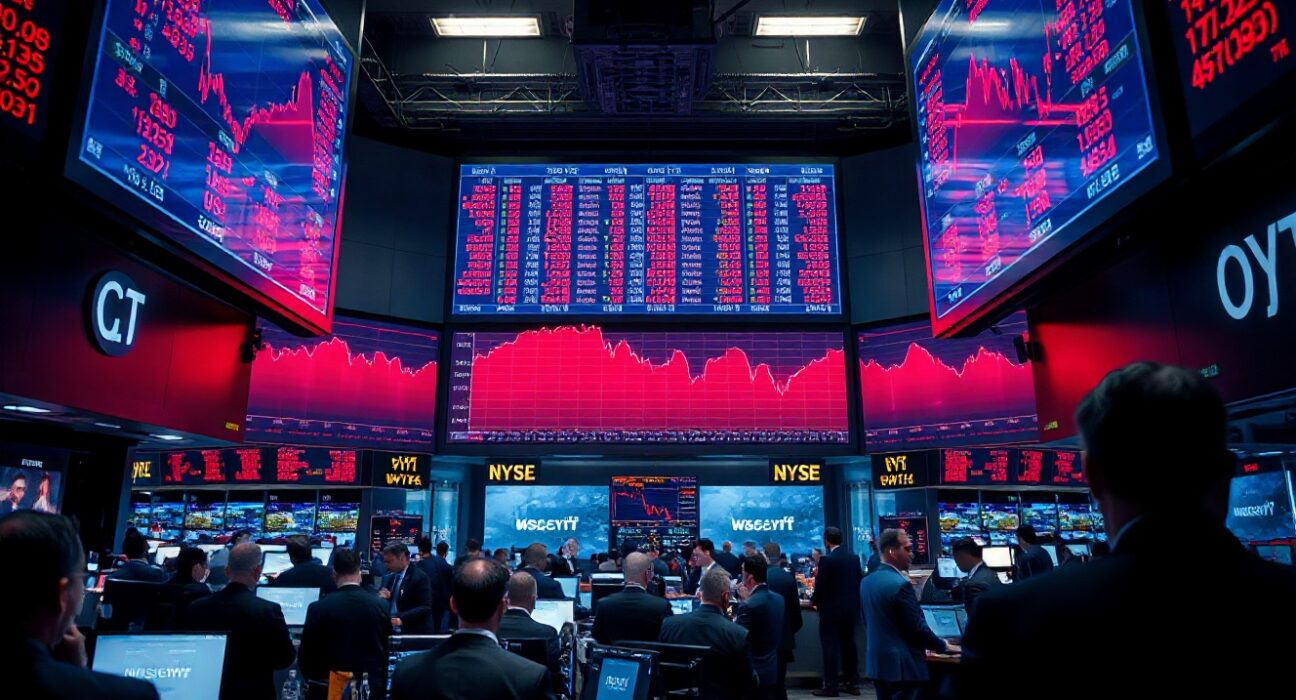
Citigroup has issued a stark warning that global stock markets are now exhibiting the characteristics of the largest financial bubble since the 2008 global financial crisis. The bank’s latest analysis reveals that 10 of the 18 indicators on its proprietary Global Bear Market Checklist have entered what it calls the ‘danger zone.’
What Is the Global Bear Market Checklist?
Citigroup’s checklist is a systematic framework designed to identify structural vulnerabilities in equity markets. It tracks a range of factors, from valuation metrics and investor sentiment to capital flows and market activity. The fact that more than half of these indicators are now flashing red suggests that the current bull run may be built on increasingly fragile foundations.
Among the key risk factors flagged by the bank are historically high stock valuations, exuberant investor sentiment, a surge in capital pouring into artificial intelligence-related equities, and a marked increase in initial public offerings. These conditions, Citigroup notes, have historically preceded significant market corrections.
AI Investment Frenzy and IPO Surge
A notable driver of the current bubble-like environment is the unprecedented enthusiasm surrounding artificial intelligence. Over the past 18 months, AI-linked stocks have attracted massive inflows, pushing valuations in the sector to levels that some analysts consider detached from underlying fundamentals. This pattern mirrors the dot-com era, where speculative capital chased technology stocks before a sharp collapse.
Simultaneously, the IPO market has rebounded strongly, with a wave of new listings—many in the tech and AI space—further inflating market froth. Historically, a flood of new issuances near market peaks has been a reliable warning signal for investors.
What This Means for Investors
Despite the warning, Citigroup’s official year-end market outlook remains cautiously optimistic. The bank acknowledges that the current cycle could still extend further before any correction materializes. However, it cautioned that if additional risk indicators begin to trigger, the traditional strategy of ‘buying the dip’ during a market pullback could become significantly more dangerous.
For retail and institutional investors alike, the message is clear: the margin for error is narrowing. Those who have grown accustomed to recovering losses quickly during downturns may find that the next correction does not behave like the previous ones.
Conclusion
Citigroup’s analysis adds to a growing chorus of voices urging caution in global equity markets. While no single indicator can predict a crash, the convergence of multiple warning signals warrants serious attention. Investors would be well-advised to reassess their risk exposure and prepare for a period of heightened volatility.
FAQs
Q1: What is the Global Bear Market Checklist?
A: It is a set of 18 indicators developed by Citigroup to identify structural risks in stock markets. It tracks valuation, sentiment, capital flows, and market activity to signal when conditions resemble past bear markets.
Q2: Should I sell my stocks based on this warning?
A: Not necessarily. The warning is a risk assessment, not a prediction of an imminent crash. Investors should review their portfolio’s exposure to overvalued sectors, particularly AI and tech, and consider diversifying to manage risk.
Q3: How does the current bubble compare to 2008?
A: The 2008 crisis was rooted in housing and credit markets, while today’s risks are concentrated in equity valuations, speculative AI investing, and frothy IPO activity. The triggers differ, but the pattern of excessive optimism and leverage is similar.
Disclaimer: The information provided is not trading advice, Bitcoinworld.co.in holds no liability for any investments made based on the information provided on this page. We strongly recommend independent research and/or consultation with a qualified professional before making any investment decisions.
