

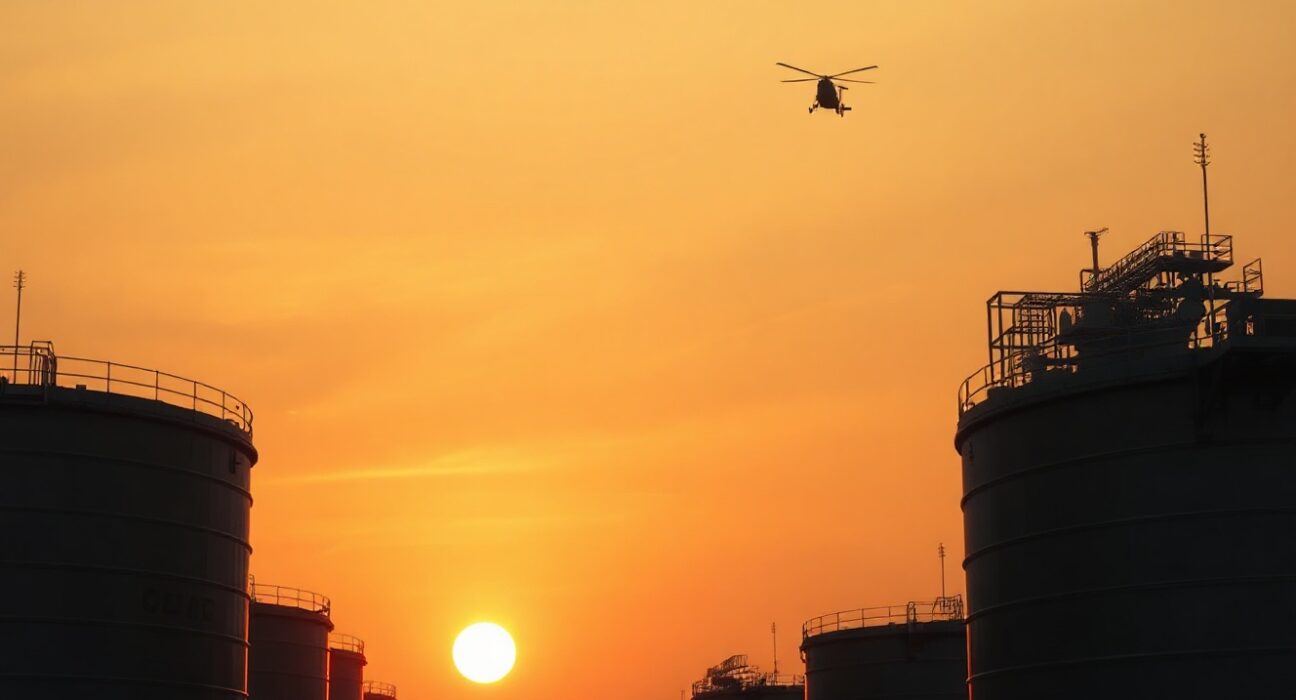
Crude oil prices have remained surprisingly stable this week, even as President Donald Trump issued fresh threats of military action against Iran following the downing of a US reconnaissance helicopter near the Strait of Hormuz. The incident, which occurred on Tuesday, has escalated tensions in the region but has so far failed to trigger the kind of price spikes typically associated with Middle East conflict.
Market Resilience Amid Rising Rhetoric
Brent crude traded near $72 per barrel on Wednesday, virtually unchanged from the previous session, while West Texas Intermediate hovered around $68. Analysts attribute the muted response to several factors: ample global supply, weaker-than-expected demand from China, and a market that has grown accustomed to periodic geopolitical flare-ups without actual supply disruptions.
The downed helicopter, an unarmed surveillance drone, was reportedly shot down by Iranian air defenses over what Tehran claims was its territorial airspace. The Pentagon has denied the claim, stating the aircraft was operating in international airspace. President Trump responded by tweeting that the US would respond with “overwhelming force” if American assets are threatened again.
Why Oil Isn’t Reacting as Expected
Historically, any direct military confrontation between the US and Iran has sent crude prices surging by 5% to 10% within hours. The current calm suggests traders are pricing in a low probability of actual conflict. “The market has seen this movie before,” said Mark Thompson, a senior energy analyst at a London-based consultancy. “Unless there is a clear disruption to tanker traffic through the Strait of Hormuz, the risk premium remains limited.”
The Strait of Hormuz, a narrow waterway between Iran and Oman, handles about 20% of the world’s oil shipments. Any blockade or military engagement there could cut off supply from key producers like Saudi Arabia, Iraq, and the UAE. However, current shipping data shows no significant rerouting or insurance premium hikes, indicating that traders believe both sides are engaging in brinkmanship rather than preparing for war.
Implications for Energy Markets and Consumers
For consumers, the stability in crude prices is a welcome relief after a volatile 2025 that saw oil swing between $65 and $85 per barrel. Lower crude costs have helped ease inflation in many economies, with gasoline prices at the pump falling in the US and Europe. However, analysts caution that the situation remains fragile. Any miscalculation by either side could trigger a rapid reversal.
Iranian officials have warned that they possess the capability to mine the strait and target US naval vessels. While such threats are not new, they underscore the underlying risk that the market is currently ignoring. “The complacency in oil markets is itself a risk factor,” noted a report from the International Energy Agency. “Geopolitical shocks are by nature unpredictable.”
Conclusion
Crude oil’s refusal to react to the latest US-Iran confrontation reflects a market that has learned to distinguish between rhetoric and genuine supply threats. For now, traders are betting that cooler heads will prevail. But the underlying tensions remain unresolved, and the next escalation could easily break the calm. Investors and consumers alike should watch for any signs of actual military engagement or disruption to shipping lanes in the Gulf.
FAQs
Q1: Why didn’t oil prices spike after the helicopter incident?
The market has priced in a low probability of actual conflict, and there has been no disruption to oil shipments through the Strait of Hormuz. Traders view the incident as a diplomatic escalation rather than a prelude to war.
Q2: How much oil passes through the Strait of Hormuz daily?
Approximately 20% of the world’s oil supply, or about 17 million barrels per day, transits the Strait of Hormuz. Any blockage would have severe global consequences.
Q3: Should consumers expect higher gasoline prices soon?
Not immediately. Crude oil prices remain stable, and unless there is a tangible supply disruption, retail fuel prices are likely to stay near current levels. However, the situation could change rapidly if tensions escalate further.
Disclaimer: The information provided is not trading advice, Bitcoinworld.co.in holds no liability for any investments made based on the information provided on this page. We strongly recommend independent research and/or consultation with a qualified professional before making any investment decisions.
