
Digital Assets Summit 2026 Closes in Singapore on a Shift from Connection to Construction
In this article
Industry, policymakers and market infrastructure leaders set out what must be true for programmable finance and tokenisation to scale
SINGAPORE, 8 October 2026 — The second Digital Assets Summit (DAS2026) closed in Singapore today with a clear change in tone: the industry is no longer debating whether digital assets belong inside institutional finance, but how programmable finance should be built. Convened by the Digital Assets Association under the theme Programmable Finance, the summit brought together policymakers, exchanges, banks, custodians and law-enforcement agencies ahead of TOKEN2049 week.
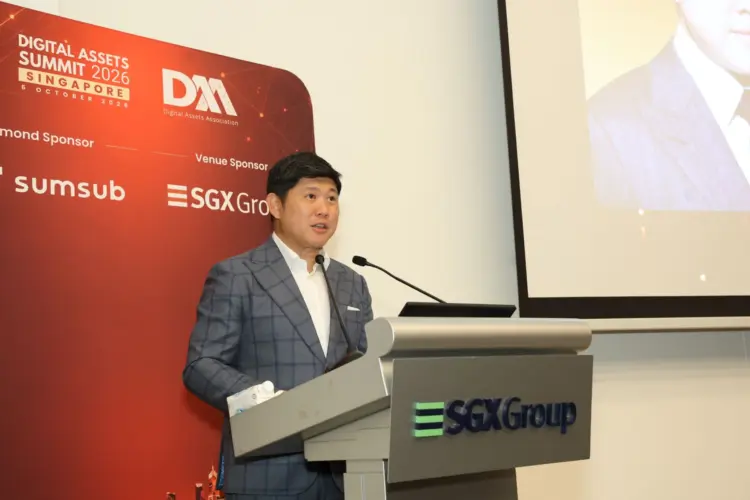
Opening the summit, Danny Chong, Co-Chairman of the Digital Assets Association, said last year’s theme — Shaping the Future of Finance — had given way to a more practical task. “A year on, that connection between digital assets and traditional finance has become much more tangible. Our focus has evolved from connection to construction,” he said. “DAS isn’t about spending the day convincing each other that tokenisation is the future. But about asking what needs to be true for tokenisation to be the future.”
Trust, usefulness and the workforce
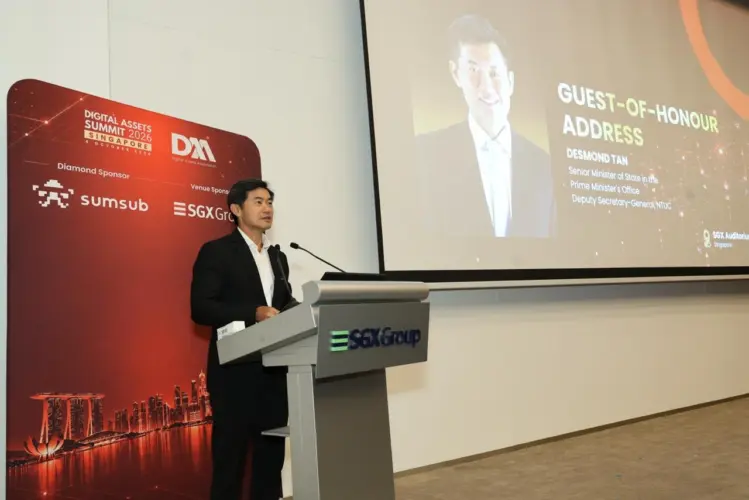
Guest of Honour Desmond Tan, Senior Minister of State and Deputy Secretary-General of NTUC, framed the build-out of the next financial system around three questions: how technology can make financial services more efficient, useful and accessible; how trust is preserved in a digital world; and how workers remain at the centre of the shift. “Programmable finance will only succeed if these three things move together. Useful innovation, trusted infrastructure and a workforce ready for change,” he said, pointing to Singapore’s tripartite model — employers, unions and government — including support through NTUC and the CDC grant.
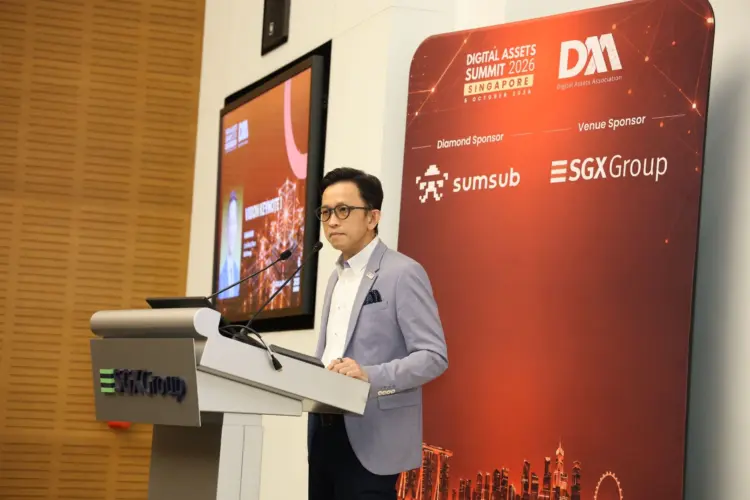
Ivan Han, Chief Risk Officer at SGX, said digital assets have already changed how markets think about settlement, ownership, collateral mobility and access. The next phase, he argued, is using programmability to solve real problems: moving collateral more efficiently, reducing settlement friction, improving liquidity and connecting markets that remain fragmented.
Singapore’s next decade
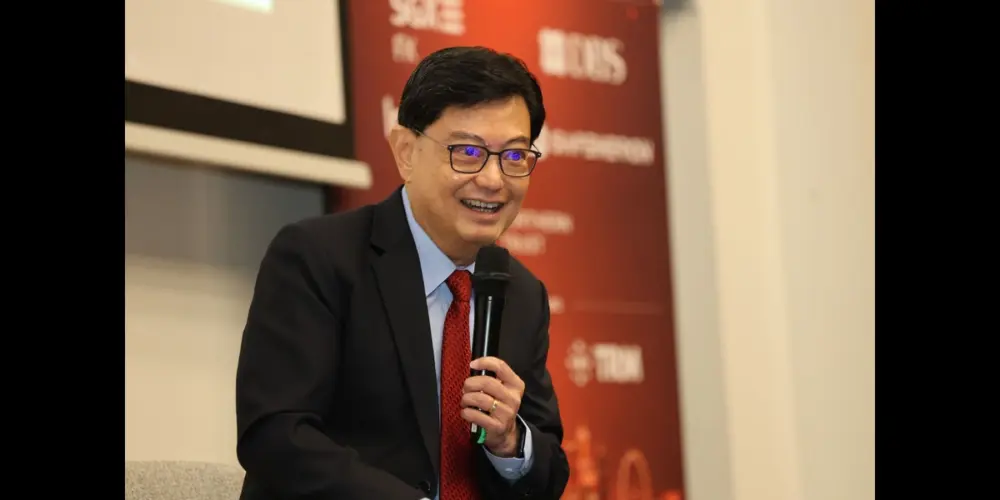
In a fireside chat with Tan Chong Huat, Chairman of SDAX Exchange and RHTLaw Asia, Heng Swee Keat, Chairman of the National Research Foundation and former Deputy Prime Minister of Singapore, set out five forces shaping the next decade: deglobalisation, decarbonisation, demographics, digitalisation and distribution. On competitiveness, he returned to a governing principle associated with Lee Kuan Yew: Singapore must remain relevant and useful to the international community, adapt to regional needs, and position itself as a vital node for global Asia.
Tokenisation at scale
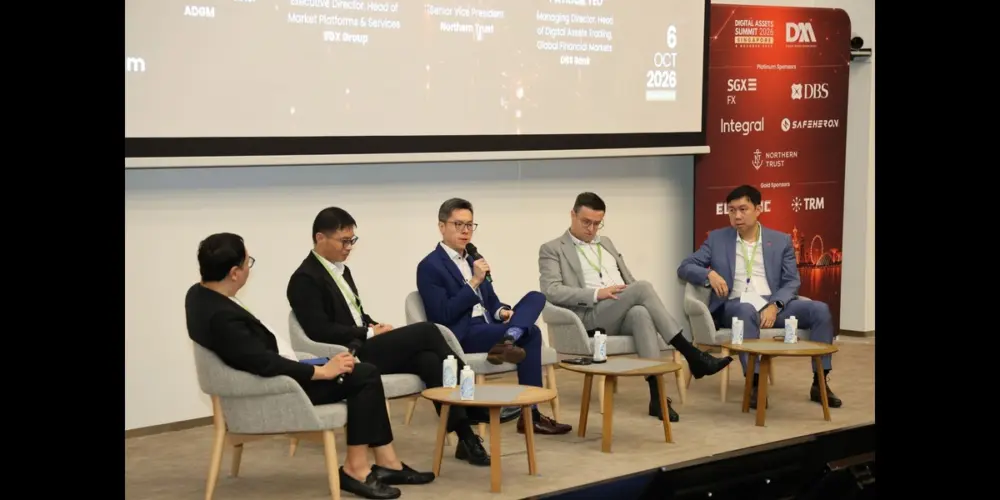
A panel moderated by Daniel Lee, CEO of Cactus Custody, examined tokenisation at scale with Wai Lum Kwok, Senior Executive Director of ADGM; Derek Neo, Executive Director, Head of Market Platforms and Services at SGX Group; Benjamin Versluijs, Senior Vice President of Northern Trust; and Patrick Yeo, Managing Director, Head of Digital Assets, Global Financial Markets at DBS Bank.
Yeo said tokenised money market funds are seeing increasing adoption as a liquid alternative to stablecoins, allowing digital-asset natives to deploy capital into other tokenised investments while avoiding the 1,250 per cent risk-weighting applied to certain real-world-asset exposures. He also pointed to rising stablecoin spending inside DBS, and to wallet familiarity as a bridge into broader tokenised investments. “The future of tokenisation requires us to reimagine tokenisation as the next generation of financial rules, and agentic AIs will help catalyse organisations,” he said.
Neo cautioned that interoperability is not only a technology problem. It includes operational, legal and cross-rail integration between digital and traditional systems. Because the transition will take five to 15 years rather than a single switch, solving cross-rail interoperability is essential so that no part of the market is left behind.
Regulation, security and cross-border coordination
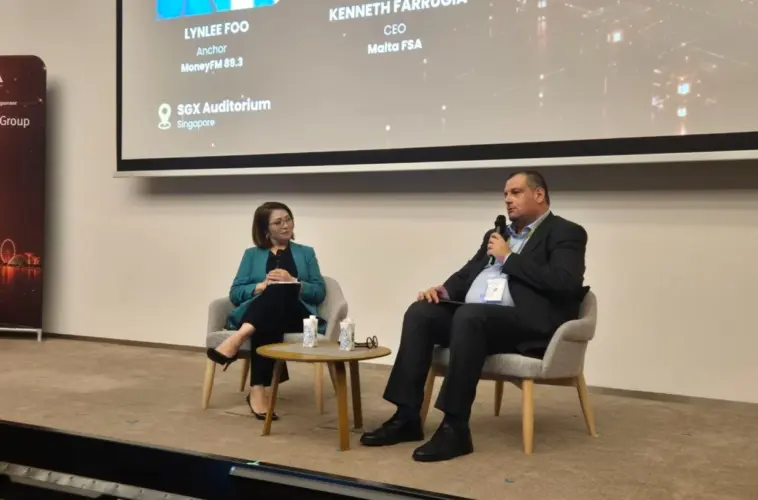
Kenneth Farrugia, CEO of the Malta Financial Services Authority, told Money FM 89.3 anchor Lynlee Foo that innovation and regulation have to move together. He said the authority consults industry on policy guidance and shares experience between regulators and firms. His advice: compliance is costly in the short term and worth it in the long term; for regulators, collaboration and cross-border information sharing matter because licence holders operate across jurisdictions.
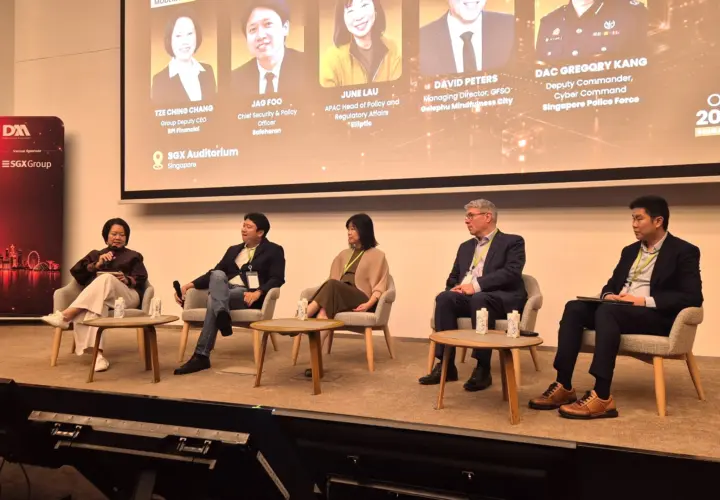
On institutional-grade security, Jag Foo, Chief Security and Policy Officer at SafeHeron, described five components: checks and balances that avoid a single point of failure; layered defence that raises the cost of an attack; a strong audit trail; infrastructure that meets industry standards; and cryptographic agility. DAC Gregory Kang, Deputy Commander, Cyber Command, Singapore Police Force, said investigations show that a misguided human decision is almost always involved in the lead-up to an exploit. The discussion, moderated by Tze Ching Chang, Deputy Chief Executive Officer of BPI Financial, also included June Lau of Elliptic and David Peters of Gelephu Mindfulness City.
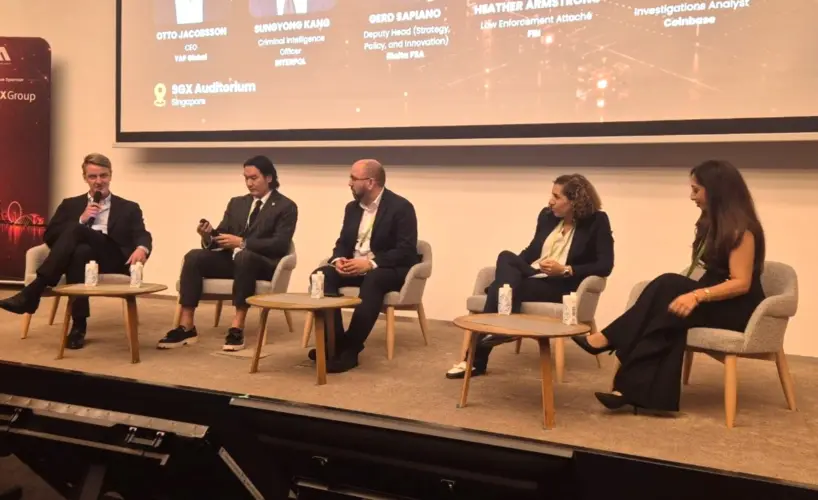
The closing panel, moderated by Otto Jacobsson, Chapter Lead of Digital Assets Association UK and CEO of YAP Global, looked at regulation, interoperability and global coordination with Gerd Sapiano of the Malta FSA, Heather Armstrong of the FBI, Sungyong Kang of INTERPOL, and Parul Vyas of Coinbase. Speakers said public-private collaboration is changing how digital crime is approached, while deliberate friction remains necessary to protect customers. Armstrong called for more consistent reporting mechanisms across jurisdictions so investigations can move faster.
END POINT — close of the release
Closing DAS2026, Chia Hock Lai, Chairman of the Responsible Fintech Institute and Co-Chairman of the Digital Assets Association, said that twelve months ago the summit was still asking “whether”. Today, every panel was asking “how”. “Asia is now the centre of gravity for this industry. While that is something to be proud of, it carries heavy responsibility. Our regulators gave this industry rules early, and the firms in this room have to live up to it,” he said.
He set three tests for the industry if next year’s summit is to move from “how” to “what next”:
- Build for the boring case. Being able to operate at 2 a.m. prepares a firm for anything.
- Share the standards, not just the wins. Playbooks and incident postmortems should travel across firms.
- Stay close to the regulators even when the work is moving slowly.
As digital assets move further into mainstream finance, the message from Singapore was that innovation and safeguards have to grow together. The Digital Assets Association said it looks forward to continuing the conversation in Singapore next year.
About the Digital Assets Association
The Digital Assets Association (DAA) is the organiser of the Digital Assets Summit. DAS2026, the second edition of the summit, was held in Singapore under the theme Programmable Finance, focusing on the intersection of digital assets and institutional finance, blockchain interoperability, regulatory clarity, market infrastructure and workforce readiness.
Media contact
YAP Global, on behalf of the Digital Assets Association