

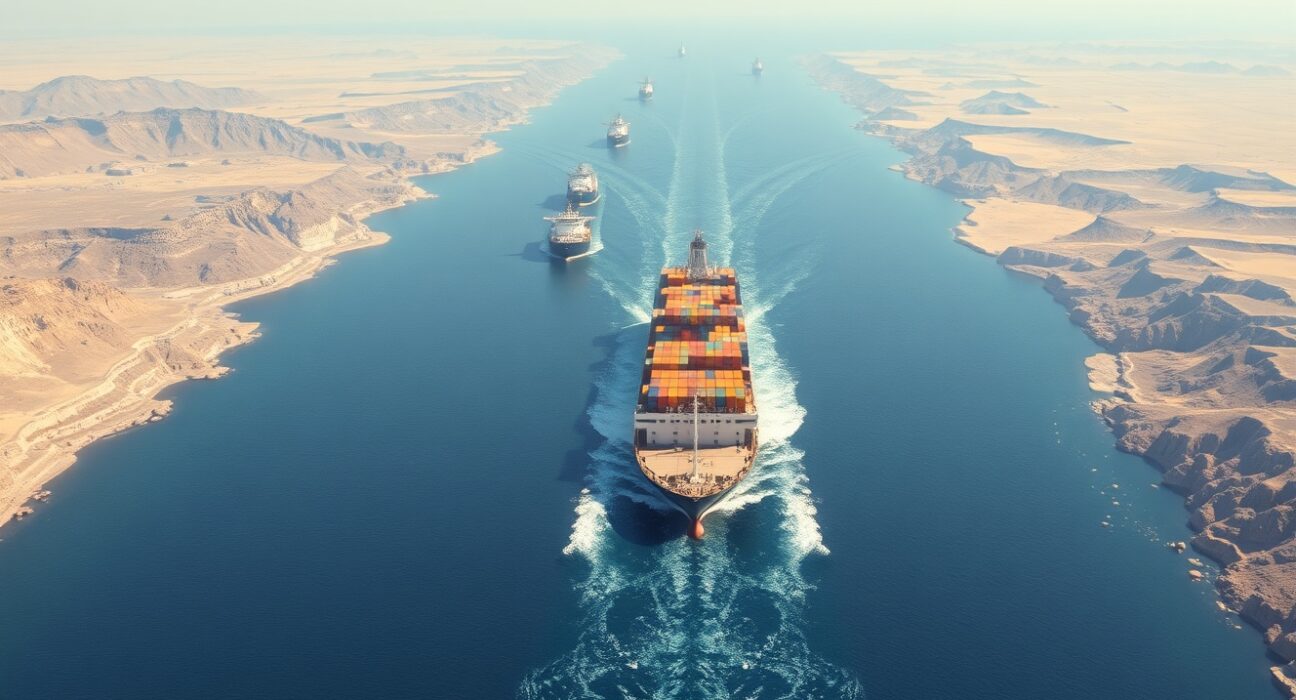
European Central Bank Governing Council member Joachim Nagel issued a stark warning today that persistent tensions in the Strait of Hormuz present a clear and present danger to global inflation stability. The Bundesbank president’s comments highlight how geopolitical flashpoints directly threaten monetary policy objectives across developed economies.
ECB’s Nagel Connects Hormuz Security to Inflation Pressures
Speaking at a financial stability conference in Frankfurt, Germany, on March 15, 2025, Joachim Nagel emphasized the tangible economic consequences of geopolitical instability. “As long as the situation in the Strait of Hormuz remains unresolved, the danger of higher inflation rises significantly,” Nagel stated during his keynote address. His warning comes amid renewed tensions in the critical maritime passage that handles approximately 20% of global oil consumption.
Nagel’s analysis reflects growing concern among central bankers about second-round effects from energy price shocks. The European Central Bank has maintained a data-dependent approach to monetary policy throughout 2024 and early 2025. However, external geopolitical factors increasingly complicate this framework. Energy prices remain a primary transmission channel for inflationary pressures into the broader European economy.
The Strait of Hormuz as Global Economic Chokepoint
The strategic waterway between Oman and Iran represents one of the world’s most critical energy arteries. According to data from the U.S. Energy Information Administration, the strait facilitates the transit of:
- 21 million barrels of oil daily
- 30% of globally traded crude oil
- 20% of global liquefied natural gas (LNG)
- Vital shipments to Asian markets including China, India, and Japan
Recent months have witnessed multiple incidents affecting shipping security in the region. These developments have kept risk premiums elevated in oil markets. Consequently, European natural gas benchmarks have shown increased volatility. The TTF front-month contract, Europe’s primary gas benchmark, has experienced price swings of up to 15% following security incidents in the Persian Gulf.
Historical Precedents and Economic Impact Analysis
Historical data reveals clear patterns linking Hormuz disruptions to economic consequences. The 2019 tanker attacks and 2021 shipping incidents both triggered immediate oil price spikes exceeding 10%. A 2024 study by the International Monetary Fund calculated that a sustained 30% increase in oil prices could add 1.2 percentage points to euro area inflation within 12 months.
Energy economists note that Europe’s energy diversification efforts since 2022 have created some resilience. However, the global nature of oil markets means regional disruptions still affect European consumers. The European Union now sources less than 15% of its crude oil from the Middle East, down from 25% in 2021. Nevertheless, global price benchmarks like Brent crude remain sensitive to Persian Gulf developments.
Monetary Policy Implications for the European Central Bank
Nagel’s warning underscores the delicate balancing act facing the ECB Governing Council. The central bank has successfully guided euro area inflation toward its 2% target after aggressive tightening cycles. However, exogenous shocks from geopolitical events could undermine this progress. Persistent energy price pressures might force the ECB to maintain restrictive policies longer than currently anticipated.
Financial markets have begun pricing in this risk premium. Euro area break-even inflation rates, derived from inflation-linked bonds, have edged higher in recent weeks. The five-year, five-year forward inflation swap, a key market gauge of long-term inflation expectations, remains anchored near 2%. Still, short-term indicators show increased sensitivity to energy news.
| Date | Event | Brent Crude Reaction | Euro Area Inflation Expectation Change |
|---|---|---|---|
| Jan 2025 | Shipping lane incident | +8.2% | +0.15 percentage points |
| Feb 2025 | Diplomatic tensions | +5.7% | +0.08 percentage points |
| Mar 2025 | Naval exercises announced | +3.1% | +0.05 percentage points |
Expert Perspectives on Risk Management
Former ECB Vice President Vítor Constâncio recently noted that “geopolitical risks represent the new frontier for central bank risk assessment.” His analysis suggests that traditional economic models struggle to quantify these threats adequately. Meanwhile, Isabel Schnabel, another ECB Executive Board member, has emphasized the importance of distinguishing between temporary price spikes and persistent inflationary pressures.
Energy market analysts point to several mitigating factors. Global strategic petroleum reserves remain at historically high levels following coordinated releases in 2022-2023. Additionally, OPEC+ maintains substantial spare production capacity exceeding 5 million barrels per day. These buffers could dampen the impact of any supply disruption from the Strait of Hormuz.
Broader Economic Consequences Beyond Energy
The inflationary impact extends beyond direct energy costs. Higher transportation expenses affect virtually all goods in the global supply chain. Manufacturing sectors face increased input costs, potentially squeezing profit margins. Services industries, particularly logistics and transportation, experience immediate cost pressures that often translate to consumer price increases.
European consumers remain sensitive to energy price fluctuations despite government support measures. The European Commission’s latest consumer sentiment survey shows that energy costs rank as the second-highest concern after general inflation. This sensitivity creates potential for second-round effects if businesses pass through higher costs to consumers.
Regional Security Dynamics and Diplomatic Efforts
The geopolitical landscape surrounding the Strait of Hormuz involves multiple stakeholders with competing interests. Iran’s strategic position gives it considerable influence over maritime security. Meanwhile, Gulf Cooperation Council members seek to ensure uninterrupted energy exports. International naval patrols, including European Union operations, aim to safeguard freedom of navigation.
Diplomatic channels remain active despite tensions. The European External Action Service has engaged in shuttle diplomacy between regional capitals. These efforts seek to establish confidence-building measures and prevent escalation. However, fundamental disagreements over regional security architecture persist, creating ongoing uncertainty.
Conclusion
Joachim Nagel’s warning about unresolved Hormuz tensions and inflation danger highlights the interconnected nature of modern geopolitics and monetary policy. The European Central Bank faces increasing challenges from external factors beyond traditional economic cycles. Energy market stability remains crucial for maintaining price stability across the euro area. As the ECB monitors these developments, financial markets will watch for any shift in policy guidance reflecting heightened geopolitical risk assessment. The situation underscores why central bankers increasingly view security policy as integral to economic stability.
FAQs
Q1: Why is the Strait of Hormuz so important for global inflation?
The Strait of Hormuz handles about 20% of global oil consumption and 30% of traded crude. Disruptions there immediately affect global oil prices, which feed into transportation, manufacturing, and energy costs worldwide, creating inflationary pressures.
Q2: How quickly can Hormuz disruptions affect European consumer prices?
Energy price changes typically affect consumer inflation within 1-3 months for direct energy costs and 3-6 months for broader goods and services through supply chain effects, according to ECB transmission analysis.
Q3: What tools does the ECB have to address geopolitical inflation shocks?
The ECB can adjust interest rates, provide forward guidance about policy duration, and utilize its balance sheet tools. However, monetary policy cannot prevent initial price spikes, only prevent them from becoming embedded in long-term expectations.
Q4: Has Europe reduced its vulnerability to Middle East energy disruptions?
Yes, significantly. Since 2022, the EU has reduced Middle East oil imports from 25% to under 15% of total consumption through diversification to other regions and accelerated renewable energy deployment.
Q5: What would constitute “resolution” of Hormuz tensions according to Nagel’s warning?
A sustainable resolution would involve stable security arrangements ensuring uninterrupted shipping, diplomatic agreements between regional powers, and mechanisms to prevent escalation of incidents into broader conflicts.
Disclaimer: The information provided is not trading advice, Bitcoinworld.co.in holds no liability for any investments made based on the information provided on this page. We strongly recommend independent research and/or consultation with a qualified professional before making any investment decisions.
