

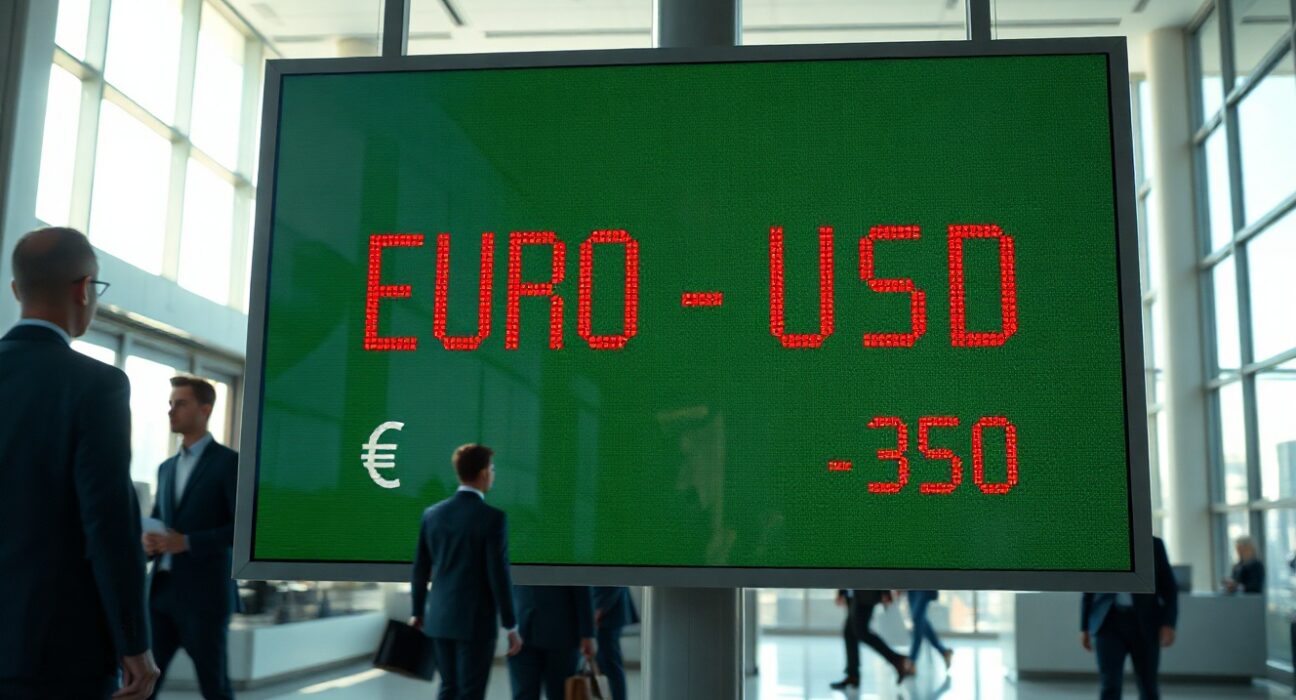
The euro softened against the U.S. dollar on Wednesday, drifting toward the 1.1350 mark as traders positioned for the release of the Personal Consumption Expenditures (PCE) price index — the Federal Reserve’s preferred inflation gauge. The move reflects growing expectations that the Fed may keep interest rates higher for longer, widening the policy divergence between the U.S. and the eurozone.
Fed Rate Hike Bets Firm Ahead of PCE Report
Markets have increasingly priced in the possibility of additional rate hikes from the Federal Reserve following a string of resilient U.S. economic data. Strong retail sales, a tight labor market, and above-consensus producer price figures have all contributed to a reassessment of the rate path. The PCE report, due later this week, is expected to show that inflation remains sticky, particularly in the services sector.
According to the CME FedWatch Tool, the probability of a 25-basis-point rate hike at the Fed’s next meeting has risen above 40%, up from roughly 30% a week ago. This shift has lifted the dollar broadly, putting pressure on the euro and other major currencies.
Eurozone Economic Slowdown Adds to Headwinds
On the other side of the Atlantic, the eurozone continues to face headwinds from sluggish manufacturing activity, weak consumer demand, and lingering energy price concerns. The European Central Bank (ECB) has signaled a cautious approach to further tightening, with policymakers emphasizing the need to avoid choking off the fragile recovery.
ECB President Christine Lagarde recently reiterated that future rate decisions would remain data-dependent, but markets have interpreted the tone as less hawkish than the Fed’s. This contrast has weighed on the single currency, which has now given back a portion of the gains made earlier in the month.
Technical Levels to Watch
From a technical perspective, the 1.1350 level has acted as a psychological support zone for EUR/USD. A sustained break below this threshold could open the door toward the 1.1300 handle, while resistance is seen near 1.1400 and then 1.1450. Traders are closely watching the PCE data for a catalyst that could determine the pair’s near-term direction.
The broader outlook remains tied to the relative pace of monetary policy between the Fed and the ECB. If U.S. inflation proves stubborn, the dollar could extend its gains, keeping the euro under pressure in the coming sessions.
Conclusion
The euro’s slide toward 1.1350 reflects a market recalibrating its expectations for Fed policy, with the upcoming PCE inflation data serving as the next major test. While the ECB remains cautious, the dollar is drawing support from a resilient U.S. economy and the prospect of higher rates. Traders should prepare for potential volatility around the PCE release, as the data could reinforce or reverse the current trend.
FAQs
Q1: What is the PCE price index and why does it matter for EUR/USD?
The Personal Consumption Expenditures (PCE) price index is the Federal Reserve’s preferred measure of inflation. It matters for EUR/USD because it influences the Fed’s interest rate decisions. A higher-than-expected reading could strengthen the dollar by raising rate hike expectations, pushing the euro lower.
Q2: Why is the euro weakening if the ECB is also raising rates?
While the ECB has raised rates, markets perceive the Fed as more likely to keep rates higher for longer due to stronger U.S. economic data. This divergence in monetary policy expectations makes the dollar more attractive relative to the euro.
Q3: What are the key support and resistance levels for EUR/USD right now?
Key support is at 1.1350, followed by 1.1300. On the upside, resistance is at 1.1400 and then 1.1450. A break above or below these levels could signal the next directional move, depending on the PCE data outcome.
Disclaimer: The information provided is not trading advice, Bitcoinworld.co.in holds no liability for any investments made based on the information provided on this page. We strongly recommend independent research and/or consultation with a qualified professional before making any investment decisions.
