

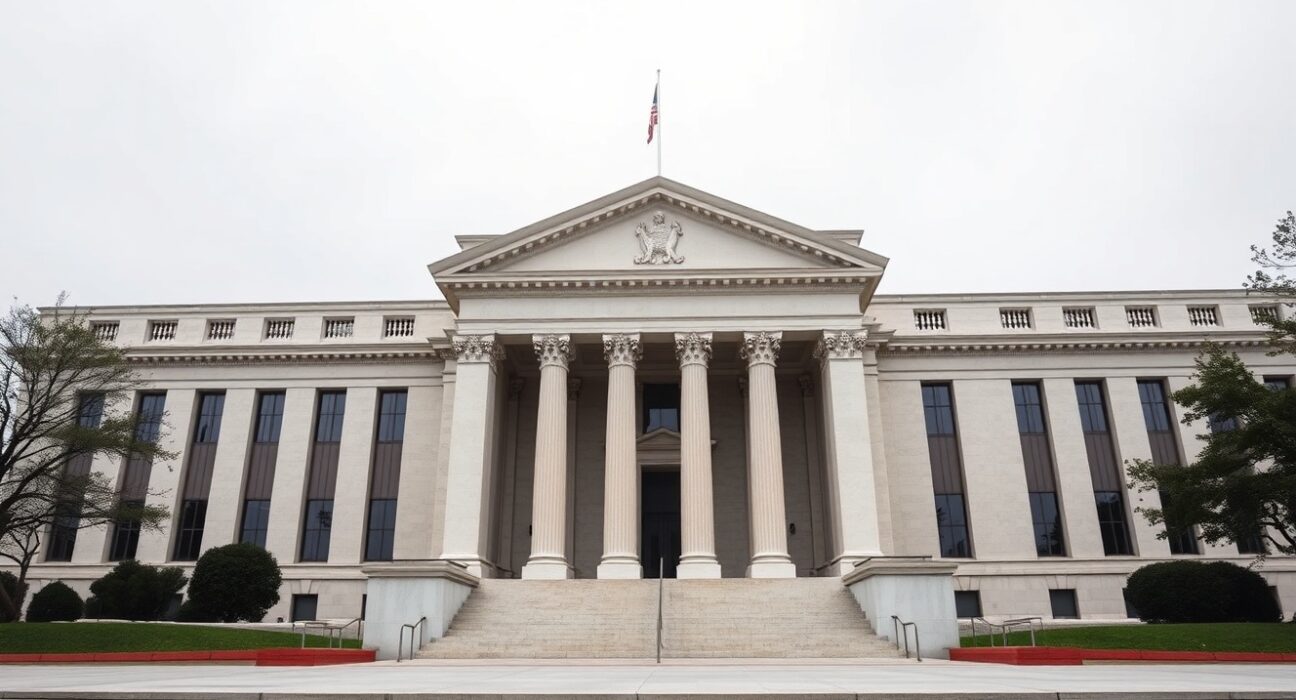
The Federal Reserve’s patience before implementing gradual rate cuts remains a key theme as inflation stays elevated, according to a recent analysis from Commerzbank. This cautious approach signals a measured shift in monetary policy, impacting markets and the broader economy.
Commerzbank Analysis Highlights Fed Patience Amid Sticky Inflation
Commerzbank economists emphasize that the Federal Reserve is adopting a patient stance. They expect gradual rate cuts only after inflation shows sustained progress toward the 2% target. This analysis provides critical context for investors watching the Fed’s next moves.
The central bank’s current data-dependent approach reflects ongoing concerns about price pressures. Recent economic indicators show that core inflation remains above the Fed’s comfort zone. This reality forces policymakers to delay aggressive easing.
According to the Commerzbank report, the Fed will likely hold rates steady through mid-2025. They project the first quarter-point cut in the third quarter. This timeline aligns with market expectations but underscores the uncertainty surrounding inflation’s trajectory.
Key factors driving the Fed’s patience include:
- Sticky services inflation – Persistent price increases in housing and healthcare
- Strong labor market – Low unemployment supports consumer spending
- Geopolitical risks – Supply chain disruptions from global conflicts
- Wage growth – Upward pressure on prices from higher labor costs
These elements create a complex environment for policymakers. They must balance inflation control with economic growth support.
Gradual Rate Cuts: A Delicate Balancing Act
The concept of gradual rate cuts reflects the Fed’s desire to avoid policy mistakes. Rapid easing could reignite inflation. Conversely, staying too tight might trigger a recession.
Commerzbank’s analysis draws on historical precedents. They compare the current cycle to the 1990s, when the Fed cut rates slowly after a tightening phase. That approach successfully managed inflation without derailing growth.
Market participants should prepare for a slow easing cycle. The Fed will likely cut rates by 25 basis points at alternating meetings. This pace allows time to assess economic data between decisions.
The impact on financial markets is significant. Bond yields may remain elevated as investors price in a higher-for-longer rate environment. Equity markets could face volatility as growth expectations adjust.
For cryptocurrency markets, the Fed’s patience presents mixed signals. Higher interest rates reduce liquidity available for risk assets. However, a gradual easing path could eventually support digital asset prices.
Timeline of Fed Policy Expectations
Commerzbank outlines a clear timeline for potential rate cuts:
- Q2 2025 – No change; Fed monitors inflation data
- Q3 2025 – First 25 bps cut if inflation moderates
- Q4 2025 – Second cut possible; depends on economic outlook
- 2026 – Further gradual cuts toward neutral rate
This schedule assumes no major economic shocks. A recession or financial crisis would force faster action.
Elevated Inflation Pressures Shape Monetary Policy Direction
Elevated inflation remains the primary obstacle to rate cuts. The Fed’s preferred measure, the core PCE price index, hovers around 2.8%. This level exceeds the 2% target by a significant margin.
Commerzbank analysts note that inflation persistence stems from multiple sources. Housing costs continue to rise, though at a slower pace. Services excluding housing show stubborn price increases.
Global factors also play a role. Energy prices remain volatile due to geopolitical tensions. Trade disruptions from shipping route changes add to cost pressures.
The Fed’s patience strategy acknowledges these realities. Policymakers want to see clear evidence of disinflation before acting. This cautious approach reduces the risk of premature easing.
Historical data shows that premature rate cuts often lead to policy reversals. The 1970s stagflation period serves as a cautionary tale. The Fed under Paul Volcker eventually raised rates sharply to break inflation.
Today’s policymakers aim to avoid such mistakes. They communicate clearly about their data-dependent stance. This transparency helps markets adjust expectations gradually.
Market Reactions and Investor Implications
Financial markets have already priced in a patient Fed. The yield curve remains inverted, signaling recession concerns. Short-term rates exceed long-term rates, a classic warning sign.
Equity investors face a challenging environment. High interest rates compress valuation multiples. Growth stocks, particularly in technology, feel the pressure most acutely.
However, some sectors benefit from the current regime. Financial stocks gain from wider net interest margins. Energy companies profit from elevated commodity prices.
For bond investors, the strategy is straightforward. Short-duration bonds offer attractive yields with less price risk. Long-duration bonds carry more uncertainty about future rate paths.
Commerzbank recommends a diversified approach. Investors should hold a mix of assets to navigate the uncertain outlook. Fixed income provides stability, while equities offer growth potential over time.
The cryptocurrency market shows mixed reactions. Bitcoin has historically performed well in low-rate environments. But current conditions favor dollar-denominated assets.
Regulatory developments also influence crypto markets. The SEC’s stance on digital assets creates additional uncertainty. A clear regulatory framework could boost institutional adoption.
Expert Perspectives on Fed Policy Path
Commerzbank’s analysis aligns with views from other major institutions. Goldman Sachs expects the first rate cut in September 2025. JPMorgan forecasts a slower pace, with cuts beginning in late 2025.
The divergence in forecasts highlights the uncertainty. Each institution weighs different data points. The common thread is that patience remains the dominant theme.
Former Fed officials offer additional context. Many emphasize the importance of credibility. The Fed must maintain its inflation-fighting reputation to anchor expectations.
Academic economists point to structural changes in the economy. Globalization’s retreat and demographic shifts may keep inflation higher. These factors require a higher neutral rate than pre-pandemic levels.
Commerzbank incorporates these perspectives into their analysis. They conclude that the Fed’s patience is justified given the circumstances.
Global Implications of Fed Patience
The Fed’s policy stance affects economies worldwide. Higher US interest rates attract capital flows from emerging markets. This dynamic strengthens the dollar and pressures foreign currencies.
Central banks in other countries face difficult choices. They must balance domestic inflation with exchange rate stability. Some may delay their own easing cycles to avoid currency depreciation.
The European Central Bank and Bank of England face similar challenges. Both deal with persistent inflation and slow growth. Their policy paths will likely mirror the Fed’s cautious approach.
For commodity-exporting nations, the impact is mixed. Strong US demand supports export revenues. But a strong dollar makes dollar-denominated debt more expensive.
Developing economies with high debt levels face particular risks. Higher global interest rates increase borrowing costs. This dynamic could trigger debt crises in vulnerable countries.
Commerzbank’s global research team monitors these spillover effects. They advise clients to consider international diversification. Emerging market assets may offer value but carry significant risks.
Conclusion
The Federal Reserve’s patience before gradual rate cuts reflects a careful strategy amid elevated inflation. Commerzbank’s analysis provides a clear framework for understanding this approach. Investors should prepare for a slow easing cycle that prioritizes inflation control over growth support. The path forward depends on economic data, but the direction is clear: gradual, measured, and data-dependent.
FAQs
Q1: Why is the Fed showing patience on rate cuts?
The Fed is patient because inflation remains elevated above its 2% target. Premature cuts could reignite price pressures and damage the central bank’s credibility.
Q2: When does Commerzbank expect the first rate cut?
Commerzbank projects the first 25 basis point cut in the third quarter of 2025, assuming inflation moderates as expected.
Q3: How do gradual rate cuts affect the stock market?
Gradual cuts reduce immediate relief for equities but provide a stable outlook. Growth stocks may remain under pressure, while financial and energy sectors could benefit.
Q4: What is the impact of Fed patience on cryptocurrency?
Higher interest rates reduce liquidity for risk assets like crypto. However, a gradual easing path could eventually support digital asset prices as conditions normalize.
Q5: How does the Fed’s policy affect global markets?
A patient Fed strengthens the US dollar and attracts capital flows. Emerging markets face currency pressure and higher borrowing costs as a result.
Disclaimer: The information provided is not trading advice, Bitcoinworld.co.in holds no liability for any investments made based on the information provided on this page. We strongly recommend independent research and/or consultation with a qualified professional before making any investment decisions.
