

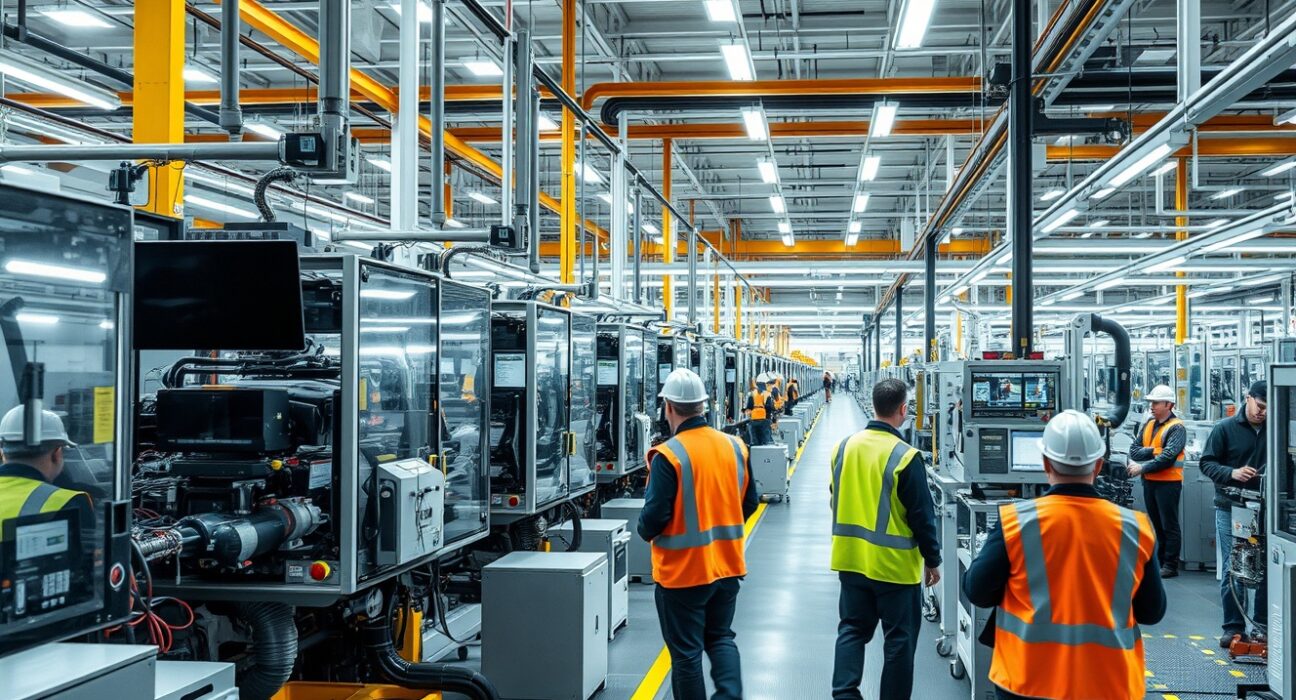
Germany’s flash Manufacturing Purchasing Managers’ Index (PMI) surged to 52.2 in February 2026, according to preliminary data released Tuesday, significantly exceeding economists’ consensus estimate of 50.1. The reading, compiled by Hamburg Commercial Bank (HCOB) and S&P Global, marks a return to expansion territory for the first time in several months, driven by stronger output and new orders.
PMI Data Signals Renewed Sector Momentum
The headline flash Manufacturing PMI for February 2026 jumped from the final reading of 48.5 in January, crossing the 50.0 threshold that separates expansion from contraction. A reading above 50 indicates growth, while a figure below signals a decline. The sharp acceleration caught markets by surprise, as analysts had anticipated only a modest improvement to 50.1.
Key sub-indices within the report, including output, new orders, and employment, all showed notable improvement. The output index rose to its highest level since mid-2024, suggesting that German manufacturers are seeing a tangible uptick in production volumes. New order inflows, both domestic and export, contributed to the positive momentum, with some firms reporting improved demand from key trading partners.
Implications for the German Economy and ECB Policy
The stronger-than-expected PMI data provides a significant boost to confidence in Germany’s industrial sector, which has been under pressure from weak global demand, high energy costs, and structural challenges. The manufacturing sector, a cornerstone of the German economy, had been in contraction for much of the past year, weighing on overall GDP growth.
This data point will be closely watched by the European Central Bank (ECB) as it assesses the pace of economic recovery in the eurozone’s largest economy. While the ECB has been navigating a complex path between curbing inflation and supporting growth, a sustained recovery in manufacturing could reduce pressure for further monetary easing. However, economists caution that one month of strong data does not constitute a definitive trend, and the ECB will likely await a broader set of indicators before adjusting its policy stance.
Market and Analyst Reactions
Financial markets reacted positively to the release, with the euro gaining ground against the US dollar and German bond yields edging higher. Analysts at several major banks noted that the data reduces the immediate risk of a deeper industrial recession in Germany.
“This is a clear upside surprise,” said Dr. Anja Weber, senior economist at a Frankfurt-based research institute. “The PMI data suggests that the worst may be over for German manufacturers. However, we need to see if this momentum is sustained in the coming months, as the global economic outlook remains uncertain.”
Conclusion
Germany’s flash Manufacturing PMI for February 2026 came in at 52.2, well above the 50.1 forecast, signaling a strong and unexpected return to growth for the country’s industrial sector. The data provides a positive signal for the broader German economy and may influence ECB policy discussions. Markets responded with cautious optimism, though analysts emphasize the need for sustained improvement in future readings to confirm a lasting recovery.
FAQs
Q1: What is the flash Manufacturing PMI?
The flash Manufacturing PMI is a preliminary estimate of the Purchasing Managers’ Index for the manufacturing sector, based on a survey of purchasing managers at manufacturing firms. It provides an early indication of economic activity and is considered a leading economic indicator.
Q2: Why did the PMI jump so significantly in February 2026?
The jump was driven by stronger output, new orders (both domestic and export), and improved business confidence. The exact reasons include a potential easing of supply chain pressures and improved demand from key export markets.
Q3: What does a PMI above 50 mean for the German economy?
A PMI above 50 indicates that the manufacturing sector is expanding. This is a positive sign for the overall economy, as manufacturing is a major component of Germany’s GDP and employment. It suggests that industrial production and business activity are increasing.
Disclaimer: The information provided is not trading advice, Bitcoinworld.co.in holds no liability for any investments made based on the information provided on this page. We strongly recommend independent research and/or consultation with a qualified professional before making any investment decisions.
