

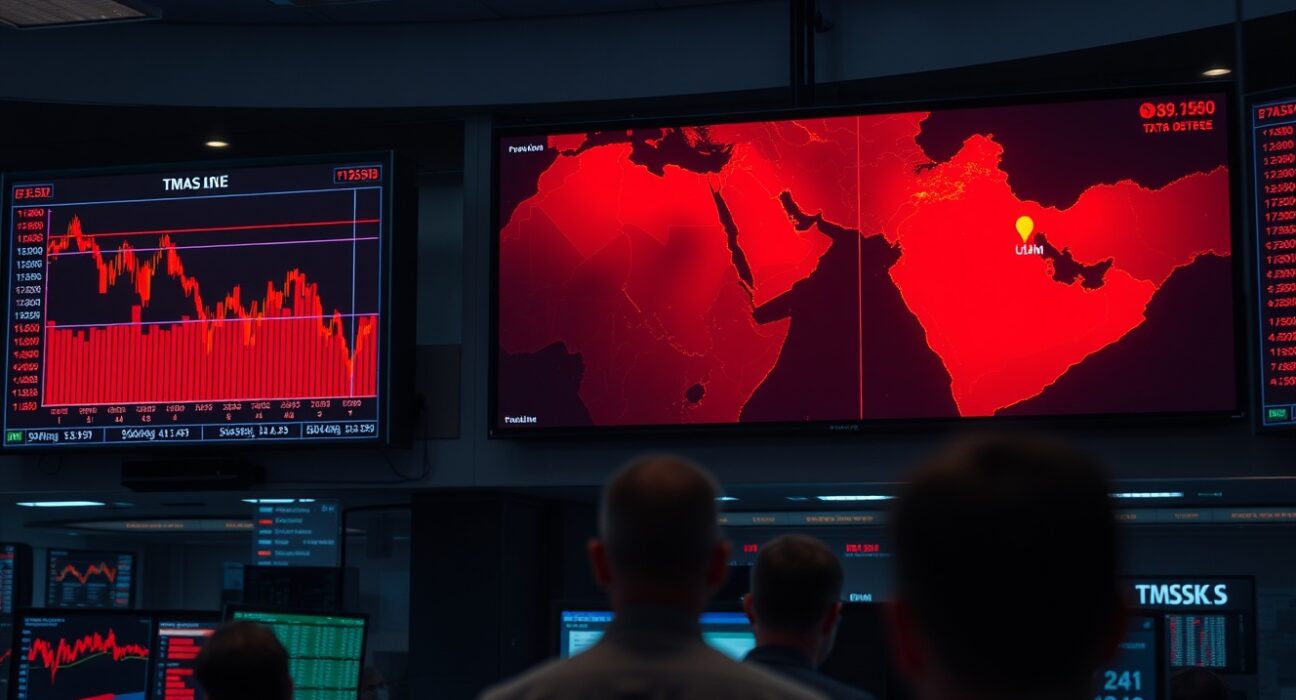
Escalating tensions in the Gulf region have pushed global financial markets into a risk-off stance as of early trading sessions, with investors rotating out of equities and into safe-haven assets. The heightened geopolitical uncertainty follows a series of military exchanges and diplomatic breakdowns reported over the past 48 hours, prompting a broad reassessment of portfolio risk exposure.
Market Reaction and Safe-Haven Flows
Major stock indices in Asia and Europe opened lower, with futures pointing to a cautious start on Wall Street. The yield on the benchmark 10-year U.S. Treasury note declined as demand for government debt increased, while gold prices edged higher, reflecting the classic flight to safety. The U.S. dollar also strengthened against most emerging market currencies, adding to the risk-off narrative.
Oil prices, already elevated due to supply concerns, saw additional upward pressure as traders priced in the risk of potential disruptions to shipping routes in the Strait of Hormuz. Brent crude futures rose by more than 2% in early trading, compounding inflationary concerns that central banks have been grappling with.
Geopolitical Context and Key Developments
The immediate trigger for the latest escalation appears to be a series of airstrikes and retaliatory actions between regional powers, which have drawn in international stakeholders. Diplomatic channels remain active but have so far failed to de-escalate the situation. The United Nations Security Council is scheduled to hold an emergency session later this week.
Market participants are closely monitoring statements from central banks, particularly the Federal Reserve and the European Central Bank, for any indication of how the geopolitical shock might influence monetary policy decisions. A prolonged period of uncertainty could delay rate cuts that investors had been anticipating for the second half of the year.
Implications for Investors
For retail and institutional investors alike, the current environment underscores the importance of diversification and hedging strategies. Sectors most exposed to global trade and energy costs, such as airlines, shipping, and manufacturing, are facing the sharpest sell-offs. Conversely, utilities, healthcare, and consumer staples have held relatively steady as defensive plays.
Currency markets are also reflecting the shift, with the Japanese yen and Swiss franc gaining against riskier currencies. Cryptocurrencies, often touted as hedges, have shown mixed performance, with Bitcoin trading lower alongside equities, suggesting that even digital assets are not immune to broad risk-off moves.
Conclusion
The Gulf escalation has introduced a new layer of uncertainty into an already complex macroeconomic landscape. While the full economic impact will depend on the duration and intensity of the conflict, the immediate market reaction is clear: risk appetite has diminished, and investors are prioritizing capital preservation. Continued monitoring of diplomatic developments and energy supply chains will be essential for navigating the weeks ahead.
FAQs
Q1: What does ‘risk-off’ mean in financial markets?
Risk-off describes a market environment where investors prefer safer assets like government bonds, gold, and cash over higher-risk investments such as stocks and commodities, typically due to heightened uncertainty or fear.
Q2: How does Gulf tension specifically affect oil prices?
The Gulf region is a critical transit point for global oil shipments. Any escalation that threatens the Strait of Hormuz — through which about 20% of the world’s oil passes — can cause supply disruption fears, driving crude prices higher.
Q3: Should I change my investment portfolio because of this news?
Short-term geopolitical events often create volatility but may not warrant drastic portfolio changes. Investors are advised to review their risk tolerance, ensure adequate diversification, and avoid making impulsive decisions based on headlines. Consulting a financial advisor is recommended.
Disclaimer: The information provided is not trading advice, Bitcoinworld.co.in holds no liability for any investments made based on the information provided on this page. We strongly recommend independent research and/or consultation with a qualified professional before making any investment decisions.
