

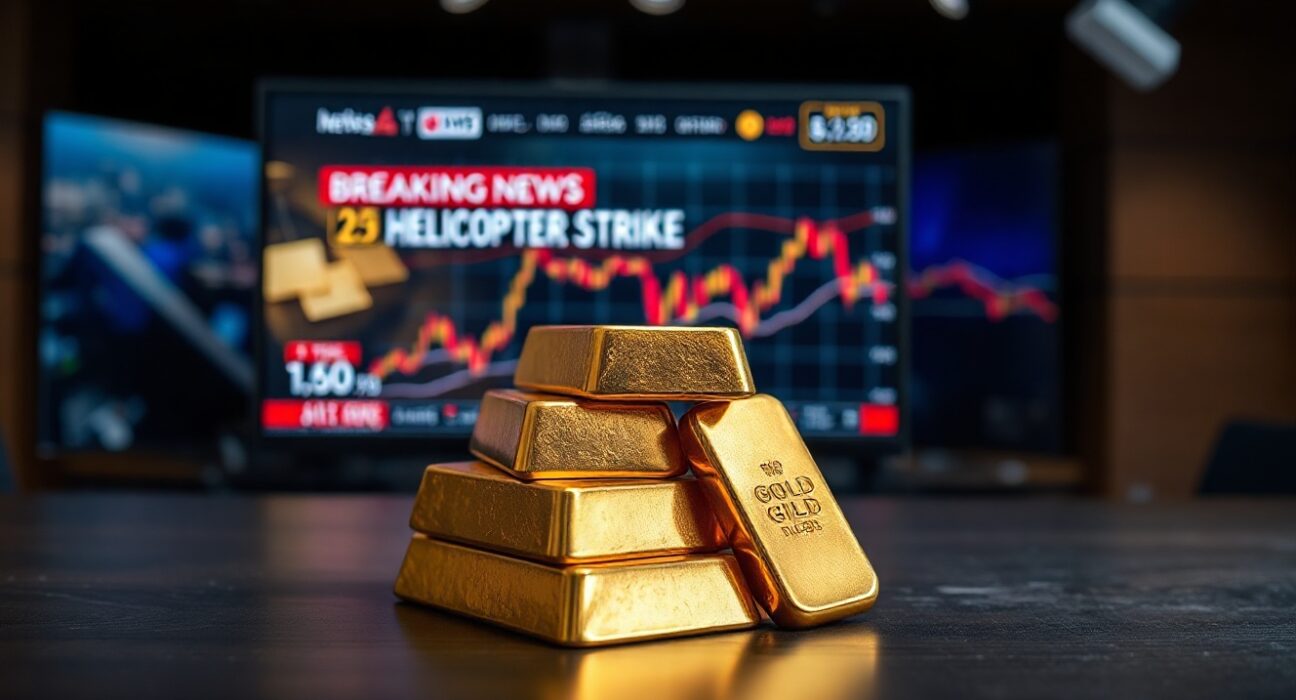
The price of gold fell sharply on Wednesday, dropping below the $4,250 per ounce mark, after U.S. President Donald Trump vowed a swift and forceful response to a helicopter strike that killed American personnel overseas. The decline marks a notable reversal for the safe-haven asset, which had been trading near record highs earlier this week.
Market Reaction and Immediate Context
Spot gold slid approximately 2.3% in early trading, breaching the psychologically significant $4,250 level before stabilizing near $4,210. The move came after reports confirmed that a U.S. military helicopter was shot down in a contested region, with multiple casualties. President Trump, speaking from the White House, described the incident as an act of aggression and stated that the United States would respond decisively.
Investors initially rushed into gold as a traditional hedge against geopolitical uncertainty, pushing prices higher in the hours following the news. However, the rally reversed sharply as traders reassessed the potential for a broader military escalation, which could lead to higher interest rates, a stronger U.S. dollar, and reduced liquidity in commodity markets.
Why Gold Fell Despite Rising Tensions
Historically, gold tends to benefit from geopolitical crises, but the relationship is not always straightforward. In this case, several factors contributed to the sell-off:
- Dollar Strength: The U.S. dollar index rose 0.6% as investors sought the relative safety of the greenback, putting downward pressure on dollar-denominated gold.
- Rate Hike Expectations: Markets began pricing in a higher probability of a Federal Reserve rate hike to contain potential inflation from increased military spending, which makes non-yielding assets like gold less attractive.
- Liquidity Squeeze: Some institutional investors sold gold to raise cash and meet margin calls in other asset classes, a pattern seen during previous periods of sudden geopolitical stress.
Impact on Investor Portfolios
For retail and institutional investors holding gold as a portfolio hedge, the sudden decline serves as a reminder that even safe-haven assets can experience sharp corrections during periods of extreme uncertainty. Analysts at several major banks have advised clients to maintain a diversified approach rather than concentrating positions in any single commodity.
Gold mining stocks also took a hit, with the NYSE Arca Gold Miners Index falling nearly 3% in afternoon trading. Some traders noted that profit-taking after gold’s recent run-up to $4,350 likely amplified the move lower.
Conclusion
The gold market’s reaction to the helicopter strike and President Trump’s response underscores the complexity of geopolitical risk pricing. While the metal remains a long-term store of value, short-term volatility can be extreme when diplomatic and military dynamics shift rapidly. Investors should monitor official statements from the White House and the Pentagon in the coming days for further clarity on the scope of the U.S. response, which will likely dictate the next major move in gold prices.
FAQs
Q1: Why did gold fall if there is a geopolitical crisis?
Gold initially rose but fell as the U.S. dollar strengthened and markets priced in potential Federal Reserve rate hikes. Some investors also sold gold to raise cash amid broader market volatility.
Q2: Is gold still a safe-haven asset?
Yes, gold remains a long-term safe haven, but it can experience sharp short-term corrections during sudden geopolitical events due to dollar strength, liquidity needs, and shifting rate expectations.
Q3: What should investors do after this drop?
Financial advisors generally recommend maintaining a diversified portfolio. Investors should avoid panic selling and consult with a professional to assess whether their gold allocation aligns with their risk tolerance and long-term goals.
Disclaimer: The information provided is not trading advice, Bitcoinworld.co.in holds no liability for any investments made based on the information provided on this page. We strongly recommend independent research and/or consultation with a qualified professional before making any investment decisions.
