

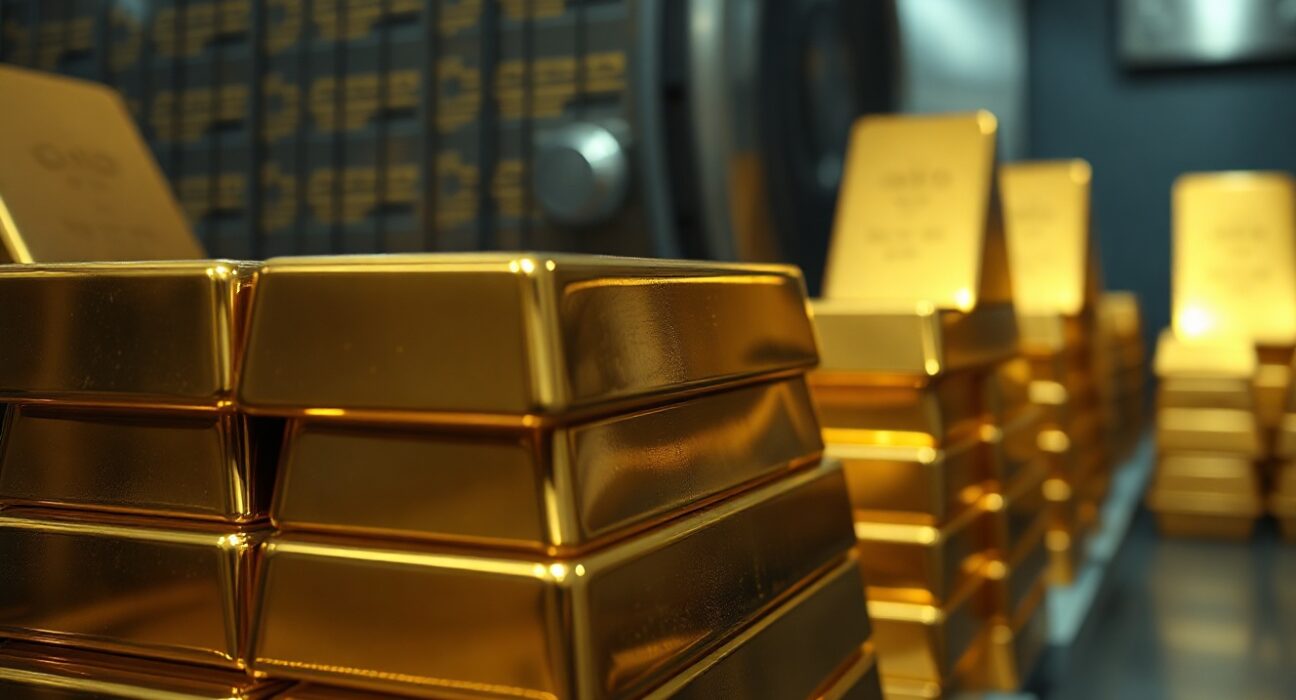
The gold market saw its recent recovery stall this week as persistent uncertainty surrounding the Federal Reserve’s next policy move kept buyers cautious. After a brief rally that pushed prices above $2,650 per ounce, the precious metal has struggled to maintain upward momentum, settling into a tight trading range as investors await clearer signals from the U.S. central bank.
Fed Policy Uncertainty Weighs on Sentiment
Gold’s inability to extend its gains comes amid a backdrop of mixed economic data and conflicting statements from Fed officials. While some policymakers have signaled a potential pause in rate hikes, others have warned that inflation remains stubbornly above the 2% target, leaving the door open for further tightening. This ambiguity has created a cautious environment for gold investors, who typically view the metal as a hedge against inflation and currency debasement.
The U.S. dollar index, which often moves inversely to gold, has remained relatively stable, further limiting gold’s upside. A stronger dollar makes gold more expensive for holders of other currencies, dampening demand. Additionally, rising bond yields have increased the opportunity cost of holding non-yielding assets like gold.
Key Support and Resistance Levels
Technical analysts are closely watching the $2,600 support level. A break below this threshold could signal a deeper correction, potentially testing the $2,550 area. On the upside, gold needs to clear the $2,670 resistance level to regain bullish momentum and target the $2,700 psychological barrier.
Market participants are also monitoring physical demand from central banks, which has been a significant driver of gold prices in recent years. Data from the World Gold Council shows that central bank purchases remain robust, though the pace has slowed slightly from the record levels seen in 2022 and 2023.
What This Means for Investors
For retail and institutional investors, the current environment suggests a wait-and-see approach. The lack of a clear catalyst means gold may remain range-bound in the near term. However, the underlying macroeconomic factors — including geopolitical tensions, inflation concerns, and potential economic slowdown — continue to support gold’s long-term appeal.
Analysts advise that investors should focus on the broader trend rather than short-term fluctuations. The Federal Reserve’s next policy meeting, scheduled for later this month, will be a key event that could provide the directional catalyst the market needs.
Conclusion
Gold’s stalled recovery reflects the broader uncertainty gripping financial markets. While the precious metal retains its status as a safe-haven asset, near-term price action will likely depend on incoming economic data and clearer guidance from the Federal Reserve. Investors should remain patient and prepared for potential volatility as the market digests new information.
FAQs
Q1: Why is gold price stalling despite inflation concerns?
Gold is stalling because the Federal Reserve’s next move remains unclear. A strong dollar and rising bond yields are offsetting the inflationary support for gold, creating a tug-of-war in the market.
Q2: What is the key support level for gold right now?
The key support level is around $2,600 per ounce. If gold breaks below this level, it could test the $2,550 area. On the upside, resistance is at $2,670 and then $2,700.
Q3: Should I buy gold now or wait?
It depends on your investment horizon. Short-term traders may want to wait for a clearer catalyst. Long-term investors may consider accumulating on dips, given the ongoing macroeconomic uncertainties and central bank buying.
Disclaimer: The information provided is not trading advice, Bitcoinworld.co.in holds no liability for any investments made based on the information provided on this page. We strongly recommend independent research and/or consultation with a qualified professional before making any investment decisions.
