

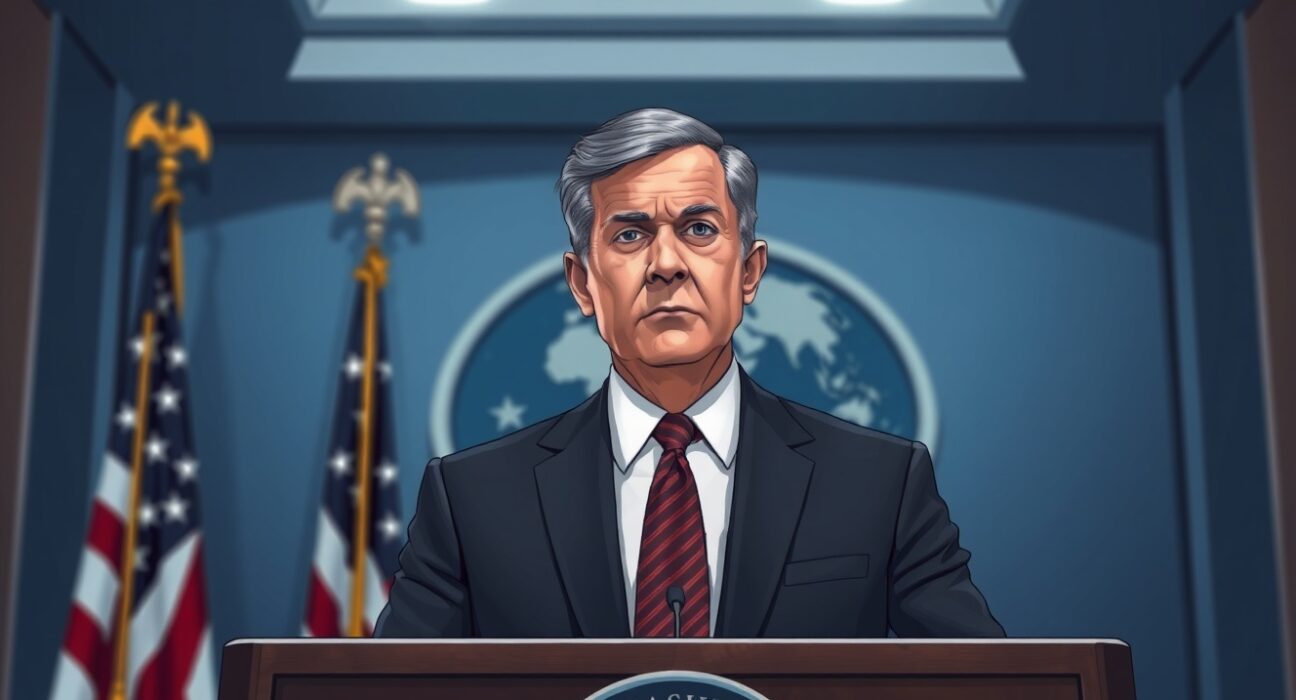
U.S. Treasury Secretary Scott Bessent has issued a stark warning: the United States will respond decisively if Iran escalates the current situation. This statement, delivered from Washington, D.C., on October 26, 2023, signals a hardening of the U.S. stance amid rising tensions in the Middle East. The focus keyword, Iran escalation, is central to understanding the potential for broader conflict.
US Treasury Secretary Bessent’s Warning on Iran Escalation
Secretary Bessent’s comments come during a period of heightened geopolitical risk. He stated that the U.S. is prepared for any scenario. This response is not limited to military action. It includes a full range of economic and diplomatic tools. The Treasury Department plays a key role in enforcing sanctions. It can freeze assets and restrict financial flows. These measures aim to deter further aggression.
The warning follows recent provocations. Iran has increased its nuclear enrichment activities. It has also supported proxy forces in the region. The U.S. views these actions as destabilizing. Bessent’s remarks serve as a clear deterrent. They emphasize that the cost of escalation will be high. The administration seeks to avoid conflict but will not back down.
Background on US-Iran Tensions
Relations between the U.S. and Iran have been strained for decades. The 2015 nuclear deal, the JCPOA, offered a brief thaw. The U.S. withdrew from the agreement in 2018. This move led to a series of escalations. Iran resumed advanced nuclear work. It also attacked Saudi oil facilities in 2019. The U.S. responded with targeted strikes.
Current tensions center on Iran’s nuclear program. The IAEA reports that Iran now has enriched uranium close to weapons-grade. This development alarms Western nations. The U.S. has imposed crippling sanctions. These sanctions have crippled Iran’s economy. Inflation is rampant. The rial has lost significant value. Yet, Iran continues its nuclear path.
Economic Impacts of Sanctions
The Treasury Department’s sanctions are a key weapon. They target Iran’s oil exports, banking system, and key industries. The goal is to pressure Tehran to negotiate. However, sanctions also have humanitarian consequences. They limit access to medicine and food. Critics argue they harm ordinary Iranians more than the regime. The U.S. insists it provides exemptions for humanitarian goods.
Sanctions have reduced Iran’s oil revenue by billions. This has limited its ability to fund proxies. It has also fueled domestic unrest. Protests have erupted over economic conditions. The regime faces a difficult choice: negotiate or face further isolation. Bessent’s warning reinforces that the U.S. will not ease pressure without concessions.
Potential Scenarios for Iran Escalation
Several flashpoints could trigger escalation. A direct attack on U.S. forces in the region is one. Iran’s proxies in Iraq and Syria have targeted American bases. Another scenario is a major nuclear breakout. If Iran enriches uranium to 90%, it could build a bomb quickly. This would likely prompt a military response from Israel or the U.S.
Cyberattacks are also a concern. Iran has launched cyber operations against U.S. infrastructure. The Treasury Department is a prime target. A major cyberattack could trigger a retaliatory strike. The U.S. has demonstrated its ability to disable Iranian systems. The Stuxnet virus, which damaged Iranian centrifuges, is a past example.
Naval incidents in the Persian Gulf are another risk. Iran has seized oil tankers. It has harassed U.S. Navy vessels. A miscalculation could lead to a firefight. The U.S. Fifth Fleet is based in Bahrain. Any conflict would disrupt global oil supplies. This would send shockwaves through financial markets.
Expert Analysis on Geopolitical Risk
Analysts view Bessent’s statement as a calibrated signal. It aims to deter without provoking. “The U.S. is drawing a red line,” says Dr. Sarah Miller, a Middle East expert at the Council on Foreign Relations. “But it leaves room for diplomacy.” The Treasury Secretary’s role is crucial. He controls the financial levers of power. His words carry weight with allies and adversaries alike.
Markets have reacted cautiously. Oil prices have edged higher. Safe-haven assets like gold have seen modest gains. Investors are watching for further developments. A full-scale conflict would be catastrophic. It would drive oil prices above $100 per barrel. It would also strain global supply chains.
The U.S. is also coordinating with allies. The EU has maintained its own sanctions on Iran. The UK and France have expressed support for Bessent’s stance. A unified front strengthens deterrence. It also limits Iran’s ability to divide its adversaries.
Timeline of Key Events
- 2015: JCPOA signed between Iran and P5+1.
- 2018: U.S. withdraws from JCPOA, reimposes sanctions.
- 2019: Iran breaches nuclear limits; attacks on Saudi oil facilities.
- 2020: U.S. kills Qasem Soleimani; Iran retaliates with missile strikes.
- 2021-2023: Nuclear talks stall; Iran enriches uranium to 60%.
- October 2023: Bessent warns of response to any Iran escalation.
Conclusion
US Treasury Secretary Bessent’s warning on Iran escalation underscores the high stakes. The U.S. is prepared to use all tools to deter aggression. Economic sanctions remain a primary weapon. However, the risk of miscalculation is real. The coming weeks will test both sides’ resolve. The world watches as the situation unfolds. The focus keyword, Iran escalation, will continue to dominate headlines.
FAQs
Q1: What did US Treasury Secretary Bessent say about Iran?
A1: Bessent said the U.S. will respond if Iran escalates the situation, using economic and military tools.
Q2: Why is the Treasury Secretary involved in Iran policy?
A2: The Treasury Department enforces sanctions, freezes assets, and restricts financial flows, making it central to U.S. deterrence.
Q3: What are the main triggers for Iran escalation?
A3: Key triggers include attacks on U.S. forces, a nuclear breakout, cyberattacks, or naval incidents in the Persian Gulf.
Q4: How have markets reacted to Bessent’s statement?
A4: Oil prices have risen slightly, and safe-haven assets like gold have seen modest gains due to increased geopolitical risk.
Q5: Can diplomacy still prevent escalation?
A5: Yes, experts say Bessent’s warning leaves room for negotiations, but Iran must show willingness to compromise.
Disclaimer: The information provided is not trading advice, Bitcoinworld.co.in holds no liability for any investments made based on the information provided on this page. We strongly recommend independent research and/or consultation with a qualified professional before making any investment decisions.
