
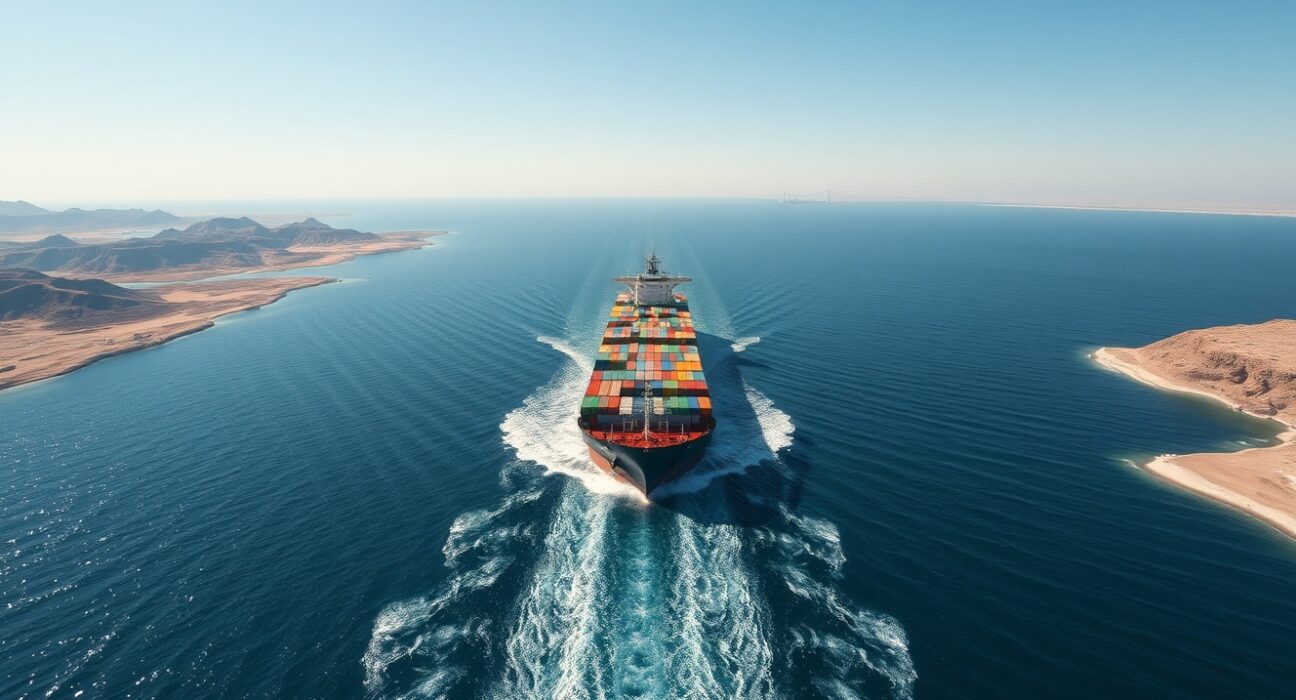
TEHRAN, Iran – January 15, 2025: In a move with profound implications for global energy markets and regional stability, Iran’s Islamic Revolutionary Guard Corps (IRGC) has declared it will adopt a “proactive management” posture over the strategic Strait of Hormuz. This critical maritime chokepoint, often described as the world’s most important oil transit lane, sees nearly one-fifth of global oil consumption pass through its narrow confines. Consequently, the IRGC’s announcement immediately reverberated through diplomatic channels and trading floors worldwide, raising urgent questions about the future security of seaborne energy supplies.
Strait of Hormuz Becomes a Geopolitical Flashpoint
The statement from the IRGC Navy commander represents a significant escalation in rhetoric. Historically, Iranian officials have issued warnings about their ability to close the strait during periods of heightened tension. However, the shift to “proactive management” suggests a more assertive, day-to-day operational doctrine. This strait is only 21 nautical miles wide at its narrowest point, with shipping lanes confined to two-mile-wide channels in Iranian territorial waters. Therefore, any increase in naval activity or inspections by the IRGC directly impacts commercial transit. Analysts point to several immediate catalysts for this declaration, including stalled nuclear negotiations, increased regional military partnerships seen as encircling Iran, and ongoing maritime disputes.
Furthermore, the global energy landscape lends this announcement extraordinary weight. According to data from the U.S. Energy Information Administration, an average of 20.5 million barrels of oil per day transited the Strait of Hormuz in 2023. This volume represents about 21% of global petroleum liquids consumption. Major exporters like Saudi Arabia, Iraq, the United Arab Emirates, and Kuwait depend almost entirely on this passage. A serious disruption would trigger immediate price shocks and force a costly and time-consuming rerouting of tankers around the Arabian Peninsula.
Decoding the IRGC’s “Proactive Management” Doctrine
The term “proactive management” remains deliberately ambiguous, allowing for a spectrum of possible actions. Military and maritime security experts interpret it through several potential lenses:
- Enhanced Surveillance and Patrols: A permanent increase in IRGC Navy fast-attack craft and drone patrols, creating a more visible and intimidating presence for commercial shipping.
- Expanded Boarding and Inspection Rights: Asserting a broader interpretation of national security to stop and search vessels under the pretext of enforcing sanctions or customs regulations.
- Exercises and Live-Fire Drills: Conducting more frequent military exercises in and around the shipping lanes, potentially leading to temporary closures or navigational hazards.
- Legal and Administrative Hurdles: Imposing new reporting requirements, pilotage rules, or insurance mandates on transiting vessels.
Historical Context and Escalation Risks
This is not the first time the Strait of Hormuz has been a crisis point. Recent history provides a clear roadmap of escalation. In 2019, tensions spiked following attacks on oil tankers, which the U.S. attributed to Iran. Subsequently, in 2021, the IRGC seized a South Korean-flagged tanker. Each incident led to a surge in regional military deployments and insurance premiums for shipping. The new “proactive” stance suggests Iran may move from reactive seizures to a sustained campaign of pressure. Importantly, the IRGC operates separately from Iran’s conventional navy, often with more aggressive tactics and direct lines to the country’s supreme leadership. This command structure can lead to rapid, unpredictable actions that are difficult to de-escalate.
Global and Regional Reactions: A Calculus of Response
International reactions have been swift but measured, reflecting the delicate balance of power. The United States Fifth Fleet, based in Bahrain, has reaffirmed its commitment to ensuring freedom of navigation. Meanwhile, European and Asian nations, major consumers of Gulf oil, have called for restraint through diplomatic channels. Regional Gulf Cooperation Council (GCC) states, while publicly critical, are likely accelerating behind-the-scenes contingency planning. These plans include:
| Contingency Measure | Description | Key Challenge |
|---|---|---|
| Pipeline Diversification | Using the East-West Pipeline (Saudi Arabia) and Habshan-Fujairah pipeline (UAE) to bypass the strait. | Limited capacity; cannot replace full sea-borne exports. |
| Naval Coalitions | Expanding multinational task forces like the International Maritime Security Construct (IMSC). | Political will and resource commitment from member states. |
| Strategic Stockpile Releases | Coordinated use of national strategic petroleum reserves to dampen price spikes. | Temporary measure; does not address physical supply disruption. |
Concurrently, energy markets exhibited classic risk premium behavior. Brent crude futures experienced immediate volatility. Shipping insurance underwriters in London began reassaying risk models for the region, which could lead to significantly higher war risk premiums for vessels. These added costs inevitably trickle down to global consumers.
Economic and Security Impacts Beyond Oil
While oil dominates the narrative, the Strait of Hormuz is also a vital corridor for liquefied natural gas (LNG). Qatar, one of the world’s top LNG exporters, sends almost all its shipments through this passage. A disruption would therefore have cascading effects on global gas markets, particularly impacting Europe and Asia. Moreover, the announcement casts a shadow over wider regional security initiatives. For instance, it complicates ongoing efforts to de-escalate tensions between Iran and its Gulf Arab neighbors. It also presents a direct challenge to the security architecture built around U.S. partnerships in the region. The fundamental question for global powers is whether the IRGC’s proclamation is a tactical bargaining chip or a strategic red line.
Conclusion
The IRGC’s vow to proactively manage the Strait of Hormuz marks a dangerous new phase in Persian Gulf geopolitics. It transforms the waterway from a potential conflict zone into an active instrument of state policy. The immediate effects will be measured in market volatility and heightened military readiness. However, the long-term consequence is a more fragile and unpredictable global energy supply chain. The world’s dependence on this narrow sea lane remains its greatest vulnerability. Ultimately, the coming weeks will reveal whether this is a sustained strategy or a pressure tactic, but the warning itself has already altered the strategic calculus for every nation reliant on the free flow of oil from the Middle East.
FAQs
Q1: What exactly does “proactive management” of the Strait of Hormuz mean?
The term is intentionally broad but likely signifies increased Iranian military patrols, more assertive boarding of vessels, and potentially stricter regulations for ships passing through its territorial waters, moving beyond mere threats of closure to active daily oversight.
Q2: How much of the world’s oil passes through the Strait of Hormuz?
Approximately 21% of global petroleum liquids consumption, or about 20.5 million barrels per day, transits the strait. It is the most critical maritime oil chokepoint on Earth.
Q3: Which countries are most affected by disruptions in the Strait?
Major oil exporters like Saudi Arabia, Iraq, the UAE, and Kuwait are directly affected. On the import side, China, India, Japan, and South Korea are heavily reliant on oil that transits the strait. Disruptions impact global prices for all consumers.
Q4: Can global oil supplies bypass the Strait of Hormuz?
Limited alternatives exist, such as the Petroline pipeline in Saudi Arabia and the Abu Dhabi Crude Oil Pipeline, but their combined capacity falls far short of replacing all sea-borne exports. Rerouting tankers around the Arabian Peninsula is possible but adds significant time and cost.
Q5: What is the difference between Iran’s IRGC Navy and its regular navy?
The IRGC Navy is a separate branch focused on asymmetric warfare in the shallow waters of the Persian Gulf, operating fast-attack boats and missiles. Iran’s conventional Artesh Navy operates larger vessels for blue-water operations. The IRGC often acts more aggressively and with greater political autonomy.
Disclaimer: The information provided is not trading advice, Bitcoinworld.co.in holds no liability for any investments made based on the information provided on this page. We strongly recommend independent research and/or consultation with a qualified professional before making any investment decisions.