

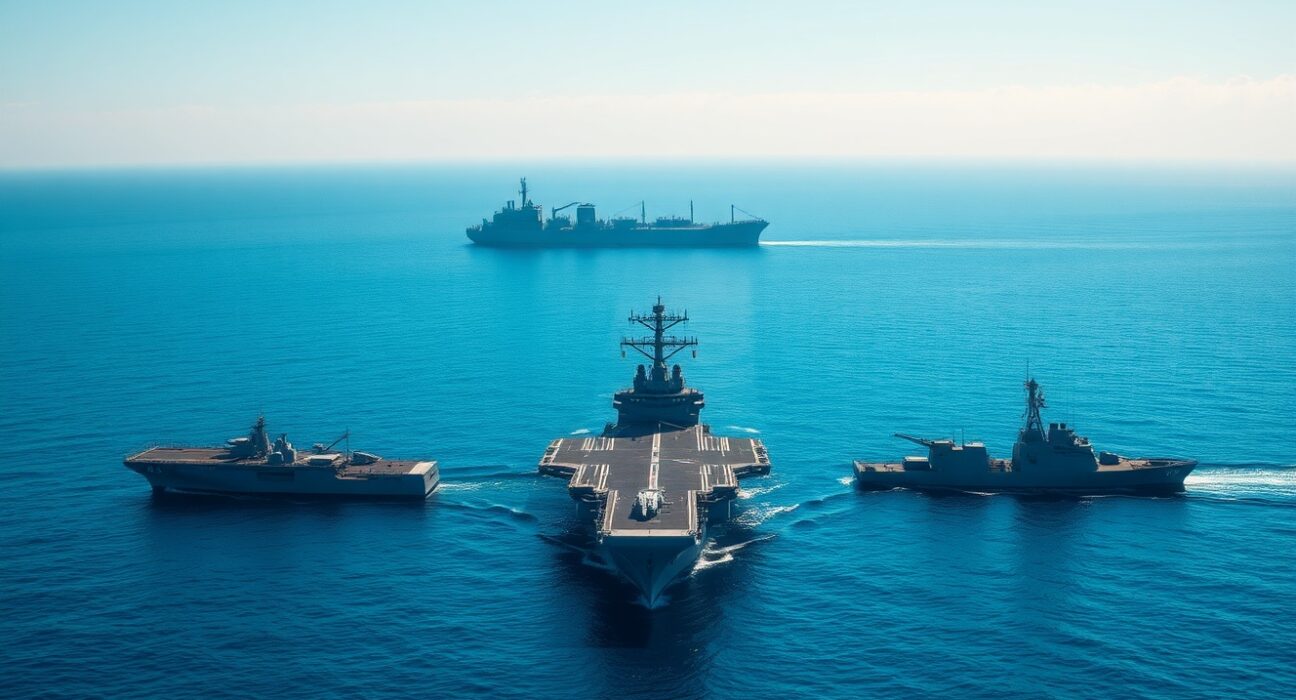
The Iran port blockade, enforced by the United States Navy since April 13, will continue indefinitely, according to U.S. Secretary of Defense Pete Hegseth. Speaking at a Pentagon press conference on April 24 alongside Chairman of the Joint Chiefs of Staff General Mark Cain, Hegseth confirmed that the naval operation has already turned back 34 vessels. An additional aircraft carrier is expected to join the blockade within days.
Pentagon Confirms Expanding US Navy Blockade
Hegseth stated that the US Navy blockade is not limited to the Persian Gulf. The operation now extends globally, targeting what he called Iran’s “shadow fleet.” The U.S. military recently seized two vessels in the Indian Ocean that belonged to this covert network. These ships often transport oil and goods while concealing their origins and destinations.
The defense chief emphasized that the blockade aims to cut off Iran’s maritime trade routes. He argued that this pressure is necessary to counter Iranian influence in the region. Hegseth also warned that if Iran attempts to lay mines in the Strait of Hormuz, the U.S. would destroy them without hesitation. He compared the response to how the U.S. handles drug smuggling vessels in the Caribbean.
Background: Escalating Tensions Since April 13
The blockade began on April 13, 2025, following a series of attacks on commercial shipping in the Red Sea and Gulf of Oman. The U.S. government blamed Iran-backed Houthi forces for those attacks. In response, the Pentagon deployed additional naval assets to the region.
Since then, the U.S. has intercepted multiple vessels carrying Iranian oil and weapons. The operation has disrupted supply chains and increased insurance costs for shipping companies operating near Iran. Global oil prices have fluctuated as a result, with analysts warning of potential supply shortages if the blockade persists.
Shadow Fleet: A Key Target of the Operation
The term “shadow fleet” refers to vessels that operate outside normal maritime regulations. These ships often change names, flags, and ownership to avoid detection. Iran uses them to export oil and import goods despite international sanctions.
On April 22, the U.S. Navy boarded and seized two such vessels in the Indian Ocean. The ships were carrying crude oil worth an estimated $50 million. Hegseth described the seizure as a significant blow to Iran’s revenue stream. He added that the U.S. would continue to track and intercept these vessels wherever they sail.
Global Impact on Trade and Shipping
The expanding blockade has raised concerns among international shipping companies. Many now avoid the Strait of Hormuz entirely, rerouting through longer and costlier paths. This has increased freight rates and delivery times for goods moving between Asia, Europe, and the Middle East.
Insurance premiums for vessels transiting the region have also spiked. Some underwriters now charge up to five times the normal rate for war-risk coverage. This adds significant costs to every shipment passing near Iranian waters.
Hegseth Warns Allies: Free Riding Era Is Over
During the press conference, Hegseth made it clear that the U.S. expects more from its allies. “This should not be America’s fight alone,” he said. “The era of Europe and Asia free-riding is over.” He called on NATO and Asian partners to contribute naval assets and funding to the blockade effort.
This statement reflects a broader shift in U.S. foreign policy under the current administration. The Pentagon has repeatedly urged allies to increase their defense spending and share the burden of global security operations. Hegseth’s comments suggest that future cooperation may depend on more equitable contributions.
Strait of Hormuz: A Strategic Chokepoint
The Strait of Hormuz is one of the world’s most critical maritime chokepoints. Approximately 20% of global oil passes through this narrow waterway. Any disruption here can have immediate effects on global energy markets.
Hegseth warned that if Iran attempts to mine the strait, the U.S. would respond swiftly. “We will destroy those mines without hesitation,” he said. He added that the U.S. Navy has specialized mine-countermeasure vessels ready to clear any obstacles. This would ensure that commercial shipping can continue safely.
Mine-Laying: A Historical Tactic
Iran has used naval mines in the past. During the Iran-Iraq War in the 1980s, both sides laid mines in the Persian Gulf. These mines damaged several commercial vessels and required international mine-sweeping operations. The U.S. and its allies have since developed advanced technologies to detect and neutralize mines quickly.
Expert Analysis: Risks and Consequences
Defense analysts warn that the blockade could escalate into a broader conflict. Retired Admiral James Stavridis, former NATO Supreme Allied Commander, told reporters that any confrontation in the Strait of Hormuz would have severe consequences. “A single miscalculation could lead to a naval engagement,” he said.
Other experts point to the economic impact. Dr. Sarah Ladislaw, an energy security scholar at the Center for Strategic and International Studies, noted that prolonged disruption could push oil prices above $120 per barrel. This would affect consumers worldwide, particularly in developing nations that rely on affordable energy.
Timeline of Key Events
- April 13, 2025: U.S. Navy begins Iran port blockade.
- April 18, 2025: First vessel turned back near Bandar Abbas.
- April 22, 2025: Two shadow fleet vessels seized in Indian Ocean.
- April 24, 2025: Hegseth confirms indefinite continuation of blockade.
- April 25, 2025: Aircraft carrier USS Nimitz scheduled to join operation.
Conclusion
The Iran port blockade represents a major escalation in U.S. maritime strategy. With 34 ships already turned back and shadow fleet vessels seized, the operation shows no signs of ending. Hegseth’s warning about mines in the Strait of Hormuz underscores the high stakes involved. As the blockade expands globally, its impact on trade, oil prices, and international relations will continue to grow. The Pentagon has made it clear: the era of allied free-riding is over, and the U.S. expects shared responsibility for this critical mission.
FAQs
Q1: Why did the US start the Iran port blockade?
A: The blockade began on April 13, 2025, following attacks on commercial shipping in the Red Sea and Gulf of Oman. The US blamed Iran-backed Houthi forces for those attacks.
Q2: How many ships has the US Navy turned back so far?
A: As of April 24, the US Navy has turned back 34 vessels attempting to enter or leave Iranian ports.
Q3: What is Iran’s shadow fleet?
A: The shadow fleet consists of vessels that operate outside normal maritime regulations. They change names, flags, and ownership to avoid detection and sanctions.
Q4: What happens if Iran lays mines in the Strait of Hormuz?
A: US Defense Secretary Hegseth said the US would destroy any mines without hesitation, using specialized mine-countermeasure vessels to clear the strait.
Q5: How does the blockade affect global oil prices?
A: The blockade has already caused oil price fluctuations. Analysts warn that prolonged disruption could push prices above $120 per barrel, affecting consumers worldwide.
Q6: What did Hegseth mean by ‘free riding is over’?
A: Hegseth called on European and Asian allies to contribute more naval assets and funding to the blockade, stating that the US should not bear the burden alone.
Disclaimer: The information provided is not trading advice, Bitcoinworld.co.in holds no liability for any investments made based on the information provided on this page. We strongly recommend independent research and/or consultation with a qualified professional before making any investment decisions.
