

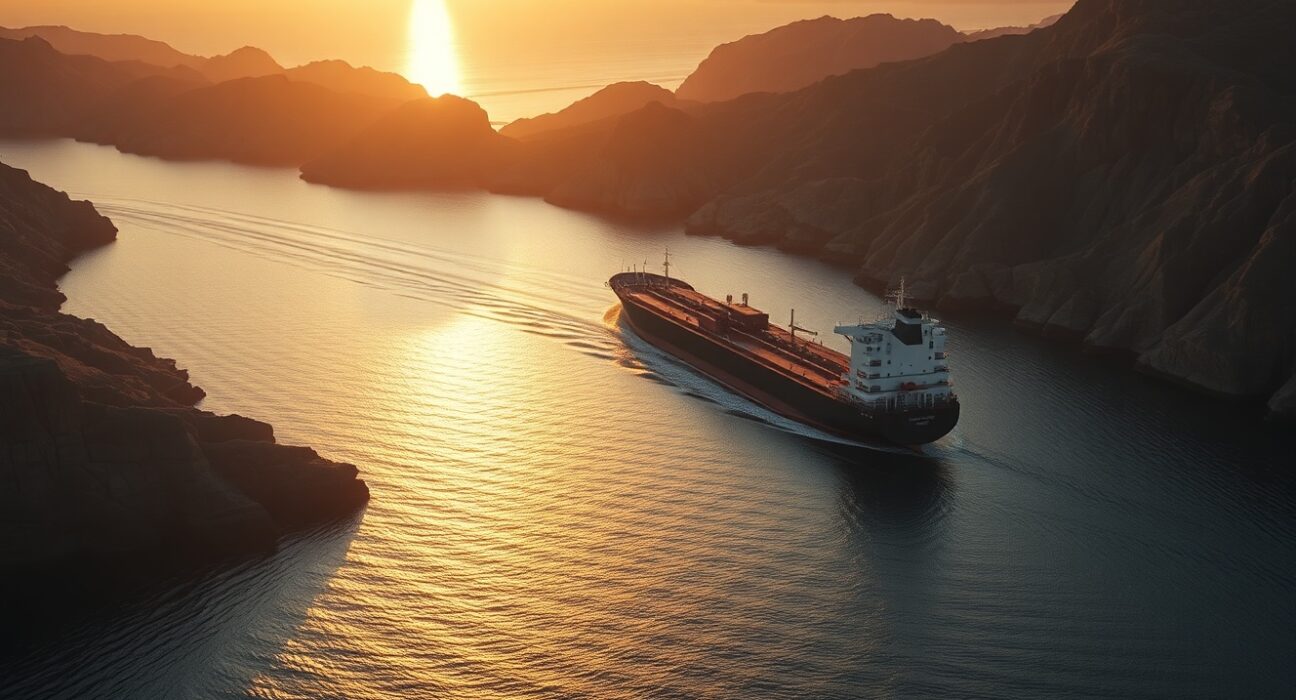
Iran has formally demanded sovereignty over the Strait of Hormuz as part of its latest response to a United States proposal aimed at ending the ongoing conflict, according to Iranian state media reported by CNN. The demand places one of the world’s most strategically vital waterways at the center of escalating geopolitical tensions between Tehran and Washington.
Strategic geography and legal framework
The Strait of Hormuz, located between Iran and Oman, is a narrow maritime passage where the Exclusive Economic Zones (EEZs) of both nations intersect. Its confined width offers limited maneuvering room for vessels and insufficient warning time to evade potential threats, giving Iran a geographically advantageous position for any potential military action against commercial shipping.
Under the United Nations Convention on the Law of the Sea (UNCLOS), coastal states possess sovereign rights to explore, exploit, conserve, and manage marine resources within their EEZ. However, the convention also guarantees the right of innocent passage for ships of all nations through territorial waters. While coastal states must not impede normal passage, they are permitted to take necessary measures to prevent non-innocent passage under specific circumstances.
Implications for global energy security
The Strait of Hormuz is a critical chokepoint for global oil supplies, with approximately 20% of the world’s petroleum transiting through its waters daily. Any disruption to shipping in the strait would have immediate and severe consequences for global energy markets, potentially driving oil prices sharply higher and threatening economic stability worldwide.
Iran’s demand for sovereignty raises fundamental questions about the interpretation and enforcement of UNCLOS provisions. Legal experts note that while Iran may claim sovereign rights over its EEZ, international law generally recognizes the right of innocent passage for foreign vessels. The precise legal boundaries of Iran’s claim remain unclear, but the demand signals a willingness to challenge established maritime norms.
Historical context and precedent
This is not the first time Iran has sought to assert greater control over the strait. During the Iran-Iraq War in the 1980s, Tehran engaged in tanker warfare, attacking vessels suspected of supporting Iraq. More recently, in 2019, Iran was accused of seizing several oil tankers in the strait amid heightened tensions following the US withdrawal from the nuclear deal. The current demand appears to represent a more formal and comprehensive assertion of sovereignty.
Why this matters
For readers, this development is not merely a diplomatic maneuver but a direct threat to global energy security and maritime freedom. The strait’s strategic importance means that any escalation could have immediate economic repercussions, from higher fuel prices to supply chain disruptions. Understanding the legal and geopolitical dimensions of Iran’s demand is essential for assessing the risks to international trade and regional stability.
The US response to Iran’s demand will be closely watched. Washington has historically maintained that freedom of navigation through international waterways is a core principle, and has conducted patrols in the region to ensure safe passage. A failure to resolve this issue diplomatically could lead to further military posturing or even direct confrontation.
Conclusion
Iran’s demand for sovereignty over the Strait of Hormuz represents a significant escalation in its negotiations with the United States. The legal complexities of UNCLOS, combined with the strait’s critical role in global energy markets, make this a high-stakes issue with far-reaching implications. As diplomatic efforts continue, the international community will be watching closely to see whether a peaceful resolution can be achieved or whether the region edges closer to conflict.
FAQs
Q1: What is the Strait of Hormuz and why is it important?
The Strait of Hormuz is a narrow waterway between Iran and Oman through which about 20% of the world’s oil passes. It is a critical chokepoint for global energy supplies.
Q2: What does UNCLOS say about Iran’s sovereignty claim?
UNCLOS grants coastal states sovereign rights within their EEZ but guarantees innocent passage for all ships. Iran’s demand tests the boundaries of these provisions.
Q3: How could this affect oil prices?
Any disruption to shipping in the strait could cause oil prices to spike sharply due to the volume of petroleum that transits through the waterway daily.
Disclaimer: The information provided is not trading advice, Bitcoinworld.co.in holds no liability for any investments made based on the information provided on this page. We strongly recommend independent research and/or consultation with a qualified professional before making any investment decisions.
