
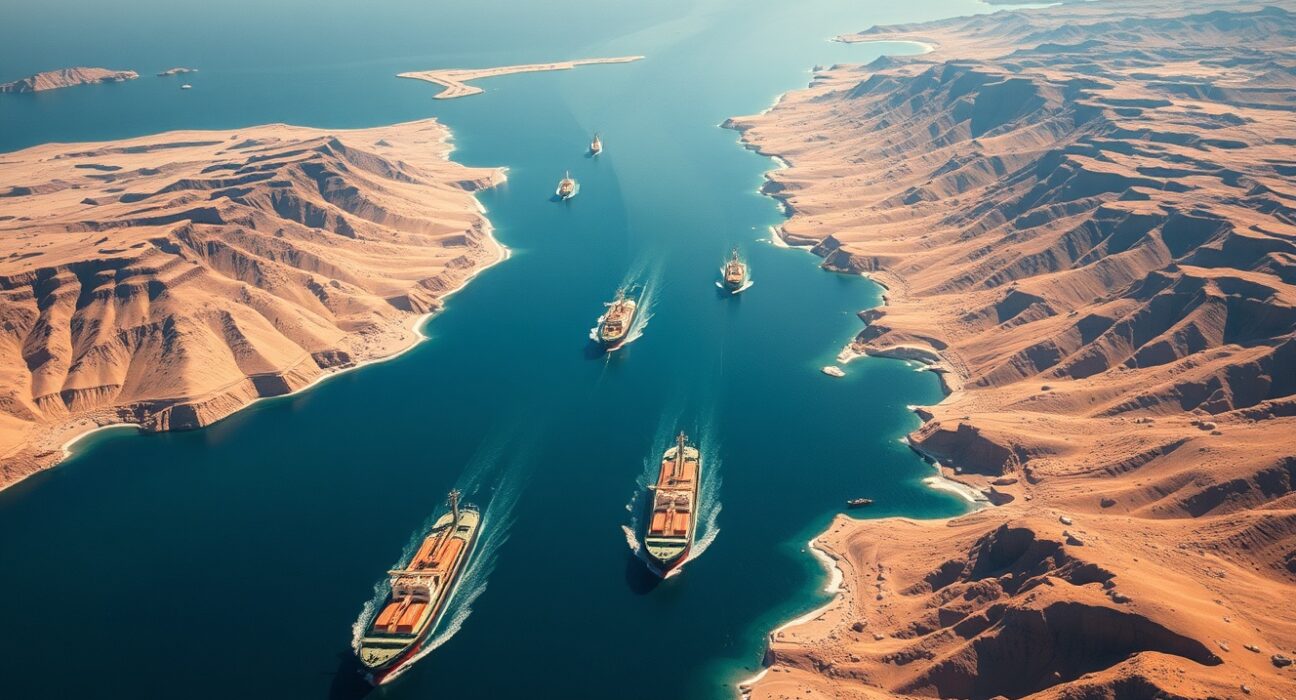
TEHRAN, Iran – April 1, 2025: Iran’s Supreme Leader’s Office has issued a stark and unambiguous warning, formally reaffirming its long-held position to utilize a blockade of the Strait of Hormuz as a primary retaliatory tool. This declaration, disseminated through official social media channels, directly quotes from Supreme Leader Mojtaba Khamenei’s first major public address of the year, signaling a deliberate escalation in rhetoric. Consequently, this move places the world’s most vital oil transit corridor at the center of escalating regional tensions, with profound implications for global energy security and geopolitical stability.
Strait of Hormuz Blockade: A Calculated Retaliatory Doctrine
The official statement from the Office of the Supreme Leader provides critical context for Iran’s strategic posture. It explicitly frames any potential blockade not as an act of unprovoked aggression, but as a measured, proportional response to external threats. The doctrine hinges on the concept of asymmetric warfare, where Iran leverages its unique geographic advantage to counter perceived adversaries who possess superior conventional military capabilities. Furthermore, the office’s disclosure indicates a move towards greater transparency in its deterrent messaging, a shift analysts suggest is aimed at both domestic and international audiences.
Historically, the threat to close the Strait of Hormuz has been Iran’s most potent strategic card. This narrow waterway, situated between the Persian Gulf and the Gulf of Oman, functions as the world’s most important oil transit chokepoint. According to data from the U.S. Energy Information Administration (EIA), approximately 21% of global petroleum liquids consumption passed through it in 2023. A successful blockade would instantly sever a significant portion of oil exports from Saudi Arabia, Iraq, the United Arab Emirates, Kuwait, and Iran itself, triggering a severe global energy crisis.
| Country | Approximate Oil Exports via Strait of Hormuz (2023) |
|---|---|
| Saudi Arabia | ~6.2 million barrels per day |
| Iraq | ~3.4 million barrels per day |
| United Arab Emirates | ~2.7 million barrels per day |
| Kuwait | ~2.0 million barrels per day |
| Qatar | ~1.8 million barrels per day (LNG & condensate) |
Assessing Adversarial Weaknesses and Potential New Fronts
Beyond the Hormuz threat, the Iranian statement reveals a broader, multi-front strategic assessment. The office asserted that Iran is “considering opening other potential fronts,” based on an evaluation that its adversaries “lack experience and have clear weaknesses in these areas.” This suggests a deliberate exploration of conflict domains where Iran believes it holds a comparative advantage or where Western and regional powers are more vulnerable. Analysts immediately began speculating on the nature of these “fronts,” which likely extend beyond traditional military confrontation.
Potential non-kinetic fronts could include:
- Cyber Warfare: Disrupting critical infrastructure, financial systems, or energy grids in adversary nations.
- Proxy Escalation: Directing allied militias in Iraq, Syria, Lebanon, or Yemen to intensify attacks on U.S., Israeli, or Saudi interests.
- Maritime Harassment: Expanding covert operations to target commercial shipping in the Red Sea or Arabian Sea using drone or missile attacks.
- Strategic Alliances: Deepening military and economic cooperation with global powers like Russia and China to alter the regional balance.
The statement’s conditional language—”if the war continues” and “after a comprehensive review”—indicates this is a contingent strategy, not an immediate action plan. It serves as a deterrent, signaling to opponents that escalation will be met with a complex, multi-domain response designed to exploit their perceived vulnerabilities.
Expert Analysis on Feasibility and Global Impact
Military and energy security experts provide a sobering analysis of Iran’s capabilities and the global ramifications. “The technical ability of Iran to disrupt or temporarily close the Strait is not in doubt,” explains Dr. Anya Roberts, a senior fellow at the Center for Maritime Security. “They possess extensive stocks of anti-ship missiles, naval mines, fast attack craft, and coastal defense batteries. A full, sustained closure is logistically challenging, but even sporadic attacks on tankers would cause insurance rates to skyrocket and tanker traffic to halt, achieving a de facto blockade.”
The economic impact would be instantaneous and severe. Global oil prices would experience a historic spike, potentially exceeding levels seen during the 1973 oil embargo. This would trigger inflationary pressures worldwide, destabilize financial markets, and place immense strain on oil-importing nations, particularly in Europe and Asia. The global strategic response would likely involve a major naval coalition, spearheaded by the U.S. Fifth Fleet based in Bahrain, to secure the waterway, raising the risk of a direct military confrontation.
Historical Context and the Evolution of a Deterrent
Iran’s threat to close the Strait of Hormuz is not new; it is a cornerstone of its national defense doctrine developed after the 1979 Revolution. The concept gained prominence during the 1980-1988 “Tanker War” phase of the Iran-Iraq War, where both nations attacked oil tankers. In the 21st century, the threat has been repeatedly invoked during periods of heightened tension, such as during sanctions escalations in 2012 and 2018, and following the U.S. withdrawal from the JCPOA nuclear deal.
However, the April 2025 reaffirmation carries distinct weight. Firstly, it comes directly from the Supreme Leader’s Office, the highest authority, rather than military commanders or politicians. Secondly, its integration with the mention of “other potential fronts” presents a more sophisticated, integrated deterrent strategy. Finally, the public nature of the speech and its dissemination mark an effort to formalize and legitimize this option in the eyes of the international community, moving it from implied threat to explicit policy.
Conclusion
Iran’s explicit reaffirmation of the Strait of Hormuz blockade as a retaliatory tool represents a critical juncture in Middle Eastern geopolitics. It underscores Tehran’s continued reliance on asymmetric strategies to project power and deter adversaries. While the immediate trigger for action remains conditional, the statement successfully raises the perceived cost of conflict for all parties involved. The world’s dependence on the free flow of oil through this narrow passage ensures that any threat to it commands global attention. The coming months will test whether this is a masterstroke of deterrence or a prelude to a dangerous escalation, with the stability of global energy markets hanging in the balance.
FAQs
Q1: What exactly is the Strait of Hormuz and why is it so important?
The Strait of Hormuz is a narrow sea passage between the Persian Gulf and the Gulf of Oman. It is the world’s most important oil transit chokepoint, with about one-fifth of global oil consumption passing through it daily from major producers like Saudi Arabia, Iraq, and the UAE.
Q2: Does Iran have the military capability to actually block the Strait?
Yes, Iran possesses significant asymmetric naval capabilities suited for this task, including large inventories of anti-ship missiles, sea mines, submarines, and fast attack boats. While a permanent closure against a determined U.S.-led naval force is difficult, Iran can severely disrupt shipping, causing a functional blockade.
Q3: What did Iran mean by “other potential fronts”?
This likely refers to non-conventional domains of conflict where Iran believes it has an advantage, such as cyber warfare against critical infrastructure, escalating attacks through regional proxy forces, or leveraging strategic partnerships with other global powers.
Q4: What would be the immediate global consequence of a blockade?
The immediate effect would be a dramatic spike in global oil prices, potentially causing a severe energy crisis, economic recession, and heightened geopolitical instability as nations scramble to secure alternative supplies and respond militarily.
Q5: Has Iran threatened to close the Strait before?
Yes, Iranian officials have periodically threatened to close the Strait during times of high tension, such as during the Iran-Iraq War in the 1980s and in response to Western sanctions over its nuclear program in the 2010s. This 2025 statement is a formal reaffirmation from the highest authority.
Disclaimer: The information provided is not trading advice, Bitcoinworld.co.in holds no liability for any investments made based on the information provided on this page. We strongly recommend independent research and/or consultation with a qualified professional before making any investment decisions.