
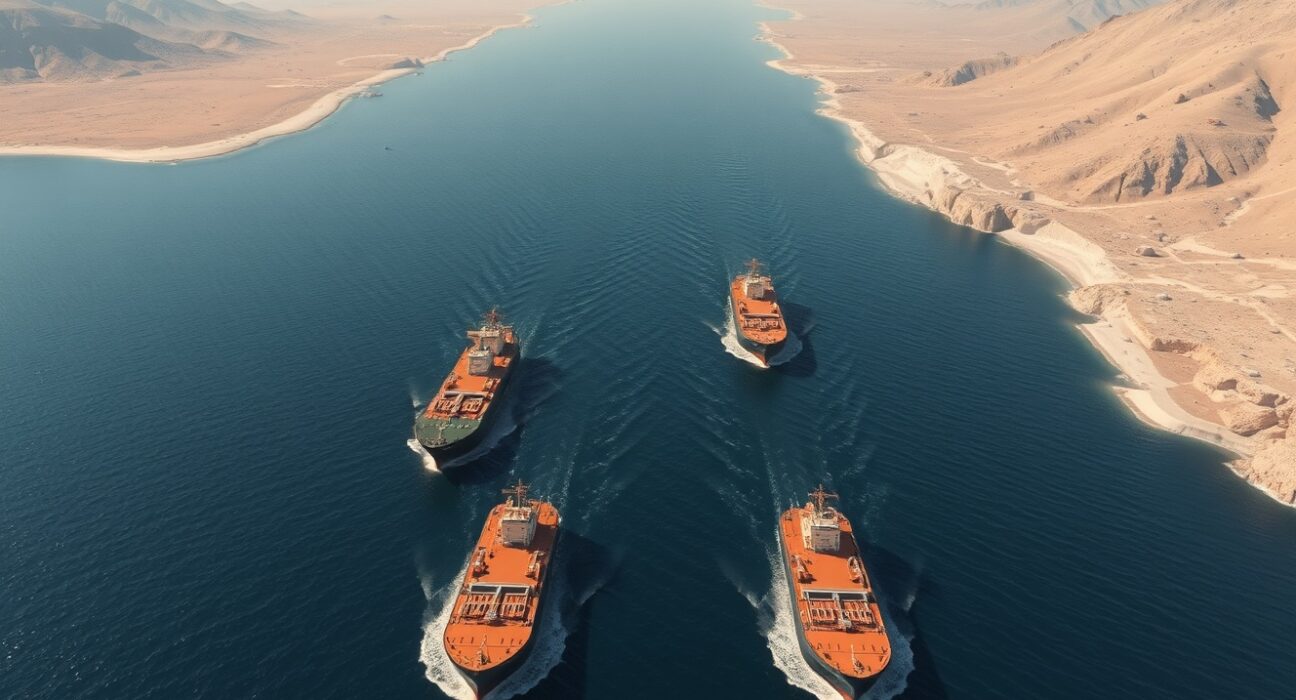
TEHRAN, Iran – A stark warning from Iranian military commanders threatens to completely close the strategic Strait of Hormuz if the United States conducts bombing operations against Iranian power plants, potentially triggering an immediate global energy crisis and regional military confrontation. This ultimatum, delivered through state media channels, represents a significant escalation in long-standing tensions and places approximately 20% of the world’s seaborne oil trade in immediate jeopardy. Consequently, global markets are monitoring the situation with heightened concern, recognizing the potential for severe supply disruptions.
Strait of Hormuz Closure Threat Escalates US-Iran Standoff
Iran’s Revolutionary Guard Corps naval commander explicitly linked any future US military action against Iranian infrastructure to a full maritime blockade of the Strait of Hormuz. This narrow channel, only 21 nautical miles wide at its narrowest point, serves as the sole sea passage from the Persian Gulf to the open ocean. Furthermore, historical precedents show Iran has previously threatened closure during periods of heightened tension, though never executed a complete, sustained shutdown. The current threat, however, carries unprecedented weight due to advancements in Iranian asymmetric naval capabilities, including sophisticated sea mines, fast attack craft, and anti-ship missile batteries positioned along the coastline.
Military analysts note that a closure would not require sinking ships in the channel. Instead, Iran could effectively halt traffic by declaring the area a military exclusion zone, deploying mines, or using its naval assets to interdict and harass commercial shipping. The table below outlines the daily oil flow through the strait, based on data from the US Energy Information Administration:
| Commodity | Volume (Million Barrels Per Day) | Percentage of Global Trade |
|---|---|---|
| Crude Oil & Condensate | 17-21 | ~20% |
| Liquefied Natural Gas (LNG) | ~3.5 | ~25% |
| Petroleum Products | ~2.0 | Significant share |
Global energy security hinges on this chokepoint. Major economies like China, India, Japan, and South Korea depend heavily on hydrocarbons transiting from Gulf producers including Saudi Arabia, Iraq, the UAE, and Kuwait. Therefore, any disruption would cause immediate price spikes and force a frantic search for alternative supply routes, which are geographically limited and more costly.
Background and Context of the Power Plant Ultimatum
The specific threat regarding power plants stems from ongoing geopolitical friction, primarily related to Iran’s nuclear program and regional activities. US officials have previously discussed military options to degrade Iranian infrastructure in various contingency plans. Iranian power grids and generation facilities, crucial for both civilian and military operations, represent potential strategic targets in a broader conflict scenario. In response, Iran has developed a doctrine of asymmetric retaliation, aiming to impose disproportionate costs on adversaries by targeting vital global economic interests, with the Strait of Hormuz being its most potent leverage.
This strategy is deeply rooted in Iran’s military posture. Key elements include:
- Naval Fortress Doctrine: Transforming the Persian Gulf into a defended zone using layered coastal defenses.
- Anti-Access/Area Denial (A2/AD): Deploying systems to challenge US naval supremacy in regional waters.
- Economic Warfare: Leveraging control of chokepoints to exert pressure on the global economy and, by extension, international diplomacy.
Regional powers have reacted with alarm. The Gulf Cooperation Council (GCC) states, while often at odds with Iran, share a vital interest in keeping the strait open for their own export economies. Meanwhile, the US Fifth Fleet, based in Bahrain, maintains a constant presence to ensure freedom of navigation, setting the stage for a potential direct naval clash if Iran attempts to implement its threat.
Expert Analysis on Viability and Global Impact
Security experts are divided on Iran’s ability to sustain a prolonged closure. Dr. Anya Roberts, a senior fellow at the Maritime Security Institute, states, “Iran possesses the capability to disrupt shipping for a period of weeks through mining and harassment campaigns. However, a complete and permanent closure is militarily unsustainable against determined US-led countermeasures, which would likely include escorted convoys and strikes on Iranian coastal defenses.” The economic impact, however, would be instantaneous and severe.
A closure would trigger a global oil price shock potentially exceeding the spikes seen during the 1973 oil embargo or the 1990 Gulf War. Insurance premiums for shipping in the region would become prohibitive overnight. Furthermore, global LNG markets would experience extreme volatility, affecting energy supplies in Europe and Asia. Stockpiles in strategic petroleum reserves would be tapped, but these are finite. The geopolitical ramifications would extend far beyond the Middle East, testing alliances and potentially reshaping global energy trade routes toward longer, more expensive passages.
Historical Precedents and Legal Frameworks
Threats to close the Strait of Hormuz are not new. Iran made similar declarations during the 1980s Tanker War, the 2011-2012 sanctions escalation, and following the US withdrawal from the JCPOA in 2018. However, it has always stopped short of a full blockade, likely due to understanding the catastrophic consequences. International law, particularly the United Nations Convention on the Law of the Sea (UNCLOS), guarantees transit passage through straits used for international navigation. Any blockade absent a formal declaration of war would be considered a breach of international law, potentially legitimizing military action to reopen the passage.
The current situation is uniquely dangerous due to several converging factors:
- Advanced Iranian Arsenal: Modern anti-ship missiles and drones provide more credible threats.
- Fragile Global Economy: Markets are less resilient to supply shocks post-pandemic.
- Great Power Competition: US focus is divided, potentially affecting response decisiveness.
Diplomatic channels remain active but strained. The implicit message from Tehran is a deterrent, aiming to raise the cost of US military action to an unacceptable level for Washington and its allies. The success of this deterrence depends on the perceived credibility of the threat and the value all parties place on stable energy markets.
Conclusion
Iran’s threat to completely close the Strait of Hormuz in retaliation for US strikes on its power plants marks a dangerous inflection point in Middle Eastern geopolitics. It underscores the fragile nature of global energy security, which relies on the unimpeded flow of traffic through a handful of critical maritime chokepoints. While the military and economic costs of executing such a blockade would be immense for Iran itself, the very issuance of the threat demonstrates the high-stakes brinkmanship defining current US-Iran relations. The world now watches to see if diplomacy can de-escalate the situation or if the strategic Strait of Hormuz will become the focal point of the next global crisis.
FAQs
Q1: Why is the Strait of Hormuz so important?
The Strait of Hormuz is the world’s most important oil transit chokepoint. It is the only sea route from the Persian Gulf, through which about 20% of global seaborne oil and 25% of liquefied natural gas (LNG) must pass to reach international markets.
Q2: Can Iran actually close the Strait of Hormuz?
Iran has the military capability to severely disrupt or temporarily halt shipping through mining, missile attacks, and swarm tactics using small boats. However, most analysts believe a prolonged, complete closure would be difficult to sustain against a US-led military response to reopen the passage.
Q3: What would happen to oil prices if the strait closed?
Oil prices would spike dramatically, potentially doubling or more in a short period, triggering a global economic shock. The exact increase would depend on the duration of the closure and the ability of other producers to increase output.
Q4: How has the United States responded to this threat historically?
The US has consistently stated it will ensure freedom of navigation in the strait. It maintains the US Fifth Fleet in Bahrain and has conducted military exercises to demonstrate its capability to counter Iranian threats and keep the passage open.
Q5: Are there any alternative routes for Gulf oil if the strait is closed?
Alternatives are extremely limited. Some oil could be redirected via overland pipelines in Saudi Arabia and the UAE, but these have far less capacity than the seaborne route. Building new pipelines would take years and significant investment.
Disclaimer: The information provided is not trading advice, Bitcoinworld.co.in holds no liability for any investments made based on the information provided on this page. We strongly recommend independent research and/or consultation with a qualified professional before making any investment decisions.