

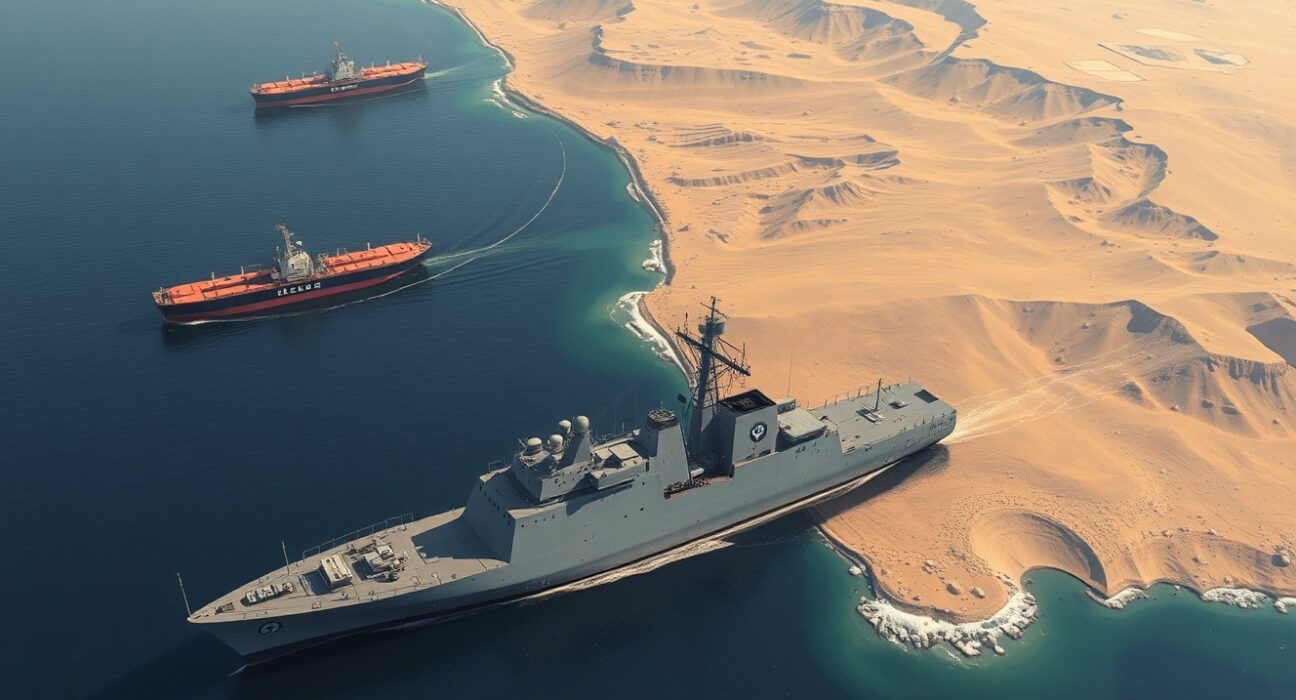
TEHRAN, Iran – March 15, 2025 – Iran has issued a stark warning through its semi-official Fars News Agency, declaring it could close the strategic Strait of Hormuz if a United States Navy blockade in the region persists. This threat directly targets one of the world’s most critical maritime chokepoints for global oil transportation. Consequently, the statement escalates long-standing tensions and raises immediate concerns about energy security and regional stability.
Strait of Hormuz Standoff Escalates Geopolitical Tensions
The Strait of Hormuz is a narrow sea passage between the Gulf of Oman and the Persian Gulf. It serves as a transit route for approximately 21% of the world’s petroleum liquids consumption. Moreover, about 30% of all seaborne-traded crude oil passes through this channel. Iran’s military has historically viewed control over the strait as a primary strategic deterrent. The recent threat follows reports of increased US naval patrols and surveillance operations near Iranian territorial waters. These actions form part of a broader US strategy to enforce sanctions and monitor Iranian military activities.
Analysts note that Iran’s Revolutionary Guard Corps (IRGC) possesses significant asymmetric naval capabilities. These include swarms of fast attack craft, anti-ship missile batteries along the coast, and sophisticated underwater mines. Therefore, a closure attempt, while logistically challenging, remains a credible threat. The international community, particularly oil-importing nations in Asia and Europe, monitors the situation with acute concern. Any disruption would trigger immediate volatility in global oil markets.
Historical Context and the US Navy’s Persistent Presence
This is not the first time Iran has threatened to close the strait. Similar warnings emerged during periods of heightened sanctions under previous US administrations. However, the current geopolitical landscape features several new variables. First, ongoing negotiations regarding Iran’s nuclear program remain stalled. Second, regional proxy conflicts continue unabated. Finally, the US maintains its Fifth Fleet headquarters in Bahrain, ensuring a permanent naval presence.
The US Navy’s mission in the area officially focuses on ensuring freedom of navigation. This principle is a cornerstone of international maritime law. Nevertheless, Iranian officials consistently label the presence as an illegal naval blockade aimed at strangling their economy. A review of recent naval deployments shows a consistent pattern:
- Increased Patrols: US destroyers and cruisers maintain a near-constant presence.
- Surveillance Flights: Maritime patrol aircraft monitor shipping lanes.
- Allied Coordination: Joint exercises with Gulf Cooperation Council (GCC) navies.
This sustained pressure creates a backdrop of persistent friction where a miscalculation could spark a wider conflict.
Expert Analysis on Viability and Global Impact
Maritime security experts provide a measured assessment of Iran’s threat. “While Iran has the capability to harass shipping and temporarily disrupt traffic, a complete and prolonged closure is militarily difficult,” explains Dr. Anya Petrova, a senior fellow at the Center for Maritime Strategy. “The US and allied navies are postured to respond swiftly to any attempt to mine the channel or attack commercial vessels.”
However, the economic impact of even a temporary disruption would be severe. Global oil prices are highly sensitive to supply shocks from this region. The following table outlines the potential immediate effects:
| Impact Area | Short-Term Consequence | Long-Term Risk |
|---|---|---|
| Oil Prices | Spike of 30-50% within days | Stagflationary pressure on global economy |
| Shipping Insurance | Premiums skyrocket for Persian Gulf routes | Permanent rerouting of trade flows |
| Regional Security | High risk of direct US-Iran naval engagement | Destabilization of Gulf Arab states |
Furthermore, alternative pipelines, like the Abu Dhabi Crude Oil Pipeline, have limited capacity. They cannot fully offset the loss of seaborne exports from Saudi Arabia, Iraq, Kuwait, and the UAE.
Legal and Diplomatic Dimensions of a Maritime Closure
International law, specifically the United Nations Convention on the Law of the Sea (UNCLOS), provides clear guidelines. States bordering straits used for international navigation cannot impede transit passage. Transit passage is defined as continuous and expeditious travel. Any unilateral closure by Iran would therefore violate these international norms. The United States and its allies would likely frame any military response as upholding this legal order.
Diplomatically, the threat complicates an already fraught relationship. Backchannel communications reportedly continue despite the public rhetoric. European nations, heavily dependent on regional energy, are actively engaged in crisis mediation. They seek to de-escalate tensions and prevent a scenario that would cripple their economies. Meanwhile, China, a major importer of Gulf oil, has called for calm and dialogue, balancing its energy needs with its strategic partnership with Iran.
Conclusion
The threat to close the Strait of Hormuz represents a critical escalation in the protracted US-Iran confrontation. While the military and logistical challenges of a sustained closure are significant, the mere threat holds global markets hostage. The situation underscores the fragile nature of global energy security, which hinges on the stability of a single maritime corridor. Ultimately, the path forward requires calibrated diplomacy to reduce naval tensions and address underlying grievances, thereby preventing a catastrophic disruption to the world economy.
FAQs
Q1: Why is the Strait of Hormuz so important?
The Strait of Hormuz is the world’s most important oil transit chokepoint. It is a narrow channel through which about 21% of global petroleum liquids flow, making it critical for the energy supplies of Asia, Europe, and beyond.
Q2: Has Iran closed the strait before?
Iran has never successfully executed a full, prolonged closure. However, it has engaged in harassment of commercial shipping, mined waters, and seized vessels during past conflicts, demonstrating its capacity to disrupt traffic.
Q3: What would trigger a US military response?
A direct attack on US or allied military vessels, or an unambiguous attempt to mine the channel and block international shipping, would almost certainly trigger a direct US military response to reopen the passage.
Q4: How would a closure affect gasoline prices?
A closure would cause an immediate and sharp spike in global crude oil prices. This would translate to significantly higher gasoline prices worldwide within a matter of weeks, impacting consumers and industries.
Q5: Are there any realistic alternatives to shipping oil through the strait?
Alternatives exist but are limited. Pipelines within the Arabian Peninsula can redirect some oil to ports on the Red Sea or Gulf of Oman, but their combined capacity falls far short of the volume currently transiting the Strait of Hormuz.
Disclaimer: The information provided is not trading advice, Bitcoinworld.co.in holds no liability for any investments made based on the information provided on this page. We strongly recommend independent research and/or consultation with a qualified professional before making any investment decisions.
