

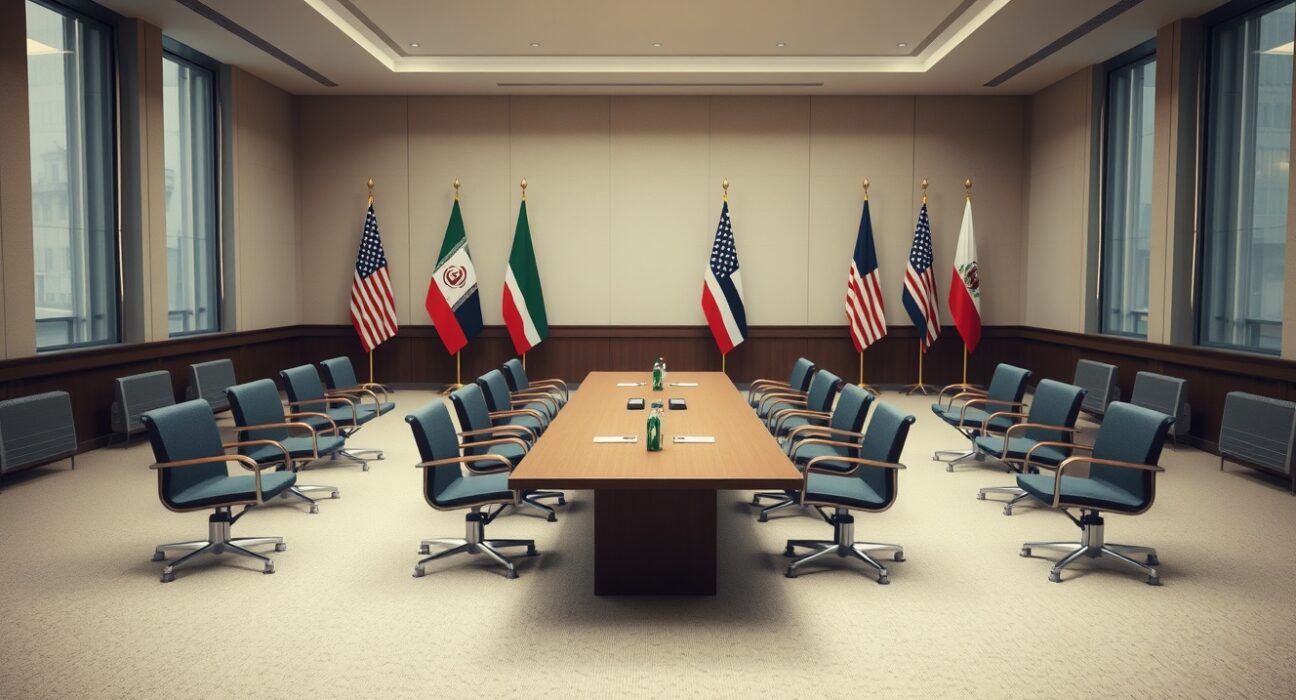
An Iranian delegation has refused to return to four-party talks after U.S. President Donald Trump made threats during the negotiations, according to Iran’s semi-official Tasnim News Agency. The development marks a significant setback for diplomatic efforts aimed at resolving long-standing tensions over Tehran’s nuclear program and regional influence.
Background of the Talks
The four-party format involved Iran, the United States, and two mediating nations—Qatar and Pakistan. These talks were seen as a potential channel to de-escalate tensions and explore a framework for renewed negotiations following the U.S. withdrawal from the 2015 Joint Comprehensive Plan of Action (JCPOA) in 2018. The discussions had been proceeding intermittently, with both Qatar and Pakistan acting as intermediaries to bridge gaps between the two adversaries.
Trump’s Threats and Iran’s Response
According to Tasnim, the Iranian delegation decided to withdraw after Trump made what it described as threatening remarks during the course of the negotiations. While the exact nature of the threats has not been publicly detailed, the incident reportedly occurred while talks were still underway, prompting Tehran to instruct its representatives not to return to the table. The parties have since exchanged messages through Qatari and Pakistani mediators, but no date for resumption has been set.
Regional Mediation Efforts
Qatar and Pakistan have both played active roles in facilitating communication between Washington and Tehran. Doha has maintained close ties with Iran and the United States, positioning itself as a neutral broker. Islamabad has also leveraged its diplomatic channels, though its influence is more limited. The continued use of these mediators suggests both sides may still be open to indirect engagement, even as direct talks remain stalled.
Implications for Nuclear Diplomacy
The collapse of this round of talks reduces the likelihood of near-term progress on nuclear issues. Iran has continued to enrich uranium at levels exceeding JCPOA limits, and the International Atomic Energy Agency (IAEA) has reported a lack of full cooperation from Tehran. Without a functional diplomatic channel, the risk of miscalculation or escalation increases. The United States has maintained a policy of maximum pressure, combining sanctions with military posturing, which has so far failed to bring Iran back to comprehensive negotiations.
Conclusion
The Iranian walkout underscores the fragility of diplomatic efforts in a region already marked by proxy conflicts and strategic rivalry. While mediators remain active, the direct rupture in talks signals that both sides are still far from a mutual understanding. For readers, this development means continued uncertainty in global energy markets, potential volatility in the Persian Gulf, and a prolonged impasse over one of the most consequential foreign policy challenges of the decade.
FAQs
Q1: What were the four-party talks about?
The talks involved Iran, the United States, Qatar, and Pakistan, and were aimed at de-escalating tensions and exploring a framework for negotiations on Iran’s nuclear program and regional activities.
Q2: Why did Iran withdraw from the talks?
According to Iran’s Tasnim News Agency, the Iranian delegation refused to return after President Trump made threats during the negotiations. The specific remarks have not been disclosed.
Q3: Are there any ongoing diplomatic channels between Iran and the U.S.?
Yes, Qatar and Pakistan continue to exchange messages between the two sides, but no direct talks are scheduled as of now.
Disclaimer: The information provided is not trading advice, Bitcoinworld.co.in holds no liability for any investments made based on the information provided on this page. We strongly recommend independent research and/or consultation with a qualified professional before making any investment decisions.
