

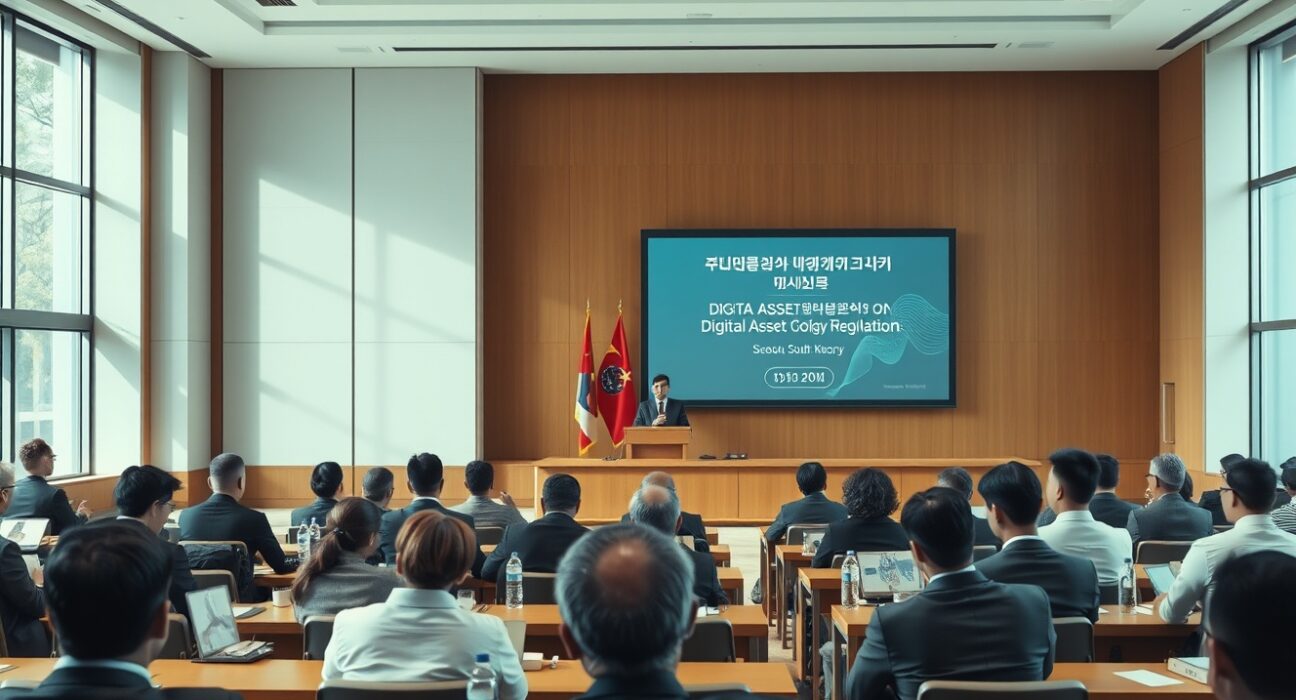
South Korea’s ruling Democratic Party is taking a concrete step toward shaping the next phase of the country’s digital asset regulations by meeting with the Solana Policy Institute. Lawmakers Ahn Do-geol and Lee Kang-il are hosting a seminar today at 5:00 a.m. UTC, titled ‘Global Digital Asset Regulatory Trends and South Korea’s Legislative Path,’ to examine international legislative developments and explore how they might influence domestic policy.
Solana Policy Institute Joins Legislative Discussion
Miller Whitehouse-Levine, CEO of the Solana Policy Institute, is scheduled to present an overview of major U.S. digital asset legislative trends and governance changes. The institute, which focuses on blockchain policy advocacy, brings a perspective shaped by the rapidly evolving regulatory environment in the United States, where debates over stablecoin oversight, market structure, and consumer protection have intensified.
This engagement marks a notable intersection between a leading blockchain ecosystem and South Korea’s political establishment, signaling that lawmakers are actively seeking industry input as they draft the next iteration of the Digital Asset Basic Act.
Second Phase of Digital Asset Basic Act in Focus
The seminar is particularly significant because it represents the ruling party’s first formal step toward discussing the second phase of the Digital Asset Basic Act. This phase is expected to address won-denominated stablecoins — a topic that has gained urgency as global regulators move to establish frameworks for fiat-backed digital currencies.
South Korea’s initial digital asset legislation, passed in 2023, focused primarily on investor protection and market integrity. The upcoming phase is anticipated to tackle broader structural issues, including the issuance and circulation of stablecoins pegged to the Korean won, which could have substantial implications for the country’s financial system and digital economy.
Timing and Political Context
The ruling party has scheduled these discussions to follow the local elections in June, a strategic choice that allows lawmakers to focus on policy development without the immediate pressures of the campaign season. This timeline also aligns with global regulatory momentum, as jurisdictions like the European Union and Japan advance their own stablecoin regimes.
For South Korean crypto users and businesses, the outcome of these discussions could determine the operational framework for stablecoin services, including reserve requirements, licensing obligations, and cross-border transaction rules.
Why This Matters for the Crypto Industry
South Korea remains one of the world’s most active cryptocurrency markets, with a retail trading volume that often rivals or exceeds that of traditional equity markets. Clear and balanced regulation is critical to maintaining market integrity while fostering innovation.
The involvement of the Solana Policy Institute suggests that South Korean lawmakers are looking at international best practices, particularly from the United States, where legislative proposals like the Lummis-Gillibrand Responsible Financial Innovation Act and the Clarity for Payment Stablecoins Act have shaped the debate.
Industry observers will be watching closely for signals on how the second phase of the Digital Asset Basic Act addresses stablecoin reserves, redemption rights, and the role of traditional financial institutions in digital asset markets.
Conclusion
Today’s seminar between South Korea’s ruling party and the Solana Policy Institute represents a meaningful step in the country’s digital asset legislative journey. By examining global trends and engaging directly with blockchain policy experts, lawmakers are laying the groundwork for a regulatory framework that could influence the broader Asian crypto market. The second phase of the Digital Asset Basic Act, particularly its approach to won-denominated stablecoins, will be a key development to track in the coming months.
FAQs
Q1: What is the Digital Asset Basic Act?
The Digital Asset Basic Act is South Korea’s primary legislative framework for regulating cryptocurrencies and digital assets. The first phase, passed in 2023, focused on investor protection. The second phase will address stablecoins and broader market structure.
Q2: Why is the Solana Policy Institute involved in South Korea’s legislative process?
The institute specializes in blockchain policy and governance. Its CEO, Miller Whitehouse-Levine, is presenting on U.S. digital asset legislative trends to help South Korean lawmakers understand international regulatory approaches.
Q3: What are won-denominated stablecoins?
Won-denominated stablecoins are digital tokens pegged to the value of the South Korean won. They are designed to maintain a stable value and could be used for payments, remittances, and decentralized finance applications within South Korea.
Disclaimer: The information provided is not trading advice, Bitcoinworld.co.in holds no liability for any investments made based on the information provided on this page. We strongly recommend independent research and/or consultation with a qualified professional before making any investment decisions.
