

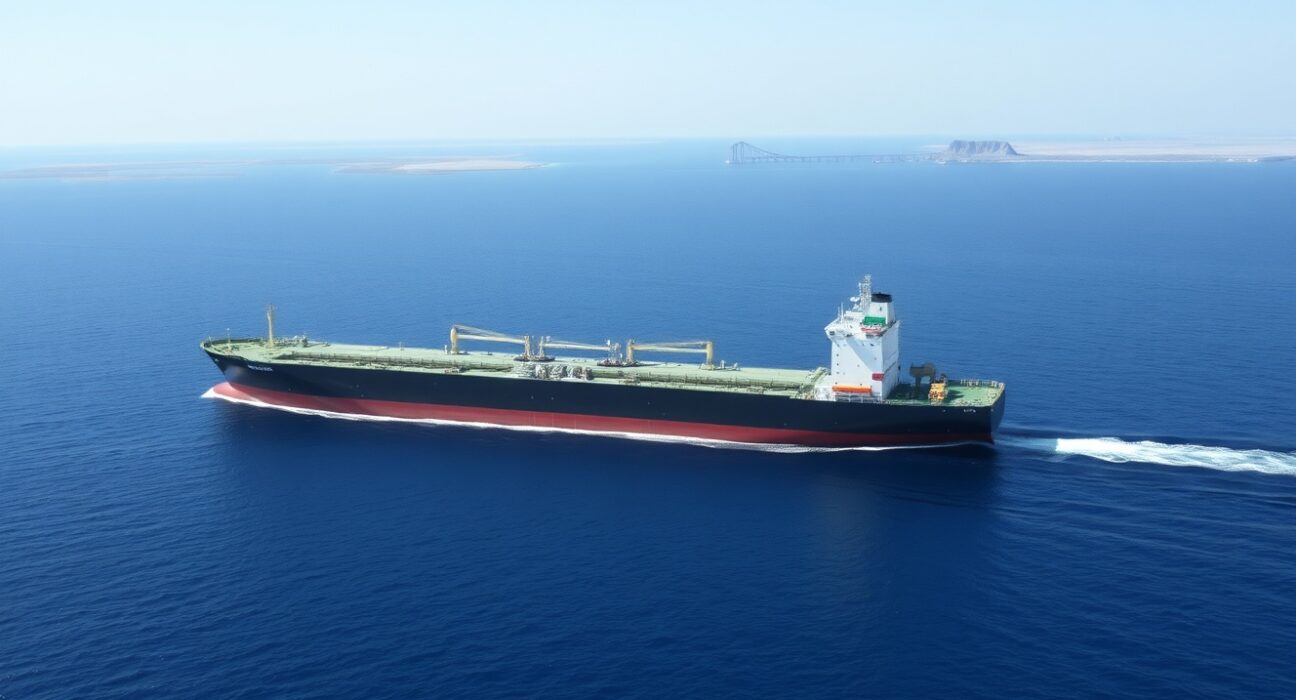
TEHRAN, Iran – March 2025: An Iranian supertanker subject to stringent U.S. sanctions has successfully transited the Strait of Hormuz, a critical global oil chokepoint, according to reports from Iran’s Fars News Agency. This passage occurred despite an established U.S. maritime enforcement posture aimed at restricting such movements. The event immediately raises significant questions about the efficacy of sanctions enforcement, regional maritime security, and the ongoing geopolitical friction between Tehran and Washington.
Iranian SuperTanker Navigates a Geopolitical Flashpoint
The reported transit involves a Very Large Crude Carrier (VLCC) operated by the National Iranian Tanker Company (NITC). Consequently, the U.S. Department of the Treasury has designated NITC under its sanctions regime. The primary goal is to curtail Iran’s oil export revenue. Furthermore, the U.S. Navy maintains a persistent presence in and around the Strait of Hormuz. This presence aims to monitor shipping and deter activities deemed threatening.
Maritime analysts note that a supertanker’s passage is not inherently illegal under international maritime law. The United Nations Convention on the Law of the Sea (UNCLOS) generally guarantees innocent passage through territorial straits. However, the application of unilateral sanctions creates a complex legal and operational grey zone. The U.S. government asserts authority to penalize entities engaging in transactions with sanctioned Iranian entities, including through secondary sanctions.
Anatomy of the Strait of Hormuz Blockade
The term “blockade” in this context refers to a multifaceted U.S. pressure campaign rather than a classic naval blockade. This campaign relies on several interconnected tools:
- Financial Sanctions: The U.S. leverages the dollar’s dominance to cut off sanctioned entities from the global financial system.
- Maritime Interdiction: Authorities may board and inspect vessels suspected of violating sanctions on the high seas.
- Port State Control: The U.S. pressures allied nations to deny port access to sanctioned tankers.
- Insurance and Certification: Sanctions target vital services like maritime insurance and classification, making international trade perilous.
For a sanctioned tanker to pass through, it likely operates with obscured transponders, engages in ship-to-ship transfers in open waters, or relies on bilateral trade agreements with nations not enforcing U.S. sanctions. The following table outlines key challenges for a sanctioned tanker:
| Challenge | Typical Mitigation Strategy |
|---|---|
| Automatic Identification System (AIS) Tracking | Turning off or spoofing AIS signals |
| Denial of Port Services | Using friendly ports or offshore transfers |
| Lack of Insurance | Relying on state-backed or no insurance |
| Threat of Seizure | Navigating within territorial waters or under naval escort |
Historical Context and Escalating Tensions
This incident is not isolated. The Strait of Hormuz has been a focal point of U.S.-Iran tensions for decades. Notably, the “Tanker War” of the 1980s during the Iran-Iraq conflict saw attacks on commercial shipping. More recently, a series of incidents since 2019 have heightened risks:
- 2019: Attacks on tankers near Fujairah and the seizure of the British-flagged Stena Impero.
- 2021: A suspected drone attack on the MV Mercer Street, a petroleum product tanker.
- 2023-2024: Continued seizures of commercial vessels by Iranian forces and periodic harassment by the Islamic Revolutionary Guard Corps Navy (IRGCN).
Each event has incrementally raised the stakes. The U.S. typically responds by augmenting its naval force posture in the region, often deploying additional destroyers or aircraft carriers to the U.S. Fifth Fleet’s area of operations.
Expert Analysis on Sanctions Evasion and Maritime Security
Dr. Ian Ralby, CEO of I.R. Consilium and a recognized expert on maritime law and security, explains the operational reality. “The physical interdiction of every sanctioned vessel is logistically impossible,” Ralby states. “Sanctions enforcement relies on a network of financial deterrence and international cooperation. When a state actor like Iran decides to run the gauntlet with a flagged vessel, it becomes a direct test of political will.”
Ralby further notes that such passages are highly calculated. “Iranian commanders will have assessed the immediate U.S. naval presence, the political climate in Washington, and the likely international reaction. A successful transit is both a practical achievement and a potent symbolic gesture, demonstrating a capacity to operate in what the U.S. considers a constrained environment.”
The Ripple Effects on Global Oil Markets and Security
The immediate market impact of a single tanker movement may be muted. However, the broader signal influences trader sentiment and risk premiums. The Strait of Hormuz is arguably the world’s most important oil transit corridor. Approximately 20-21 million barrels of oil pass through it daily, representing about one-fifth of global oil consumption.
A sustained perception of instability or successful defiance of sanctions can lead to:
- Increased Risk Premiums: Insurance costs for shipping in the region can spike.
- Market Volatility: Oil prices may react to fears of supply disruption.
- Operational Changes: Shipping companies might consider longer, costlier routes.
- Diplomatic Strain: U.S. allies in the region, such as Saudi Arabia and the UAE, monitor these events closely for signals of U.S. commitment and Iranian capability.
From a security perspective, the incident tests the coordination of multinational maritime initiatives like the International Maritime Security Construct (IMSC). It also pressures the U.S. to consider more assertive, and riskier, interception tactics to maintain the credibility of its sanctions regime.
Conclusion
The passage of an Iranian supertanker through the Strait of Hormuz, directly challenging U.S. sanctions, underscores the persistent and volatile nature of the geopolitical standoff in the Middle East. This event is a multifaceted issue intersecting international law, energy security, financial warfare, and naval strategy. While a single transit does not collapse the sanctions architecture, it demonstrates its porous nature when confronted by determined state actors. The long-term implications will depend on the consistency of enforcement, the evolution of Iranian evasion tactics, and the overall stability of this narrow but crucial waterway. The world’s oil markets and regional security apparatus will continue to watch the Strait of Hormuz with unwavering attention.
FAQs
Q1: What is the Strait of Hormuz and why is it so important?
The Strait of Hormuz is a narrow chokepoint between the Persian Gulf and the Gulf of Oman. It is the world’s most critical oil transit passage, with about 20-21 million barrels of oil moving through it daily, supplying markets in Asia, Europe, and beyond.
Q2: How can a sanctioned Iranian supertanker legally pass through the strait?
Under the United Nations Convention on the Law of the Sea (UNCLOS), all ships enjoy the right of “innocent passage” through territorial straits. The legal controversy stems not from the passage itself, but from the U.S. sanctions that prohibit economic dealings with the vessel’s operator, the National Iranian Tanker Company.
Q3: What does the U.S. mean by a “blockade” in this context?
The U.S. employs a comprehensive pressure campaign, often described as a blockade. This includes financial sanctions, threats of vessel seizure, denial of port services, and efforts to strip tankers of insurance and certification, rather than a physical wall of ships.
Q4: What are the risks of the U.S. Navy physically stopping the tanker?
Physically intercepting a sovereign-flagged vessel in an international strait could be viewed as an act of aggression or piracy under international law. It carries a high risk of military escalation, potentially triggering a confrontation with Iranian naval forces.
Q5: Where might a sanctioned Iranian supertanker be delivering its oil?
Sanctioned Iranian oil often flows to markets through opaque networks. Common destinations include China, where some importers may accept the sanctions risk, or through ship-to-ship transfers at sea to obscure the oil’s final origin and buyer.
Disclaimer: The information provided is not trading advice, Bitcoinworld.co.in holds no liability for any investments made based on the information provided on this page. We strongly recommend independent research and/or consultation with a qualified professional before making any investment decisions.
