

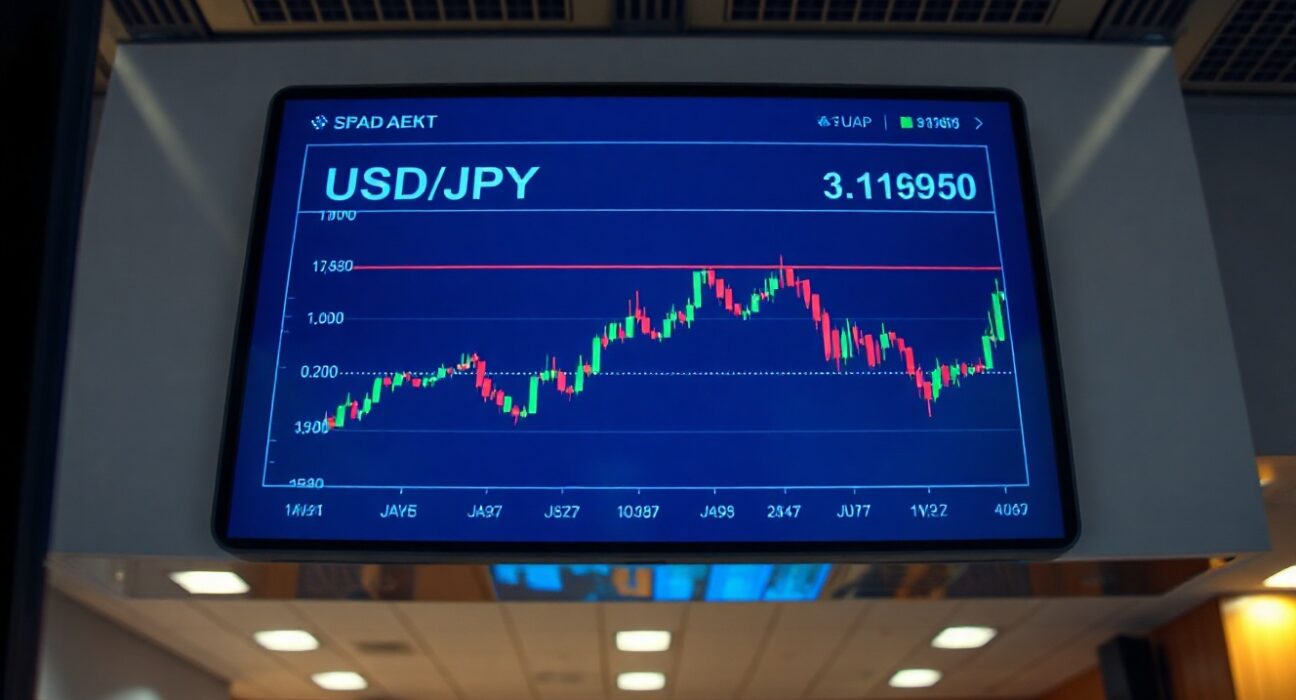
The Japanese yen traded in a narrow range near 159.50 against the US dollar on [current date], as market participants weighed the rising risk of official intervention against the backdrop of upcoming US producer price index (PPI) data.
Why the Yen Is Stuck Near 159.50
The USD/JPY pair has remained largely flat in recent sessions, hovering just below the 160.00 level that previously triggered intervention by Japanese authorities in 2022 and 2024. Traders are cautious about pushing the pair higher given the heightened possibility of yen-buying intervention by the Ministry of Finance.
At the same time, the dollar is finding support from expectations that the Federal Reserve will keep interest rates higher for longer, while the Bank of Japan (BoJ) has signaled a gradual pace of policy normalization. This interest rate differential continues to underpin the pair, but the threat of intervention is capping upside moves.
US PPI Data: A Key Catalyst
Investors are now focusing on the release of the US PPI report, scheduled for [release date and time]. The data is expected to provide fresh clues on inflation trends and could influence the Federal Reserve’s next policy decision. A hotter-than-expected PPI reading would likely boost the dollar, potentially pushing USD/JPY toward the 160.00 threshold and increasing intervention risk. Conversely, a softer print could weigh on the dollar and offer some respite to the yen.
Market Expectations and Implications
Economists polled by Reuters forecast a [consensus figure]% month-on-month increase in headline PPI, with core PPI expected to rise by [consensus figure]%. These figures are crucial because producer prices often feed into consumer inflation, and the Fed has emphasized data dependence in its rate decisions.
For the yen, the outcome of the PPI release could determine whether the pair breaks out of its recent range. A clear move above 160.00 would likely prompt verbal warnings from Japanese officials and possibly actual intervention, as seen in the past. On the other hand, a drop below 158.00 could signal a shift in sentiment, though the overall trend remains dollar-positive.
Intervention Risk: What to Watch
Japanese authorities have repeatedly stated that they are watching currency moves closely and will act against excessive volatility. The Ministry of Finance and the BoJ have a history of intervening when the yen depreciates too rapidly, as evidenced by actions in September 2022 and April 2024.
However, intervention is not a one-way bet. The effectiveness of such measures is often limited, and the fundamental drivers of yen weakness—mainly the yield gap between US and Japanese bonds—remain intact. This means that even if intervention occurs, the yen’s recovery could be short-lived unless the Fed pivots to rate cuts.
Conclusion
USD/JPY is at a critical juncture, with intervention risks and US inflation data set to determine its next move. While the pair remains technically supported, the threat of official action adds a layer of uncertainty. Traders should monitor the PPI release and any comments from Japanese officials for near-term direction. The broader trend, however, still favors the dollar, but the risk of a sudden yen spike makes the pair a volatile trade.
FAQs
Q1: What is the current USD/JPY exchange rate?
As of [current date], the USD/JPY pair is trading near 159.50, having remained flat in recent sessions.
Q2: Why is intervention risk high for the yen?
Japanese authorities have historically intervened when the yen weakens too rapidly, especially near the 160.00 level. The current proximity to that threshold has raised market caution.
Q3: How could US PPI data affect the yen?
A higher-than-expected PPI reading could strengthen the dollar, pushing USD/JPY higher and potentially triggering intervention. A lower figure could weaken the dollar and provide some relief for the yen.
Disclaimer: The information provided is not trading advice, Bitcoinworld.co.in holds no liability for any investments made based on the information provided on this page. We strongly recommend independent research and/or consultation with a qualified professional before making any investment decisions.
