

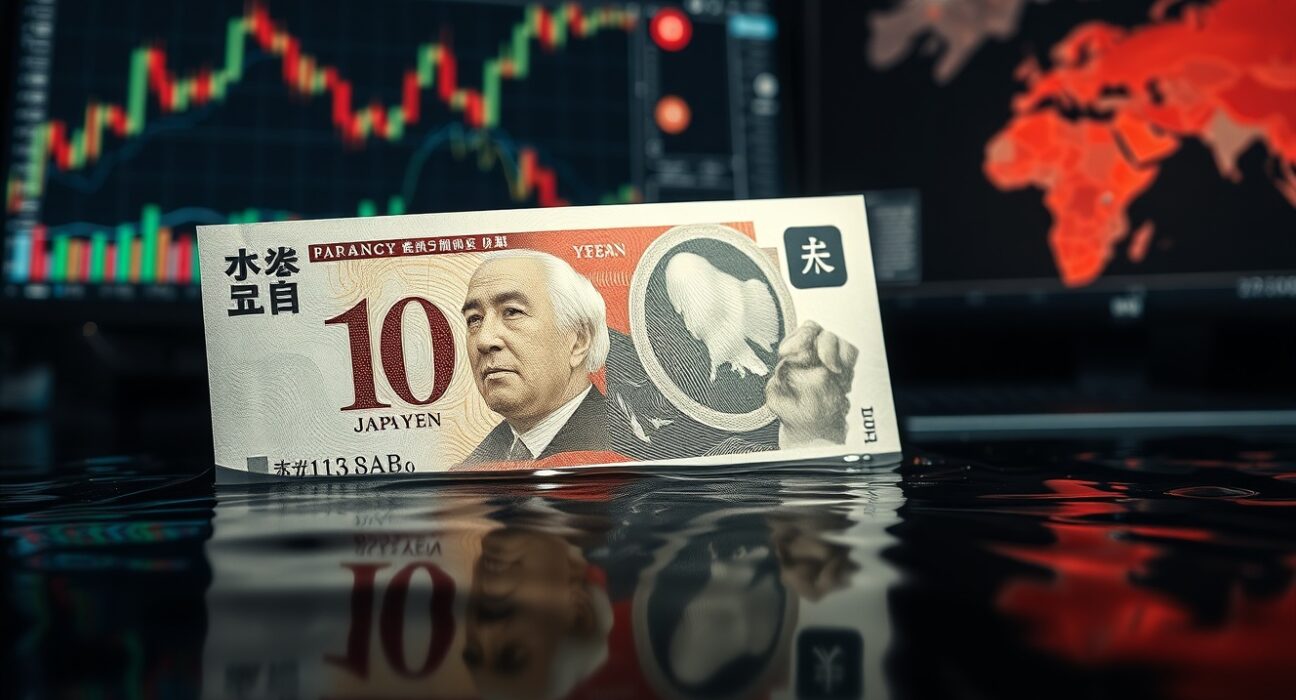
The Japanese Yen continues to face downward pressure as escalating conflict in the Middle East keeps global oil prices elevated, complicating the Bank of Japan’s monetary policy trajectory. Traders and analysts are closely watching the USD/JPY pair as geopolitical risks and energy costs reshape currency market dynamics.
Oil Prices and the Yen’s Vulnerability
Japan imports nearly all of its crude oil, making the Yen particularly sensitive to sustained increases in energy prices. Since the escalation of hostilities in the Middle East, Brent crude has hovered above $85 per barrel, adding to Japan’s import bill and widening the country’s trade deficit. A higher import bill typically weighs on the Yen, as more dollars are needed to purchase the same amount of oil.
Data from Japan’s Ministry of Finance shows the trade deficit has widened by approximately 12% year-on-year in the most recent quarter, directly correlating with the rise in energy import costs. This structural vulnerability limits the Yen’s ability to strengthen even when the Bank of Japan signals policy normalization.
Bank of Japan’s Policy Dilemma
The Bank of Japan (BOJ) faces a difficult balancing act. On one hand, elevated oil prices feed into domestic inflation, which has consistently exceeded the BOJ’s 2% target for over a year. On the other hand, raising interest rates too aggressively could stifle an already fragile economic recovery and increase the cost of servicing Japan’s massive public debt.
Governor Kazuo Ueda has maintained a cautious tone, emphasizing that the BOJ will not rush into rate hikes. This dovish stance, relative to the Federal Reserve’s higher-for-longer rate policy, continues to keep the Yen under pressure. The interest rate differential between the U.S. and Japan remains a primary driver of USD/JPY movement.
Impact on Japanese Consumers and Businesses
The weaker Yen and higher oil prices have a direct impact on Japanese households and businesses. Imported food, fuel, and raw materials become more expensive, squeezing real incomes. Small and medium-sized enterprises, which often lack the pricing power to pass on higher costs, are particularly affected.
Recent surveys from the Bank of Japan indicate that business sentiment among small manufacturers has declined for the first time in four quarters, with rising input costs cited as the primary concern. Consumer confidence has also dipped, reflecting the strain on household budgets.
Geopolitical Risks and Safe-Haven Flows
While the Yen has historically been considered a safe-haven currency, its status has been challenged in the current environment. During periods of acute geopolitical stress, investors have traditionally flocked to the Yen. However, the persistent negative interest rate differential and Japan’s reliance on energy imports have diminished this safe-haven appeal.
Instead, the U.S. dollar and gold have been the primary beneficiaries of safe-haven flows in the recent Middle East escalation. The Yen’s traditional role has been partially supplanted, adding another layer of complexity to its outlook.
Technical and Market Outlook
From a technical perspective, USD/JPY has been trading in a range between 148 and 152 over the past month, with resistance near the 152 level, which previously prompted intervention by Japanese authorities. Market participants remain wary of potential intervention if the Yen weakens too rapidly.
Options market data suggests that traders are pricing in a higher probability of further Yen depreciation in the short term, with risk reversals leaning heavily toward USD/JPY upside. However, any de-escalation in Middle East tensions or a surprise hawkish move from the BOJ could trigger a sharp reversal.
Conclusion
The Japanese Yen’s trajectory remains closely tied to the intersection of geopolitical developments in the Middle East and the Bank of Japan’s policy decisions. Elevated oil prices, a widening trade deficit, and a dovish BOJ create a challenging environment for the currency. While intervention risks and eventual BOJ normalization provide some support, the near-term bias appears tilted toward further weakness unless there is a significant shift in the geopolitical landscape or a more aggressive policy pivot from Tokyo.
FAQs
Q1: Why is the Japanese Yen weakening due to Middle East conflict?
Japan imports nearly all of its oil, so higher crude prices increase the country’s import bill, widening the trade deficit and putting downward pressure on the Yen. Geopolitical uncertainty also affects investor confidence.
Q2: Can the Bank of Japan intervene to support the Yen?
Yes, the BOJ and Ministry of Finance have intervened in the past when the Yen weakened rapidly, typically around the 150-152 level against the U.S. dollar. However, intervention is usually a short-term measure and does not change underlying economic fundamentals.
Q3: How long will oil prices stay elevated?
Oil price forecasts depend on the duration and intensity of the Middle East conflict. If tensions persist or escalate, prices could remain above $85-90 per barrel. Any ceasefire or diplomatic resolution could lead to a rapid decline in prices, providing relief for the Yen.
Disclaimer: The information provided is not trading advice, Bitcoinworld.co.in holds no liability for any investments made based on the information provided on this page. We strongly recommend independent research and/or consultation with a qualified professional before making any investment decisions.
