

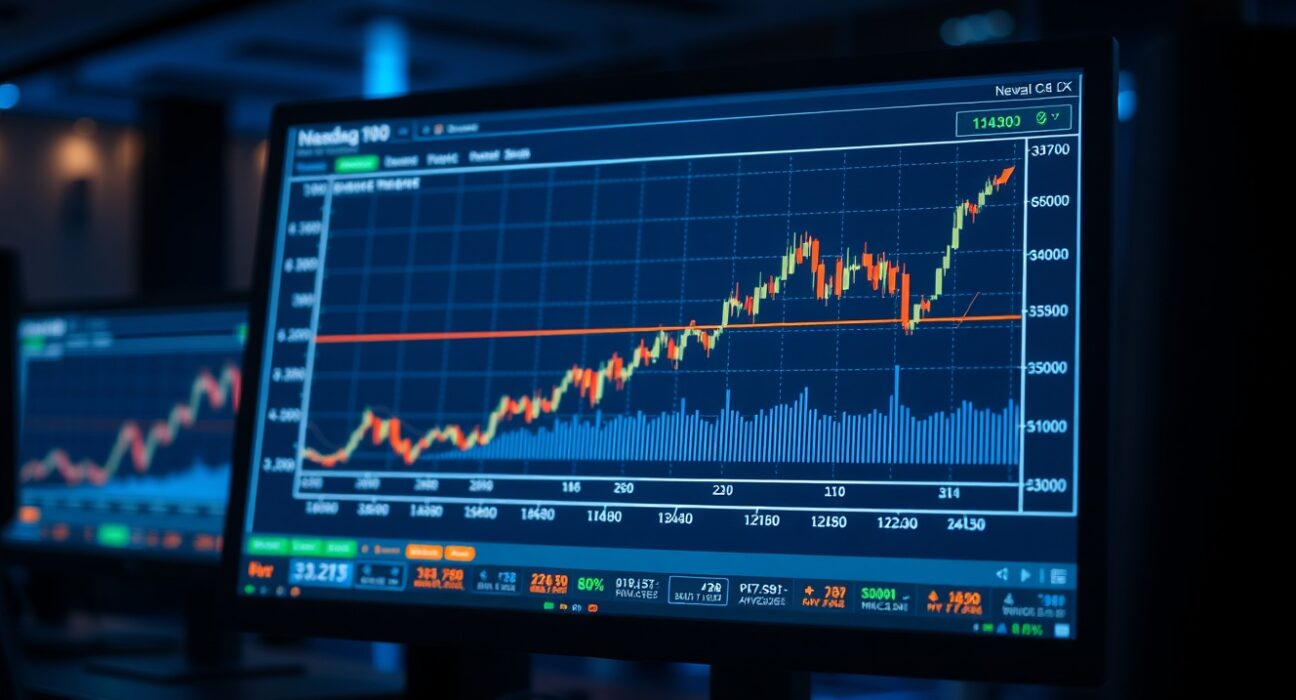
The Nasdaq 100 (USTEC) enters July at a critical juncture, with the index hovering near a key resistance level just as the artificial intelligence earnings season kicks off. After a strong first half of the year driven by enthusiasm around AI-related stocks, traders and investors are now questioning whether momentum can sustain itself through the upcoming corporate reports.
Technical resistance meets earnings reality
The USTEC has rallied significantly since late 2023, largely fueled by a handful of mega-cap technology companies heavily invested in AI infrastructure and development. However, the index now faces a well-defined resistance zone that has historically acted as a ceiling. Technical analysts point to this level as a make-or-break point: a clean breakout could signal a continuation of the bull run, while a rejection might lead to a period of consolidation or a pullback.
Adding to the tension, the upcoming earnings reports from major AI-focused firms will provide the first real test of whether the lofty valuations and growth expectations baked into current prices are justified. Investors are not just looking for strong revenue numbers — they are scrutinizing capital expenditure plans, profit margins, and forward guidance for any signs of deceleration.
AI earnings: the new market catalyst
Artificial intelligence has become the dominant theme in equity markets, but the narrative is shifting from pure hype to fundamental performance. Companies that have made massive investments in AI capabilities are now expected to show tangible returns. The July earnings season will include reports from several key players in the AI ecosystem, including chipmakers, cloud service providers, and software firms that have integrated AI into their core products.
Analysts warn that the market’s reaction to these reports could be binary. Beating expectations might not be enough — investors will want to see accelerating growth and expanding margins. Any disappointment, particularly around AI-related revenue streams, could trigger a sharp revaluation of the sector.
What this means for traders and long-term investors
For short-term traders, the resistance level offers a clear tactical framework: a breakout above resistance with strong volume could open the door to new highs, while a failure to hold recent gains might signal a short-term top. Long-term investors, however, face a more nuanced picture. The fundamental case for AI remains strong, but valuations are stretched by historical standards. The upcoming earnings season will help separate companies that are genuinely benefiting from AI adoption from those riding the wave of sentiment.
Macroeconomic factors also remain in play. Interest rate expectations, inflation data, and geopolitical risks continue to influence market direction. A dovish shift from the Federal Reserve could provide additional tailwinds, while persistent inflation or a hawkish surprise could pressure growth stocks.
Conclusion
July is shaping up to be a defining month for the Nasdaq 100. The combination of a technical resistance test and the start of AI earnings season creates a high-stakes environment where market direction could be set for the remainder of the year. Investors should watch for earnings quality, forward guidance, and the index’s ability to break through resistance with conviction. As always, disciplined risk management and a focus on fundamentals remain essential.
FAQs
Q1: What is the key resistance level for the Nasdaq 100 in July?
The exact level varies by timeframe, but traders are watching the recent highs near the all-time peak zone. A clean break above this area with increasing volume would be considered a bullish signal.
Q2: Which AI earnings reports are most important this season?
Reports from major chipmakers like NVIDIA, cloud providers such as Microsoft and Amazon, and AI software leaders are considered the most market-moving. Their guidance on AI revenue and spending plans will be closely analyzed.
Q3: How should investors prepare for potential volatility?
Diversification, position sizing, and a clear understanding of individual holdings’ exposure to AI trends are recommended. Setting stop-losses and avoiding overconcentration in high-beta tech names can help manage risk during this period.
Disclaimer: The information provided is not trading advice, Bitcoinworld.co.in holds no liability for any investments made based on the information provided on this page. We strongly recommend independent research and/or consultation with a qualified professional before making any investment decisions.
