

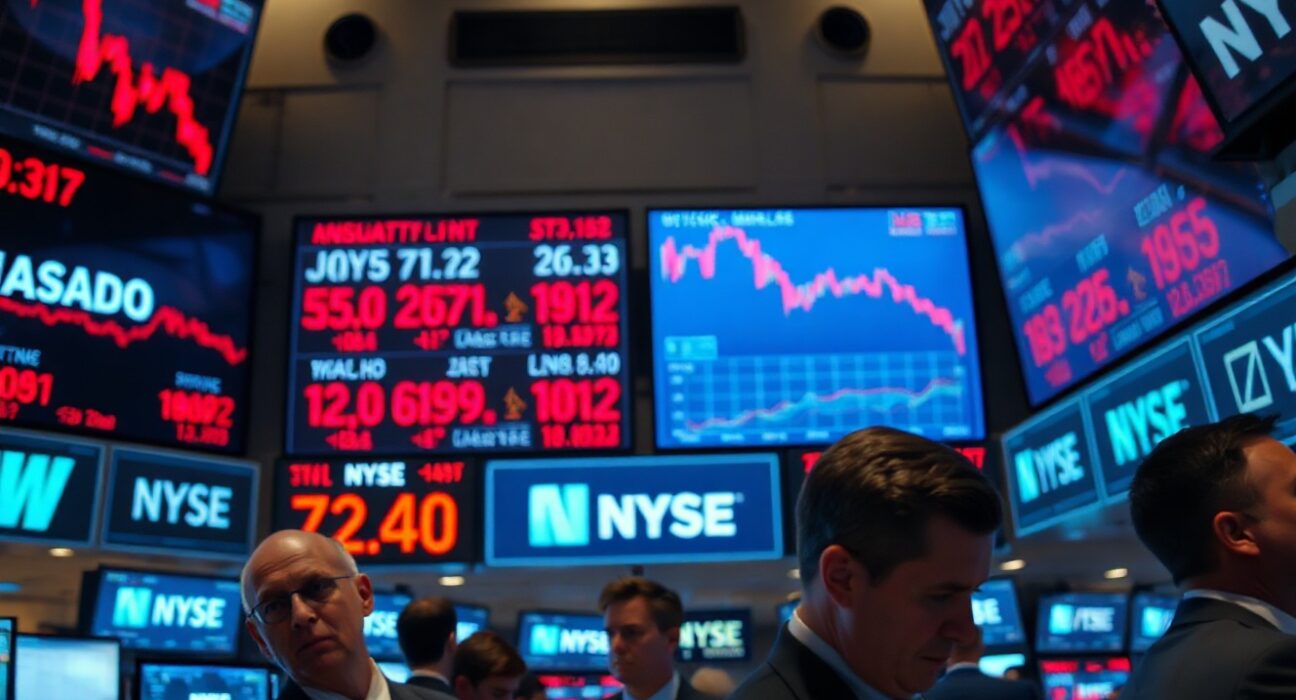
The NASDAQ Composite Index fell sharply for a second consecutive trading day on Wednesday, extending losses after President Donald Trump announced the termination of ceasefire negotiations with Iran. The decision, which caught many geopolitical analysts off guard, reignited fears of broader instability in the Middle East and sent shockwaves through equity markets already sensitive to trade policy uncertainty.
Market Reaction and Key Moves
The tech-heavy NASDAQ dropped more than 2.3% by mid-afternoon trading, bringing its two-day decline to over 4.5%. Major technology shares led the sell-off, with Apple, Microsoft, and Nvidia each losing between 2% and 3.5%. The broader S&P 500 also fell, though losses were less severe, as energy and defense stocks partially offset the downturn.
Investors interpreted the collapse of diplomatic talks as a signal that the administration may pursue more aggressive economic or military measures, raising the risk premium on U.S. equities. The CBOE Volatility Index, or VIX, surged above 28, its highest level in three months, indicating heightened market anxiety.
Geopolitical Context and Investor Sentiment
Trump’s decision to walk away from the negotiating table came after what the White House described as “unacceptable preconditions” from Iranian officials. No further details were provided, but the move marks a sharp reversal from earlier signals that a diplomatic resolution was within reach.
Geopolitical risk has historically weighed on equity valuations, particularly when it threatens global energy supply chains or disrupts trade routes through the Strait of Hormuz. Oil prices rose more than 3% on the news, adding to inflationary pressures that complicate the Federal Reserve’s interest rate outlook.
Impact on Investor Portfolios
For retail and institutional investors alike, the sell-off underscores the fragility of the current rally, which had been driven largely by artificial intelligence optimism and expectations of a soft landing. The sudden shift in geopolitical dynamics introduces a variable that is difficult to hedge and impossible to predict with precision.
Portfolio managers are now reassessing exposure to sectors most vulnerable to geopolitical shocks, including technology, consumer discretionary, and financials. Safe-haven assets such as gold and U.S. Treasury bonds saw inflows, with the 10-year yield falling to 4.12%.
Conclusion
The NASDAQ’s two-day slide reflects a market recalibrating to a more uncertain geopolitical environment following the breakdown of U.S.-Iran ceasefire talks. While the full economic implications remain unclear, the immediate reaction underscores how quickly investor sentiment can shift when diplomatic channels close. Traders will be watching closely for any further statements from the White House or the Federal Reserve in the coming days.
FAQs
Q1: Why did the NASDAQ fall after Trump ended Iran ceasefire talks?
The end of ceasefire negotiations increased geopolitical uncertainty, leading investors to sell risk assets like technology stocks and move into safer investments. The market interpreted the move as raising the likelihood of further conflict or economic disruption.
Q2: How much did the NASDAQ drop over the two-day period?
The NASDAQ Composite fell approximately 4.5% over the two sessions, with losses accelerating on the second day as more investors reacted to the news and adjusted their portfolios.
Q3: What sectors were most affected by the sell-off?
Technology stocks bore the brunt of the decline, particularly large-cap names like Apple, Microsoft, and Nvidia. Energy stocks rose on higher oil prices, while defense stocks also gained modestly. Financials and consumer discretionary sectors were broadly lower.
Disclaimer: The information provided is not trading advice, Bitcoinworld.co.in holds no liability for any investments made based on the information provided on this page. We strongly recommend independent research and/or consultation with a qualified professional before making any investment decisions.
