
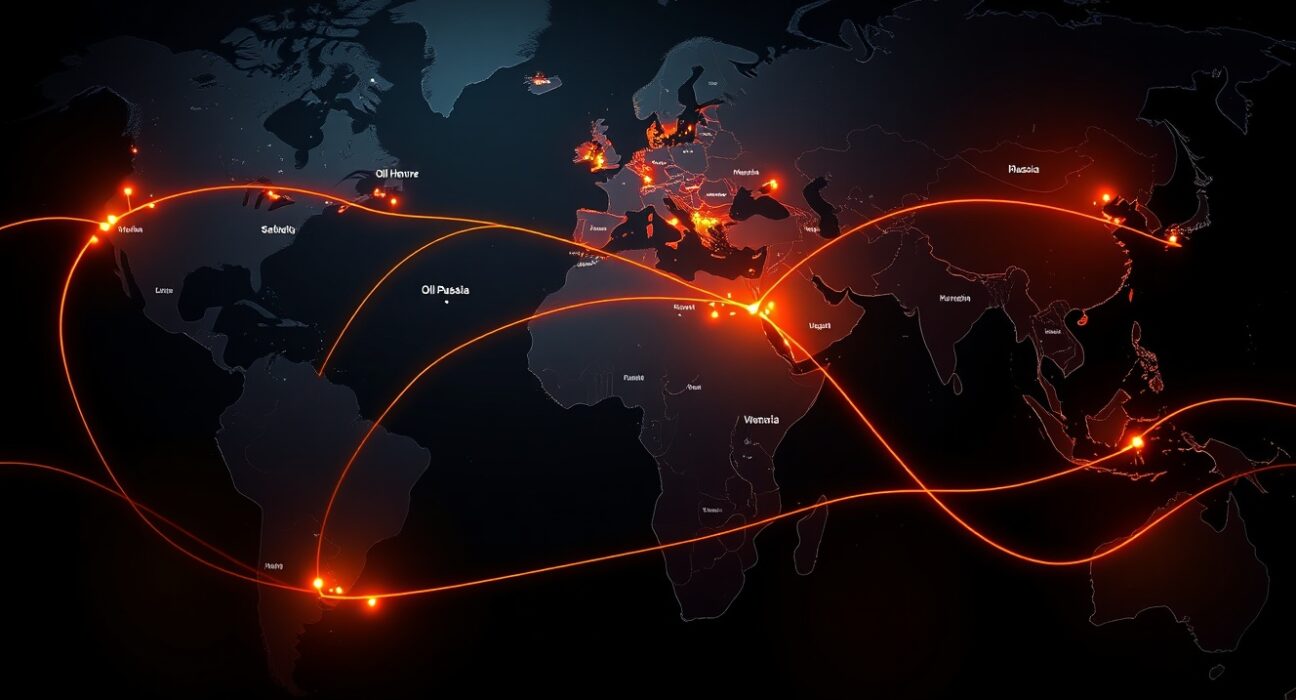
Global oil markets face escalating supply risks and deepening security fractures as geopolitical conflicts reshape energy flows and threaten market stability. Rabobank’s latest analysis reveals how war-driven disruptions create unprecedented challenges for producers, consumers, and policymakers worldwide. This comprehensive examination explores the complex interplay between military conflicts, infrastructure vulnerabilities, and strategic dependencies that define today’s volatile energy landscape.
Oil Supply Risks in Contemporary Geopolitical Conflicts
Modern warfare directly threatens global oil supplies through multiple channels. Military actions frequently target energy infrastructure, disrupt shipping routes, and trigger sanctions that reshape trade patterns. Recent conflicts in Eastern Europe and the Middle East demonstrate how quickly regional tensions can escalate into global energy crises. These developments create immediate supply shortages while simultaneously undermining long-term investment in production capacity.
Strategic chokepoints represent particularly vulnerable components of global oil infrastructure. The Strait of Hormuz handles approximately 21 million barrels daily, while the Bab el-Mandeb Strait and the Suez Canal serve as critical arteries for European and Asian supplies. Naval blockades, drone attacks, and mining operations in these regions can paralyze global energy flows within days. Consequently, security concerns now dominate shipping decisions and insurance calculations.
Security Fractures in Global Energy Networks
Energy security fractures manifest through infrastructure vulnerabilities, cyber threats, and strategic dependencies. Critical pipelines, refineries, and export terminals face increasing physical and digital attacks. Meanwhile, geopolitical realignments force nations to reconsider decades-old supply relationships. These fractures create systemic weaknesses that extend beyond immediate conflict zones to affect global market fundamentals.
The following table illustrates key security vulnerabilities in major oil-producing regions:
| Region | Primary Vulnerabilities | Potential Impact (Million bpd) |
|---|---|---|
| Middle East | Strait of Hormuz closures, pipeline attacks | 18-22 |
| Russia/Caspian | Pipeline sabotage, sanctions enforcement | 7-9 |
| West Africa | Maritime piracy, political instability | 3-5 |
| Latin America | Cyber attacks on infrastructure | 2-4 |
These vulnerabilities create cascading effects throughout global supply chains. For instance, attacks on Middle Eastern infrastructure simultaneously affect Asian importers, European refiners, and Atlantic basin pricing benchmarks. Consequently, security considerations now rival traditional economic factors in market analysis.
Rabobank’s Analytical Framework for Energy Risk Assessment
Rabobank employs a multidimensional framework to assess energy security risks. This methodology evaluates physical infrastructure, geopolitical relationships, market mechanisms, and regulatory environments. The bank’s analysts examine how conflicts transform from regional disputes into global supply crises through interconnected trade networks and financial systems.
The institution’s research identifies several critical transmission mechanisms for war-driven disruptions. These include insurance market reactions, shipping route diversions, storage drawdowns, and strategic reserve deployments. Each mechanism interacts with others to amplify or mitigate initial supply shocks. Understanding these dynamics helps market participants develop more resilient strategies.
Historical Context and Evolving Threat Landscape
Contemporary energy security challenges differ significantly from historical precedents. Today’s conflicts involve hybrid warfare tactics that blend conventional military operations with cyber attacks, economic coercion, and infrastructure targeting. Furthermore, the global energy transition creates additional complexities as nations balance fossil fuel security with climate commitments.
Several key developments have reshaped the threat landscape:
- Cyber warfare capabilities now threaten supervisory control systems at refineries and pipelines
- Precision munitions enable targeted strikes against specific infrastructure components
- Economic sanctions have evolved into sophisticated tools for redirecting energy flows
- Private military actors increasingly operate in critical energy regions
These developments create unprecedented challenges for traditional security approaches. Consequently, nations and corporations must develop more adaptive and resilient protection strategies.
Market Impacts and Price Volatility Mechanisms
War-driven supply risks trigger specific market reactions that amplify price volatility. Initial supply disruptions typically cause immediate price spikes as traders anticipate physical shortages. Subsequently, inventory drawdowns and production adjustments create secondary effects that may persist for months. These dynamics frequently produce price contango structures that incentivize storage while discouraging immediate consumption.
Financial markets amplify physical disruptions through several channels. Options markets exhibit increased demand for protection against extreme price movements. Exchange margins rise to cover heightened volatility risks. Meanwhile, traditional hedging strategies become less effective as correlation patterns break down between different crude grades and regional benchmarks.
The following factors particularly influence market responses:
- Spare production capacity availability in non-conflict regions
- Strategic petroleum reserve levels and release policies
- Shipping and insurance market capacity to absorb disruptions
- Refining system flexibility to process alternative crude grades
Market participants must monitor these factors to anticipate volatility patterns and develop appropriate risk management strategies.
Regional Analysis: Middle Eastern and European Perspectives
The Middle East remains the epicenter of global oil supply risks despite diversification efforts. Regional conflicts frequently involve direct attacks on energy infrastructure while simultaneously threatening maritime transit routes. These dual threats create particularly challenging security environments that require coordinated international responses.
European energy security has undergone fundamental transformation following recent geopolitical developments. Traditional supply relationships have been reconfigured, necessitating rapid infrastructure adaptations and policy adjustments. This region now exemplifies how security fractures can drive structural market changes with lasting consequences.
Conclusion
Oil supply risks driven by geopolitical conflicts represent persistent challenges for global energy markets. Security fractures in production regions and transit routes create vulnerabilities that extend far beyond immediate conflict zones. Rabobank’s analysis demonstrates how these interconnected risks require comprehensive assessment frameworks and adaptive response strategies. Market participants must account for both physical disruptions and their financial market amplifications when developing risk management approaches. Ultimately, understanding war-driven supply risks remains essential for navigating today’s volatile energy landscape.
FAQs
Q1: What are the main war-driven risks to global oil supplies?
The primary risks include direct attacks on infrastructure, shipping route disruptions, sanctions enforcement, cyber attacks on control systems, and political instability in producing regions. These threats frequently interact to create compounded supply challenges.
Q2: How do security fractures differ from traditional supply disruptions?
Security fractures represent systemic weaknesses in energy networks that persist beyond immediate disruptions. They involve broken trust in supply relationships, compromised infrastructure integrity, and fundamentally altered risk calculations that affect long-term investment decisions.
Q3: Which regions face the greatest oil supply security challenges?
The Middle East faces the most significant challenges due to concentration of infrastructure and strategic transit routes. Eastern Europe and certain African regions also experience substantial security pressures that affect global market balances.
Q4: How do markets typically respond to war-driven supply shocks?
Markets generally respond with immediate price spikes, increased volatility, changing term structures, and altered trade flows. Financial instruments frequently amplify physical disruptions through risk premium adjustments and hedging activity changes.
Q5: What strategies can mitigate war-driven oil supply risks?
Effective strategies include supply diversification, infrastructure hardening, strategic reserve management, enhanced monitoring systems, and international security cooperation. Market participants also employ financial hedging and flexible supply contracts to manage exposure.
Disclaimer: The information provided is not trading advice, Bitcoinworld.co.in holds no liability for any investments made based on the information provided on this page. We strongly recommend independent research and/or consultation with a qualified professional before making any investment decisions.