

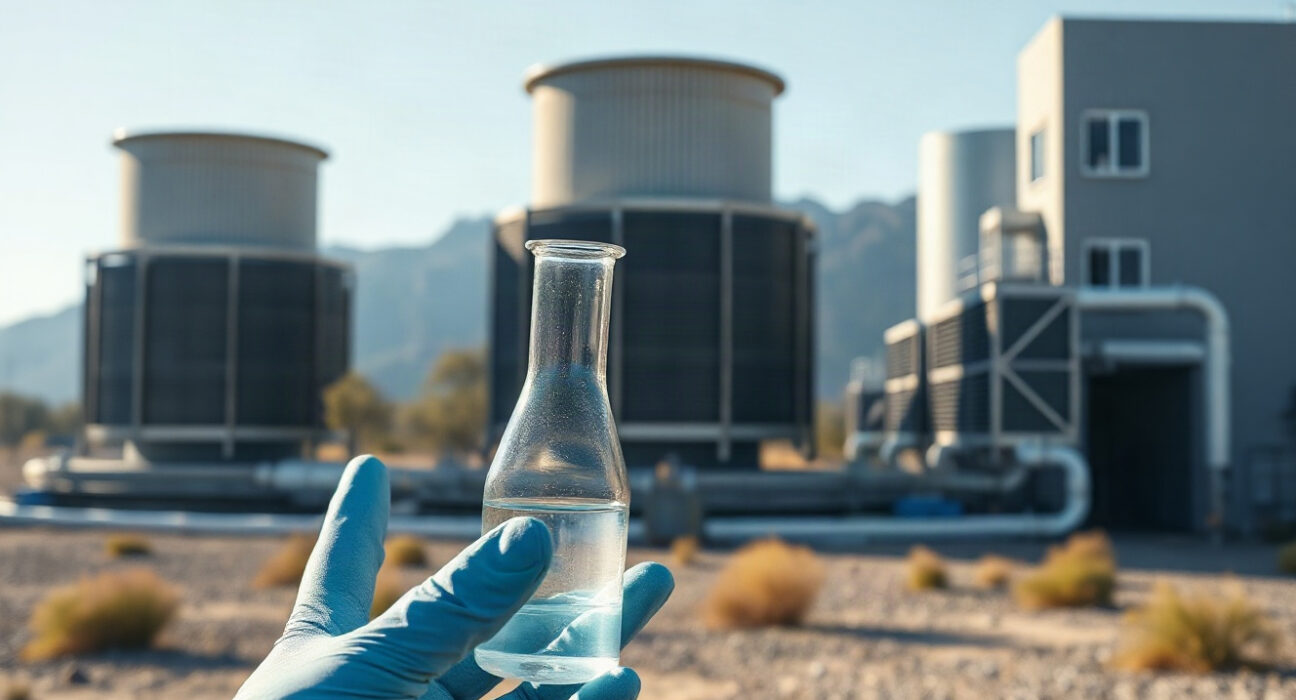
Liquid Death’s latest ad campaign, featuring former NFL star Jason Kelce, jokingly suggests that public urine could help cool AI data centers—but the underlying concept of using recycled wastewater for cooling is a real and growing practice. As data centers consume massive amounts of water to prevent servers from overheating, municipalities and tech companies are increasingly turning to treated wastewater, which includes human urine, as a sustainable alternative to potable water.
The Viral Campaign and Its Unintentional Accuracy
The campaign, which blends humor with environmental messaging, highlights the enormous water footprint of AI infrastructure. In the video, Kelce and a crowd sing, “Let’s pee on computers together to save humanity!” While clearly satirical, the joke aligns with actual industry trends. “The Liquid Death commercial is funny and tongue-in-cheek,” said Michael Obradovitch, vice president of Data Center Global Accounts at Ecolab, in an interview with Bitcoin World. “But in reality, there is a fair amount of alternative water sources already being used to a similar extent to cool these data centers.”
Recycled Water: A Practical Solution
Recycled water, produced by treating wastewater and sewage, is already used for cooling in various industries. The treatment process involves membrane bioreactors, reverse osmosis, and ultraviolet light to make the water safe for industrial use. “You wouldn’t just use pee, but you can clean it and make it into useful water, and that’s what we advocate,” said Bruno Pigott, executive director of the WateReuse Association and former acting assistant administrator for water at the U.S. EPA.
Dr. Greta Zornes, practice leader for water reuse at engineering firm CDM Smith, noted a surge in demand: “Every day right now, I’m working on recycled water for data centers.” However, the feasibility depends on proximity to large wastewater treatment facilities. “When data centers go out into rural areas, a lot of the times the wastewater treatment plants just aren’t big enough,” she added.
Real-World Impact and Challenges
In Loudoun County, Virginia, home to over 250 data centers, recycled water accounts for 43% of daily data center water usage—about 200 million gallons—while the remaining 57% comes from potable supplies, according to Loudoun Water. This illustrates both the potential and the limitations of recycled water. Infrastructure gaps and the time required to build treatment capacity remain significant hurdles.
Companies like Meta are investing in wastewater infrastructure near their data centers, with at least $270 million committed to such projects. “That’s where data centers can actually come in and be anchors of water infrastructure,” Obradovitch said. On the policy front, Pigott is advocating for a 30% tax credit to accelerate recycled water infrastructure development.
Why This Matters for the Tech Industry
The viral nature of the campaign underscores growing public concern over data centers’ environmental impact. A recent Gallup poll found that about seven in ten Americans oppose data centers in their communities. While the ad is humorous, it sparks conversation about sustainable practices. “I’m glad that people are concerned about water, and anything that raises awareness of water, however crude it may be, could actually be beneficial,” Pigott said. “It gives us a chance to educate the public about what we’re doing today.”
Conclusion
While urinating directly on servers is neither practical nor advisable, the underlying message of the Liquid Death campaign highlights a legitimate and increasingly necessary approach to data center cooling. Recycled water offers a viable path to reduce strain on potable supplies, but scaling it requires investment in infrastructure and policy support. As AI continues to expand, the industry must balance innovation with environmental responsibility.
FAQs
Q1: Can urine actually be used to cool data centers?
Not directly. Urine contains salts, urea, and organic matter that would damage cooling systems. However, wastewater containing urine can be treated to produce recycled water, which is safe for industrial cooling.
Q2: How much water do data centers use?
Usage varies, but in Loudoun County, Virginia, data centers use about 460 million gallons of water daily, with 57% coming from potable sources. The industry is exploring recycled water to reduce this burden.
Q3: What are the main challenges to using recycled water for data centers?
Key challenges include the need for nearby large-scale wastewater treatment facilities, the time and cost of building infrastructure, and the need for policy incentives to encourage adoption.
Disclaimer: The information provided is not trading advice, Bitcoinworld.co.in holds no liability for any investments made based on the information provided on this page. We strongly recommend independent research and/or consultation with a qualified professional before making any investment decisions.
